
Introduction
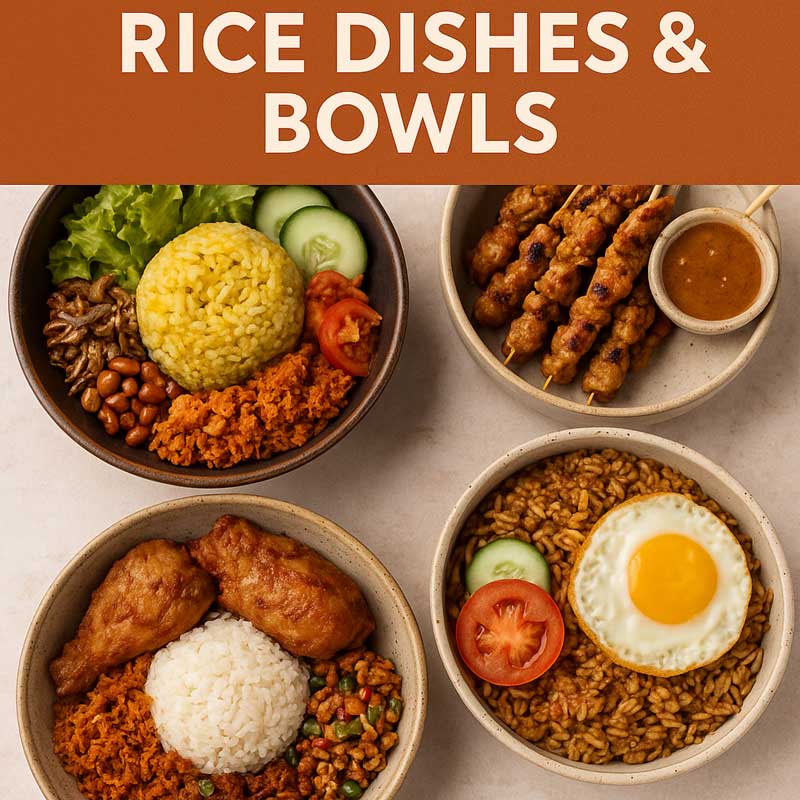
Rice is the heart of Indonesian dining. Each style carries a story, a region, and a moment of shared hospitality. This guide presents 11 rice dishes and bowls that fans of bold Indonesian flavor will love. You’ll find colors, fragrances, and textures that speak to the archipelago’s culinary creativity. Expect dishes that honor tradition while inviting exploration.
Nasi Goreng
Nasi Goreng is more than fried rice. It embodies everyday ingenuity and street-food artistry. The dish blends soy, garlic, and chili with eggs and a protein, often finishing with crispy shallots. Its cultural value lies in its versatility and comfort—an edible map of Indonesian Home Cooking. It shows how simple ingredients can create depth and warmth.
Nasi Padang
Nasi Padang centers on variety. A plate arrives with fragrant rice and a parade of small dishes. Each bite can be savory, sweet, tangy, or spicy, depending on the side. The method reflects Minangkabau hospitality: guests sample many flavors, then decide what to savor first. This bowl celebrates balance and generosity in food.
Nasi Uduk
Nasi Uduk cooks rice in coconut milk with pandan and aromatics. The aroma invites attention and signals a special mood for meals. It’s a Belawan and Betawi favorite for gatherings and morning feasts. Its cultural value rests in how fragrance elevates everyday rice to a ritual experience. The dish shows how ingredients shape mood and memory.
Nasi Kuning
Nasi Kuning translates to “yellow rice.” Turmeric gives color and warmth, while spices impart depth. This rice anchors festive plates and ceremonial tables across Java and beyond. Sharing Nasi Kuning signals joy and community, especially during celebrations. It is a bright, flavorful emblem of regional pride.
Nasi Liwet
Nasi Liwet is a savory, coconut-infused rice cooked with broth, often served in banana leaves. Its texture is fragrant and slightly creamy, the result of slow simmering. In Solo and Semarang regions, Liwet accompanies fish, chicken, and vegetables for a family meal or festive gathering. The dish embodies communal feeding and the artistry of slow-cooked flavor.
Nasi Campur
Nasi Campur means “mixed rice.” It showcases regional flavors on one plate, from spicy sambal to mild vegetables. The rice acts as a canvas for diverse accompaniments. This style highlights adaptability and regional identity, letting each community stamp its taste on a single bowl. It is a celebration of contrast and harmony in one meal.
Nasi Jinggo
Nasi Jinggo is a small, bold Balinese specialty. It pairs compact portions with fiery sambal and bright herbs. The dish reflects island markets and street-food culture, where quick, flavorful bites define daily life. Nasi Jinggo’s significance lies in its accessibility and its ability to convey Bali’s lively Flavors in a single, satisfying bite.
Nasi Tumpeng
Nasi Tumpeng features a cone of vibrant yellow rice surrounded by assorted dishes. This presentation marks gratitude, gratitude for harvests, and communal feasting. It’s a cornerstone of ceremonies and celebrations across Indonesia. The form and flavor together tell a story of reverence for abundance and shared meals.
Nasi Kebuli
Nasi Kebuli blends Indonesian tastes with Middle Eastern and Indian spice profiles. The rice is richly scented with cloves, cinnamon, and cardamom, often paired with meat or vegetables. This dish demonstrates culinary exchange as a source of bold flavor. It honors trade routes’ influence on contemporary Indonesian menus.
Nasi Bakar
Nasi Bakar is rice wrapped in banana leaves and briefly grilled. The technique concentrates aroma and creates a gentle smoky note. This method honors traditional cooking in homes and markets, where leaf-wrapped meals carry warmth and soul. The result is a comforting, deeply flavor-forward bowl.
Nasi Penyet
Nasi Penyet means “smashed rice.” The technique creates a light, fluffy base that pairs with a crisp topper and vibrant sambal. It reflects East Java’s love of textures and bright heat. The dish demonstrates how simple actions—smashing, pairing, and frying—produce dynamic flavor experiences.
Conclusion
These 11 dishes reveal how Indonesian rice bowls serve as cultural fingerprints. Each format honors regional crops, local spices, and communal dining. Whether you seek comfort, ceremony, or bold spicing, these bowls invite you to savor Indonesia’s culinary imagination. Give them a try and let the flavors tell their stories.