
Introduction
Taiwanese cuisine shines when it gathers a family around the stove or a table at Home. The Top 12 Classic Taiwanese Main Dishes Recipes for Your Next At-Home Feast invites you to explore dishes that anchor daily meals and celebratory gatherings alike. These twelve dishes carry cultural value in their ingredients, techniques, and the shared moments they create. Each recipe speaks to the balance of flavors, textures, and aromas that define Taiwanese cooking. In this post, you’ll discover not just How to cook them, but why they matter in Taiwan’s food culture and how they can elevate your own at-home feast.
Three Cup Chicken (San Bei Ji) 三杯雞
Three Cup Chicken is a fragrant, comforting staple. The name comes from the equal parts of three seasonings: sesame oil, soy sauce, and rice wine. The technique centers on layering aroma first, then sauce, and finally a glossy glaze. This dish embodies hospitality: a single pot can feed a family, and the scent invites people to the table. In homes and markets, the dish shows how simple pantry staples can become soulful flavor.
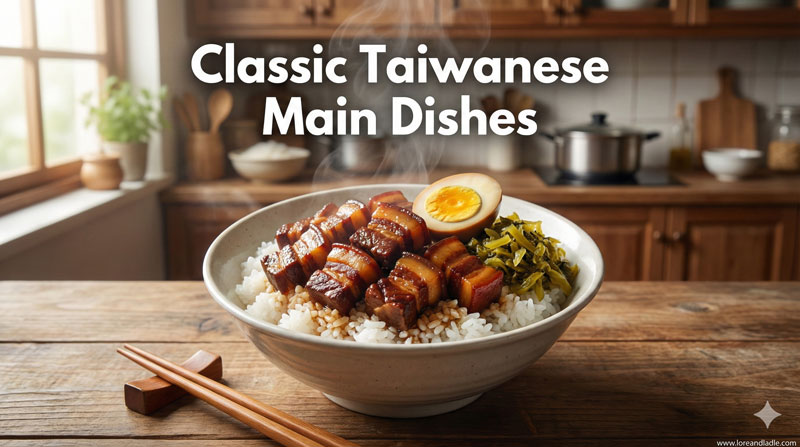
Braised Pork Rice (Lu Rou Fan) 滷肉飯
Lu Rou Fan is beloved for its slow braise and rich depth. Pork, soy, and spices melt into a tender, aromatic sauce that coats small grains of rice. This dish is everyday comfort—humble ingredients transformed through patience and technique. It demonstrates the cultural value of home cooking as a daily celebration, where a single bowl carries generations of seasoning, family memories, and shared meals.
Beef Noodle Soup (Beef Noodle) 牛肉麵
Beef Noodle Soup is both a bowl of warmth and a story of regional pride. The broth can be clear or deeply meaty, the meat braised to tenderness, and the noodles chewy and satisfying. The dish highlights careful simmering, spice balance, and technique that respects each component. At home, it becomes a flexible centerpiece: a pot for a crowd or a comforting dinner for two.
Oyster Omelette (O-A-Jian) 蚵仔煎
Oyster Omelette captures the coast’s bounty with a crisp exterior and a soft, savory center. Eggs, starch, and oysters come together in a dish that balances texture and savoriness. This dish reflects Taiwan’s coastal ingredients and the joy of quick, stove-top techniques. It’s a favorite at home for a hands-on cooking moment that yields a memorable bite.
Gua Bao (Taiwanese Pork Belly Bun) 割包
Gua Bao is a beloved street-food turned home staple. Tender pork belly, pickled vegetables, fresh herbs, and a fluffy steamed bun come together in a playful, satisfying format. The dish demonstrates how Taiwan blends simple components into balanced, portable meals that still feel ceremonial when plated for a feast. It invites sharing and generous bites.
Stinky Tofu (Chou Doufu) 臭豆腐
Stinky Tofu is fermentation’s bold story told through aroma and savory depth. The dish reflects Taiwan’s love of fermentation, texture, and bright, tangy accompaniments. Preparing it at home reveals how patience and traditional techniques transform humble ingredients into a tasting experience that sparks conversation and curiosity.
Preserved Mustard Greens with Pork (Mei Gan Cai Kou Rou) 梅干菜扣肉
This Hakka-influenced braise pairs pork with preserved mustard greens for a deeply savory, slightly sweet result. The long braise time teaches patience and restraint, while the generous portions celebrate a table ready for sharing. It showcases preservation methods that add character to the dish and connect home cooks to family culinary heritage.
Oyster Vermicelli (Hai Xian Mian Xian) 蚵仔麵線
Oyster Vermicelli combines plump oysters, silky vermicelli, and a light broth into a comforting, restorative dish. It highlights the harmony of seafood with starch, offering a soothing, satisfying option for a home feast. The balance of flavors embodies how Taiwan welcomes sea flavors into everyday cooking.
Taiwanese Fried Chicken Cutlet (炸雞排) 台灣炸雞排
Fried chicken cutlet is a modern favorite that still nods to traditional flavors. A crisp-coated chicken piece, juicy inside, invites a sensory celebration at the table. Home cooks enjoy the quick, satisfying result that fits a midweek dinner or a weekend feast, while preserving the joy of a shared, family-friendly meal.
Red-Braised Pork Belly (Hong Shao Rou) 紅燒肉
Red-braised pork belly is a slow-cooked centerpiece with a glossy glaze and deep soy-sugar balance. The technique shows how braising can transform pork into a rich, comforting dish that centers a meal. It’s a testament to patience, aroma, and the beauty of a dish that shines at home, season after season.
Clay Pot Rice (Guo Guo Fan) 砂鍋飯
Clay Pot Rice brings the sizzling, crispy bottom crust that many cooks adore. The pot locks in heat and blends starch with meat, vegetables, and aromatics. It’s ideal for a family feast or a cozy dinner with friends, illustrating how a single pot can produce warmth, texture, and a festive table.
Sweet and Sour Pork (Tang Cu Liji) 糖醋里脊
Sweet and Sour Pork adds bright notes to a feast with a vibrant balance of sweet and tangy flavors. This dish demonstrates how contrast and harmony live in Taiwanese cooking, turning colorful ingredients into a lively, shareable main course.
Conclusion: A Feast of Flavor, Culture, and Craft
These twelve dishes offer more than taste. They reveal how Taiwan layers technique, seasonal ingredients, and time-honored methods to create meals that feel both intimate and generous. When you cook them at home, you participate in a cultural ritual that honors family, hospitality, and the joy of sharing. May your next at-home feast be filled with aroma, conversation, and the warm glow that comes from a table well set with classic Taiwanese favorites.