
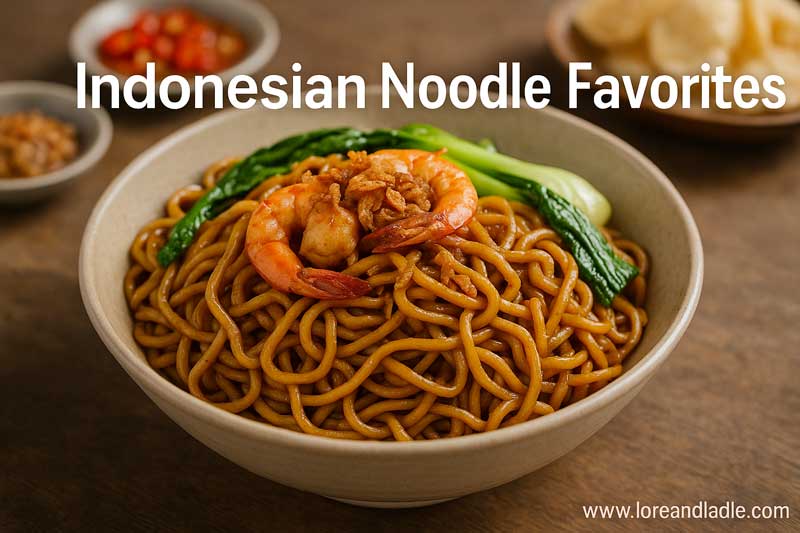
5 Indonesian Noodle Favorites to Try If You Love Bold Indonesian Flavor
Bold Indonesian flavors come alive in noodles. From bustling street stalls to family kitchens, these dishes show how noodles carry culture, technique, and seasonal ingredients. In this post, you’ll meet five favorites that celebrate aroma, texture, and a fearless use of spices. Each dish offers a doorway into regional pride and culinary craft.
Mie Goreng: A Classic Across Regions
Mie Goreng is the fried noodle icon of Indonesia. First, it blends egg noodles with garlic, shallots, and kecap manis, a sweet soy sauce that gives depth and a caramel gloss. Next, a quick wok sear adds smoky notes and a subtle sweetness. Then, cooks fold in vegetables, eggs, and often shrimp or chicken for texture. The result is bright, comforting, and versatile. Culturally, Mie Goreng travels from street carts to family pots, with each region adding its personal touch. The dish invites sharing, and a side of sambal lets you tailor heat to taste. Its adaptability makes it a daily staple and a celebration dish alike.
Mie Aceh: Fire and Flavor from Aceh
Mie Aceh showcases bold spice and spirited aroma. The base is a spicy curry-like sauce or a thick, fragrant broth with chili, garlic, shallots, coriander, and coconut milk. Noodles cook in this robust sauce, often joined by beef or seafood. The dish mirrors Aceh’s coastal markets and spice heritage, delivering warmth through heat and depth through layering. Kaffir lime leaves, lemongrass, and fried shallots brighten the bowl. A squeeze of lime lightens the heat and lifts citrusy notes. Mie Aceh stands as a proud expression of regional identity and culinary confidence.
Mie Rebus: A Spicy Noodle Soup of Jakarta’s Heart
Mie Rebus is a hearty noodle soup rich in bold broth. Chili, garlic, and sweet soy perfume the stock, while noodles soak up the flavor. Vegetables, meat, and sometimes sliced egg add texture and color. The dish shines in street carts and at Home, offering warmth and satisfaction in every spoonful. Its balance of spicy, savory, and a touch of sour creates a complex, inviting experience. Mie Rebus demonstrates how Indonesian cooks build depth through broth, aromatics, and careful seasoning, all in a single, satisfying bowl.
Mie Celor: Creamy Palembang Comfort
Mie Celor from Palembang presents a creamy coastal comfort. A coconut milk-infused broth envelops fine noodles, seasoned with white pepper, garlic, and a hint of nutty warmth. Toppings often include hard-boiled eggs, shrimp, and fried shallots. The result is smooth, dairy-like in richness without heaviness, showcasing coconut’s versatility in Indonesian cooking. This dish shines at festive tables and everyday meals alike, offering a sense of place and patience in every bite. The coconut broth invites you to savor slower, savor more.
Kwetiau Goreng: Flat Noodles, Bold Character
Kwetiau Goreng uses flat rice noodles tossed in a sizzling wok. Garlic, onion, and a kiss of soy sauce create a glossy, savory base. Meat or seafood, vegetables, and chili add color and texture. The dish reflects Chinese-influenced techniques blended with Indonesian ingredients, a hallmark of urban markets and home kitchens. Versatile and crowd-pleasing, it adapts to available ingredients and occasions, from weeknight dinners to weekend gatherings. The result is a satisfying mix of softness, chew, and a crisp-edged finish that captures the dynamism of Indonesian street food.
Closing Thoughts: Noodles as a Celebration of Flavor and Craft
Together, these five noodle dishes reveal how Indonesian flavor builds from simple, bold building blocks: garlic, chili, soy, and coconut. Each region adds its own voice, creating a chorus that moves from stall to table. For curious eaters, tasting these dishes is a friendly invitation to explore culture, craft, and community. Try them with friends, and notice how spice, aroma, and texture tell a vibrant story of Indonesian cuisine.