
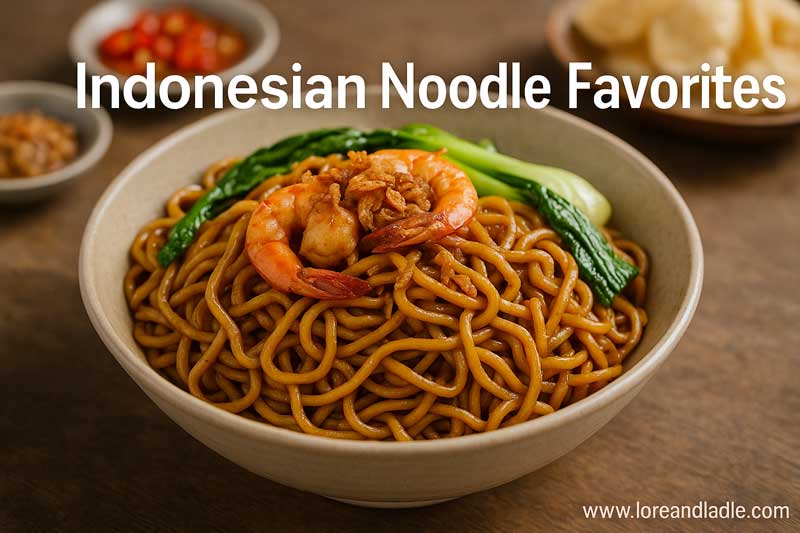
5 Indonesian Noodle Favorites to Try If You Love Bold Indonesian Flavor
Indonesia is a tapestry of islands, markets, and family kitchens. Noodles thread through many meals, carrying bold spices, sweet soy, and bright citrus. Each dish reflects a region, a season, and a shared table where people gather to eat, talk, and celebrate everyday life. These five noodles show how Indonesian cooking blends heat, depth, and balance. They are accessible, storied, and deeply rooted in everyday culture.
Mie Goreng: The Everyday Icon
Mie Goreng is a staple that travels easily from street stall to home kitchen. The dish centers on yellow egg noodles tossed with garlic, onion, soy sauce, and a kiss of kecap manis, the sweet-salty Indonesian darling. The heat level is adjustable, so cooks layer in chili to taste. What makes Mie Goreng culturally rich is its adaptability. Across cities and villages, cooks tailor the mix with cabbage, carrots, chicken, shrimp, or beef. The same noodle can feel simple in one stall and richly layered in another. This versatility mirrors Indonesian flavors: a preference for harmony—sweet, salty, and a little sour—within a single plate. Sharing a steaming bowl of Mie Goreng invites conversation and connection, from family breakfasts to bustling evening markets. The dish honors time-tested techniques: quick wok heat, careful sauce balance, and a final scatter of fried shallots for aroma. For many, Mie Goreng marks a comforting start to the day or a satisfying finish to a busy one, always delivered with a bold, familiar finish.
Mie Aceh: Fire and Fragrance from Sumatra’s North
Mie Aceh delivers a distinctive regional personality. It can appear as a dry, fried noodle or as a rich, curry-kissed soup. The dry version relies on a robust spice mix—garlic, shallots, chili, coriander, and a blend often called rempah—plus aromatics like lemongrass and kaffir lime leaf. The curry variant leans into coconut milk, giving a creamy depth that contrasts with the bright chili heat. Aceh’s cooking emphasizes bold, clean flavors that shine in every bite. Socially, Mie Aceh is a dish that travels well from home kitchens to street stalls, inviting guests to test balance: heat against sweetness, sour against creamy curry, and the texture of chewy noodles against silky broth or crisp-fried toppings. The dish carries cultural pride: a flavorful expression of a region with long-standing spice traders and a tradition of precise spice work that remains vibrant in modern kitchens.
Bakmi Goreng: Wheat Noodles, Deep-Cooking Heritage
Bakmi Goreng uses wheat noodles, often egg-enriched, that can take on a glossy sheen from a quick stir-fry. The technique features garlic, onion, soy sauce, and sometimes tomato or chili for brightness. What sets Bakmi Goreng apart is its fusion spirit. It sits at the crossroads of Indonesian and Chinese culinary traditions, with each family adding its own touches—pork or chicken, greens or herbs, and a drizzle of sweet soy for depth. In many homes and eateries, Bakmi Goreng becomes a comforting, adaptable dish. It invites conversation and memory as a shared meal, especially during gatherings where a pot of noodles is prepared for a group and everyone helps with the stir-frying and garnishing. The dish also showcases the artistry of wok cooking—fast, high heat, and precise timing—so the noodles stay tender without losing their bite. Bakmi Goreng embodies how Indonesian cooking can weave different cultural strands into one satisfying plate without losing its own bold character.
Kwetiau Goreng: Flat Noodles, Silk and Substance
Kwetiau Goreng uses flat rice noodles that soak up sauces with a delicate, silky texture. The method mirrors a practical, social approach to cooking: mix with vegetables, tofu or meat, and a savory-sweet glaze, then finish with a bright touch of scallions or chilies. Kwetiau Goreng is loved for its flexibility. It can be light and vegetal on weekdays or heartier with beef, shrimp, or seafood for Weekend meals. The dish exemplifies how Indonesian tables turn simple ingredients into a crowd-pleasing plate. Its texture—slightly chewy, glossy, and absorbing of sauces—invites leisurely sharing. The dish also highlights a regional respect for rice noodles’ versatility, showing how a common ingredient can carry different flavors and textures across households. In markets and homes alike, Kwetiau Goreng stands as a dependable favorite that respects tradition while inviting personal twists.
Mie Rebus: Hearty Noodle Soup with a Rich, Layered Broth
Mie Rebus is a noodle soup known for its depth and comfort. The noodles swim in a thick, aromatic broth that balances savory notes with warmth from spices like coriander, star anise, and cloves. Some versions lean into beef and mushrooms, others stay lean and bright with chicken or vegetables. The key is a slow, patient build of flavor—simmered broths, soy-sauce accents, and a touch of sweetness from palm sugar. Mie Rebus is often enjoyed as a hearty family meal or a satisfying late-night option after work. Its cultural value lies in how it brings people together around a steaming bowl, encouraging long conversations and shared hunger. The dish demonstrates how Indonesian soups can be both nourishing and boldly flavored, highlighting the nation’s Love for balance and depth in broth, seasoning, and texture.
The Cultural Value of Bold Indonesian Noodle D favorites
These five noodle dishes showcase how Indonesian flavors are built on balance, heat, and aroma. They reflect a common joy: food that invites sharing, speaking, and staying a little longer at the table. The ingredients—garlic, shallots, chilies, kecap manis, coconut milk, and fresh herbs—tell stories of markets, family kitchens, and regional techniques. Each dish honors craft: the quick wok, the careful simmer, the confident chop, and the final flourish of fried onions or chiles. Together, they reveal how bold Indonesian flavor can be approachable and versatile, yet distinctly rooted in place. If you explore these noodles, you’ll taste how regional ingredients and cooking styles shape a shared culinary language that is both dynamic and respectful of tradition. Whether you’re cooking at Home or savoring a street-side bowl, these favorites invite you to celebrate the beauty of Indonesian food culture—one bold bite at a time.