
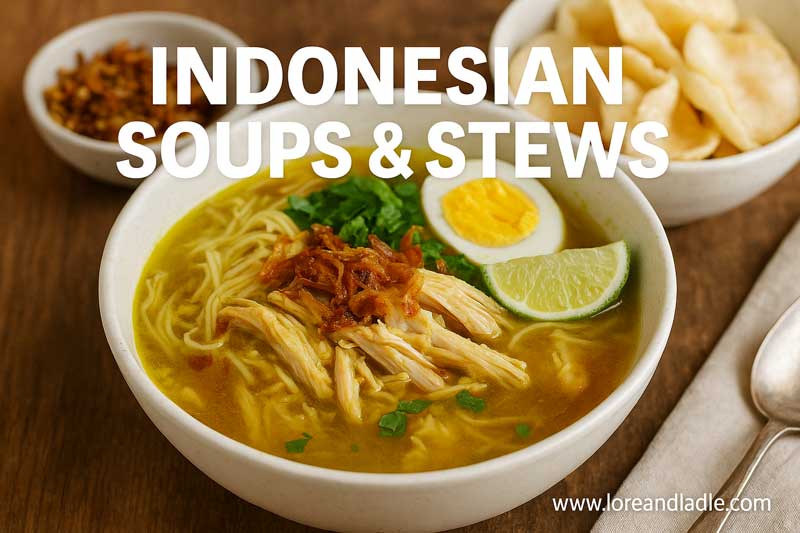
Bold, comforting, and endlessly regional, Indonesian Soups and stews invite you into a kitchen of bright spices and patient simmering. Each bowl carries the story of a place, a family, and a season. In this post, you will meet five beloved soups and stews that showcase the cultural value and culinary significance of Indonesian flavor. They are not mere dishes; they are rituals of everyday life, crafted to welcome friends, fuel long conversations, and celebrate harvests. Read on to savor how ingredients travel from market to table.
Soto Ayam
Soto Ayam is a yellow-t tinted chicken soup that captures the Indonesian love of aromatic broths. The base uses turmeric, ginger, garlic, shallots, and lemongrass, simmered with chicken and bones to release a bright, clear stock. The result is a comforting bowl, often plated with rice or vermicelli, boiled egg, crisp celery, fried shallots, a squeeze of lime, and a dab of sambal. Regions vary: Java’s version shines with a sunny glow, while Lamongan-style soto adds a touch of herbal depth. This dish travels easily from weekday breakfasts to family gatherings, where the aroma signals welcome and togetherness. Its preparation teaches balance—how a few bold ingredients can harmonize into a soothing, memorable flavor.
Rawon
Rawon is a dark, fragrant beef soup from Java’s eastern provinces that gets its color from the buah keluak nut. Garlic, shallots, coriander, and lemongrass blend with the nut’s earthy notes to create a bold, distinctive broth. The dish is usually served with rice, bean sprouts, a squeeze of lime, and crisp crackers. Rawon highlights Indonesian talent for turning humble ingredients into signature flavors. Preparing keluak is a careful craft, teaching patience, texture, and respect for regional variation. The dish speaks to a sense of pride in local ingredients and the skill to coax depth from a single pot.
Opor Ayam
Opor Ayam features chicken slowly simmered in coconut milk with turmeric, candlenut, lemongrass, and bay leaf. The result is a creamy, fragrant curry with a mild heat that invites you to savor the balance of spice and sweetness. It often accompanies rice and appears in family meals and festive occasions as a symbol of care and hospitality. The recipe travels across islands, yet each kitchen adds its own touch—more coconut cream here, a hint of pandan, or a splash of lime. Opor Ayam celebrates nourishment, comfort, and communal eating.
Sup Buntut
Sup Buntut is a hearty oxtail soup that glows with a rich, tomato-forward broth. Onions, garlic, cloves, and nutmeg mingle with kecap manis to create a sweet-savoury glaze on the meat. Potatoes, carrots, and tomatoes add body, while fresh herbs brighten the finish with lime and fried shallots. It is a dish shared in family gatherings and casual eateries alike, a symbol of generous hospitality. The meal moves slowly as the soup simmers, teaching patience and attention to aroma, texture, and the joy of a well-seasoned pot.
Sayur Asem
Sayur Asem is a bright, sour vegetable soup. Tamarind balances the natural sweetness of corn, long beans, and chayote with a touch of palm sugar. The broth is clear but sharply flavored, inviting you to adjust salt and heat with sambal. This dish honors regional gardens and seasonal produce; cooks adapt it to what markets offer. Sayur Asem teaches balance: sour meets sweet, bold meets fresh, and a simple pot becomes a shared, comforting experience that embodies everyday Indonesian cooking.
In closing, these five soups and stews offer more than taste. They reveal how Indonesian cooks blend local ingredients, seasonal flavors, and time-tested techniques into bowls that nourish the body and connect people. Each recipe invites you to explore with curiosity, patience, and respect for the kitchens that keep these flavors alive.