
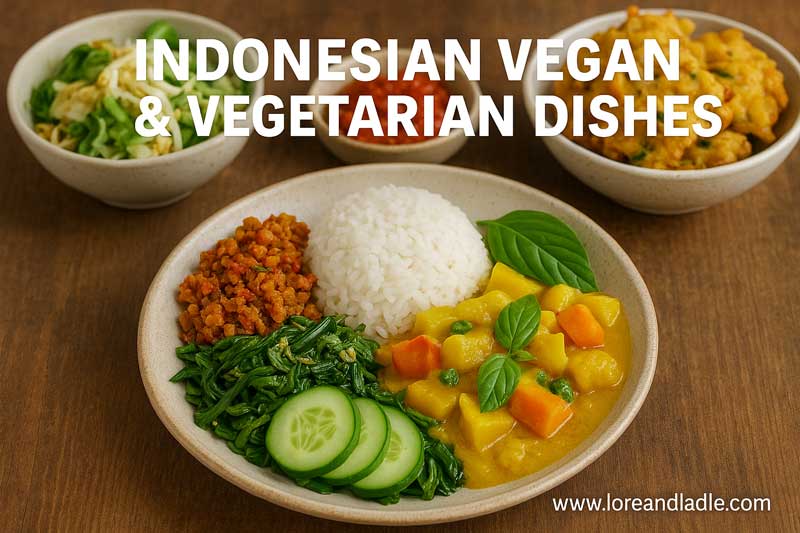
Celebrating Bold Indonesian Flavor: An Overview
This post, “7 Indonesian Vegan & Vegetarian Dishes to Try If You Love Bold Indonesian Flavor,” invites you to explore seven plant-based dishes that showcase Indonesia’s vibrant palate. These dishes come alive through vegetables, tofu, tempeh, coconut milk, peanuts, and chili. They reveal how regional cooks express identity, seasonality, and hospitality through food. Each dish is rooted in daily life, markets, and family tables, yet also lights up festive meals with color and aroma. The result is a culinary map of texture and taste that remains welcoming to all who love bold flavors.
Gado-Gado
Gado-Gado is a colorful mix of vegetables, tofu, and sometimes tempeh, all brought together by a rich peanut sauce. The name means “mixed vegetables” and reflects the dish’s communal spirit. A vegan version stays true to the heart of the dish by using extra tofu or tempeh and skipping eggs. The sauce blends roasted peanuts, lime, tamarind, palm sugar, and chilies to create a creamy, bright balance. This dish embodies Indonesian artistry in everyday meals: simple ingredients transformed by a fragrant, smoky-sweet sauce. It is commonly found in markets and home kitchens, served with lontong or rice to complete the meal.
Pecel
Pecel is a cousin of gado-gado, with a focus on raw and lightly blanched vegetables dressed in a vivid peanut sauce. The vegetables—beansprouts, spinach, long beans, and herbs—provide fresh crunch, while the sauce delivers depth and warmth. In many regions, pecel is enjoyed with lontong or warm rice, creating a pleasing contrast between cool vegetables and a lush, spicy topping. For vegan eaters, pecel shines without animal products, especially when eggs are omitted or replaced with extra tofu. Pecel reflects the Java and Bali influence on plant-based cooking, where simplicity meets bold, nutty intensity.
Sayur Lodeh
Sayur Lodeh is a creamy coconut milk vegetable curry that brings together a mosaic of textures and flavors. Common vegetables include green beans, cabbage, eggplant, and sometimes pumpkin or corn. Lemongrass, turmeric, garlic, and galangal perfume the broth, giving a warm, comforting aroma. Tofu or tempeh can be added to increase heartiness, while staying fully plant-based. This dish speaks to the Indonesian ability to build flavor through layering—smooth coconut, spiced aromatics, and the natural sweetness of vegetables. Sayur Lodeh is a staple in family meals and festival tables alike, valued for its generosity and comforting richness.
Karedok
Karedok is a lively, raw-vegetable salad from West Java, dressed with a bold peanut-chili sauce. The dish foregrounds freshness and crunch: raw cucumbers, bean sprouts, cabbage, and herbs mingle with a sauce that is both bright and strikingly nutty. Its quick prep and bright flavors make it a favorite in markets and home kitchens. For vegan cooks, karedok needs no animal ingredients and showcases how raw vegetables can carry the full weight of Indonesian spice and texture. Karedok illustrates regional diversity within Indonesian vegetarian cuisine, offering a crisp, invigorating counterpoint to richer dishes.
Urab (Urap)
Urab is a vibrant dish that tosses steamed vegetables with a spiced grated coconut dressing. The dressing often includes garlic, chili, and lime, creating a balance of heat and brightness that coats every vegetable piece. This dish is a versatile side, pairing well with rice and other staples. The coconut-based sauce adds aroma and a gentle sweetness that complements greens, squash, and beans. Urab highlights the use of coconut and spice in Indonesian cooking and shows how simple ingredients can yield a striking, cohesive plate.
Opor Tahu
Opor Tahu features tofu cooked in a fragrant coconut-milk curry with turmeric and coriander. The result is a creamy, mellow dish with warm spice notes and a comforting, silky texture. In many regions, this dish is served during festive meals and gatherings, where hospitality shines through the menu. A fully vegan version relies on tofu, coconut milk, and spices rather than animal stock, letting plant-based ingredients carry the soothing richness. Opor Tahu demonstrates how tofu can absorb deep flavors while maintaining a gentle, approachable character that fits into everyday eating and special occasions alike.
Sate Jamur
Sate Jamur brings a plant-based take on a beloved Indonesian format: skewered and grilled morsels. Mushrooms are marinated with garlic, coriander, and kecap manis, then grilled to smoky perfection. The outcome is a bold, savory bite with a hint of sweetness and a satisfying chew. Served with a peanut sauce or a light satay dip, Sate Jamur invites sharing and conversation, much like traditional satay does in gatherings and street scenes. This dish showcases how mushrooms can be the star of a bold, vegan-friendly meal while honoring a classic Indonesian flavor profile.
If you’re exploring Indonesian vegan and vegetarian fare, these seven dishes offer a rich, cultural lens on flavor and technique. Each plate demonstrates how plant-based ingredients can carry regional pride, familial warmth, and a love of color, aroma, and texture. Whether you’re cooking at Home or seeking out plant-forward meals, you’ll find that bold Indonesian flavor is accessible, inviting, and deeply rooted in everyday food culture.