
Introduction
Indonesia offers a rich panorama of flavors centered on rice. Each region adds its own spice, technique, and philosophy to the bowl. If you love bold Indonesian flavor, these seven rice dishes and bowls reveal the cultural heartbeat behind everyday meals and festive tables. They show how simple staples become memorable experiences through aroma, texture, and balance. Let’s explore how each dish carries tradition, craft, and everyday joy.
Nasi Goreng: Bold Fried Rice, Everyday Icon
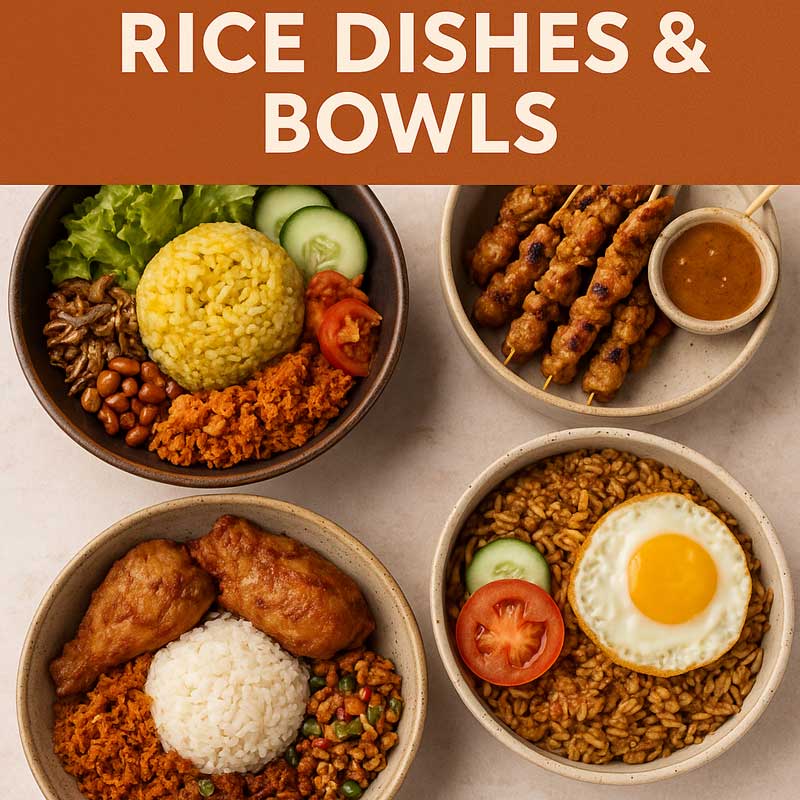
Nasi Goreng is Indonesia’s beloved fried rice. It begins with day-old rice fried quickly with garlic, shallots, chilies, and kecap Manis for a hint of sweet, dark soy. Eggs, vegetables, and a protein often crown the dish. The result is a smoky, savory plate that sings with garlic and soy. Culturally, it’s a flexible canvas found in street carts and family kitchens alike. Its popularity comes from its speed, depth of flavor, and universal comfort. The dish embodies how bold, practical cooking can create a shared ritual around a simple bowl of rice.
Nasi Uduk: Fragrant Coconut Rice for Calm Mornings
Nasi Uduk starts with rice cooked in coconut milk, with pandan leaves, lemongrass, and spices. The kitchen fills with a warm, nutty fragrance. This dish is a staple in morning meals and special gatherings alike. Typically served with fried chicken, tempeh, fried onions, and sambal, it reveals a harmony of soft richness and bright heat. Culturally, it reflects home cooking and communal feasts, where aroma signals hospitality. In culinary terms, the balance of creamy coconut and aromatic herbs makes Nasi Uduk a study in tenderness and layered flavor.
Nasi Liwet: Savory Steam and Bananas of the Javanese Table
Nasi Liwet hails from Central Java’s cooking pot, where rice sits in coconut milk and fragrant stock, often layered with chicken, vegetables, and hard-boiled eggs. The dish is traditionally steamed in a pot and served on banana leaves, which adds a gentle rainforest aroma. Its texture is creamy yet distinctly separated, with a glossy finish that invites a second bite. Culturally, it represents communal meals and ceremonial occasions in Java, where generous portions and shared plates echo togetherness. Culinary significance lies in technique: simmering rice in flavorful liquid creates depth beyond plain steamed rice.
Nasi Kuning: Golden Rice, Festive Flavor
Nasi Kuning is turmeric-yellow rice that shines with brightness and warmth. The turmeric, coconut milk, and sometimes cinnamon give a sunny aroma and a comforting taste. It is commonly prepared for celebrations, birthdays, and family gatherings. The vibrant color makes the dish instantly inviting, signaling joy and abundance. In terms of culinary value, Nasi Kuning demonstrates how color and aroma can elevate a simple bowl into a festive centerpiece. It blends sweet, savory, and slightly spicy notes, offering a wide palette in a single serving.
Nasi Kebuli: Spiced Rice with a Heritage of Trade
Nasi Kebuli blends Indonesian spice with Middle Eastern influence, often using beef or goat, clarified butter, and rich aromatics like cardamom, cinnamon, cloves, and raisins. The long-grain rice absorbs a luxurious blend of spices, creating a bold, aromatic plate. This dish is enjoyed in homes and at gatherings, where generous portions reflect hospitality and celebration. Culinary significance lies in its technique: slow-simmered rice layered with meat and a forest of spices, yielding depth, warmth, and a touch of sweetness. Nasi Kebuli stands as a flavorful bridge between traditions and regional innovation.
Nasi Campur: The Artful Balance on a Plate
Nasi Campur translates to “mixed rice,” and it lives up to its name. A bed of fragrant rice supports a mosaic of side dishes—such as vegetables, sambal, fried fish, tofu, or meat—presented in small portions. Each bite offers a contrast of textures and flavors: soft, crispy, sour, spicy, and savory. The cultural value is in the meal’s adaptability and communal spirit. Vendors and homes alike assemble it with care, turning a simple bowl into a portrait of a region’s tastes. Nasi Campur celebrates balance, variety, and the joy of choosing your own flavor journey.
Nasi Tumpeng: A Crowned Rice, Community Celebration
Nasi Tumpeng is a ceremonial rice cone served with a spread of side dishes. The cone shape symbolizes gratitude, abundance, and the bond of a community. It is built to be shared, with the yellow cone of turmeric rice standing tall as the centerpiece. The accompanying dishes create a tapestry of textures and colors, inviting a cooperative feast. Culturally, Nasi Tumpeng marks milestones, religious festivals, and local gatherings. It highlights how rice can be a stage for generosity, storytelling, and shared delight.
Conclusion: A Rich Tradition, One Bold Flavor at a Time
Each of these seven dishes turns rice into a cultural conversation. The flavors, textures, and rituals surrounding them reveal how Indonesian cuisine values hospitality, family, and regional pride. From everyday comfort to festive grandeur, these bowls show the versatility and resilience of rice as a cultural canvas. If you crave bold Indonesian flavor, exploring these rice dishes invites you to taste history, craftsmanship, and heart in every bite.