
Introduction: A Journey Through Bold Indonesian Flavor
Rice is the heart of Indonesian meals. It carries connections between kitchens, markets, and gatherings across the archipelago. This post, “7 Indonesian Rice Dishes & Bowls to Try If You Love Bold Indonesian Flavor,” highlights how each dish embodies culture and craft. You will see how ingredients, techniques, and presentation tell stories of place, family, and daily life. Every bowl invites curiosity and respect for the culinary artistry behind it.
Nasi Goreng: The Everyday Ambassador of Indonesian Flavor
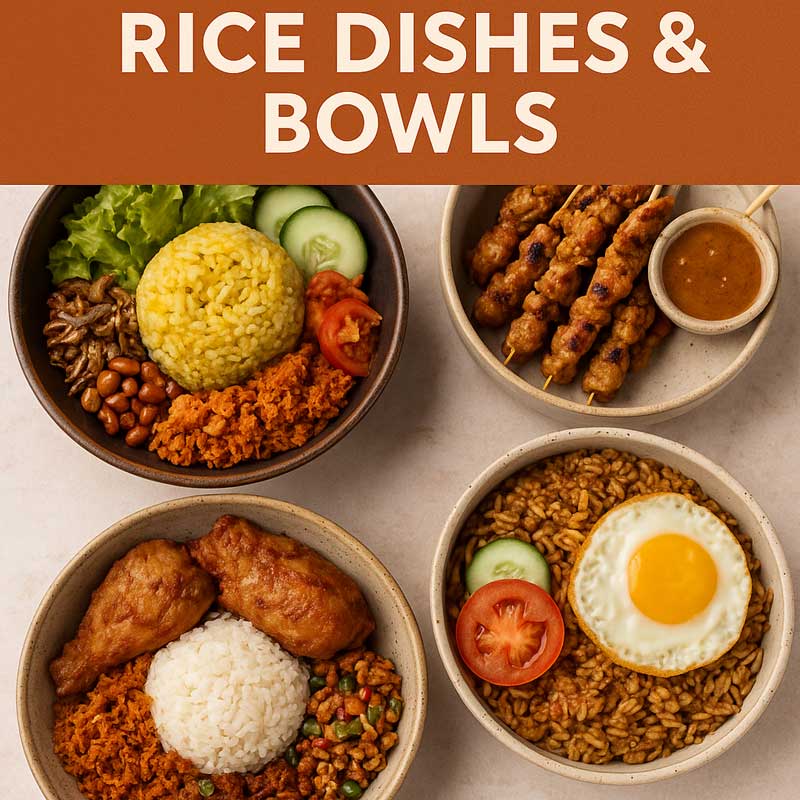
Nasi Goreng sits at the center of daily life. It began as a practical way to transform leftover rice into something exciting, then grew into a celebrated dish with its own iconic style. A hot wok, garlic and shallots sizzling in oil, and a splash of kecap manis create a savory, slightly caramelized aroma. The finish often includes a fried egg, crisp shallots, and a few remaining toppings like chicken, prawns, or tempeh. Nasi Goreng embodies balance: sweet, savory, and smoky notes mingle in one pan, and the dish travels from street stalls to home kitchens with equal grace. This flexibility reflects Indonesian hospitality—always welcoming and adaptable.
Nasi Padang: A Banquet in One Plate
Nasi Padang is more than a single dish; it is a style of serving many small dishes with rice. A steaming plate of rice sits at the center, surrounded by a chorus of flavors: tender beef rendang, spicy fish, fragrant vegetables, and a chorus of sambals. The practice emphasizes variety, generosity, and communal dining. People choose from a curated array of “hidangan” and pass dishes around the table, building a personalized banquet. Each bite demonstrates a regional vocabulary of heat, sour with lime or tamarind, and richness from coconut milk. Nasi Padang shows how Indonesian cooks layer taste through texture and contrast, turning a simple bowl of rice into a shared celebration.
Nasi Uduk: Fragrant Rice for Quiet Mornings and Gentle Gatherings
Nasi Uduk is rice simmered in coconut milk with pandan and spices, producing a fragrant grain that feels intimate and comforting. In markets and homes, it is paired with fried chicken, tempeh, sambal, and crispy onions. The dish speaks to Jakarta’s urban rhythm and to village kitchens alike, where aroma guides the meal’s arrival. Its subtle, creamy base serves as a stage for bolder accompaniments, allowing vegetables, protein, and sambal to take the lead. Nasi Uduk highlights how preparation methods—coconut milk infusion, gentle steaming, and careful timing—shape culture and ritual around the everyday meal.
Nasi Liwet: A Rich, West Javanese Tradition in a Bowl
Nasi Liwet comes from Solo and surrounding areas, where rice is cooked in broth with garlic, shallots, and coconut milk. The result is a moist, flavorful base that carries hints of fragrant spices. Traditionally served on banana leaves with chicken, areh (egg), vegetables, and sometimes fried tempeh, the dish invites a feast-like presentation. The technique shows mastery of simmering and timing, producing a rice that remains tender and scented even as it rests. Nasi Liwet reflects a community-centered approach to dining, where rice forms the anchor of a complete spread.
Nasi Campur: The Art of Balancing In One Bowl
Nasi Campur, or mixed rice, invites a careful balance of flavors and textures. Chefs arrange rice with a selection of proteins, vegetables, sambal, and sometimes peanuts or fried springs of crunch. The result is a personal mosaic in a single bowl, with each component contributing its own character. The dish reveals how Indonesians view flavor as a dialogue—hot and sour, salty and sweet, soft and crisp all at once. Its adaptability mirrors regional kitchens across the archipelago, where cooks tailor the mix to local ingredients and tastes.
Nasi Kebuli: Bold Aromatics Meet Aromatic Traditions
Nasi Kebuli is a fragrant rice dish influenced by spice traditions from the broader region. Coconut milk or ghee-softened grains mingle with bold spices such as cinnamon, cloves, cardamom, cumin, and coriander. The rice often accompanies spiced meats like chicken or lamb, and it might be finished with dried fruits or nuts for texture. Nasi Kebuli stands as a celebration dish in many communities, used for special occasions and gatherings. Its lush aroma and depth showcase how Indonesian kitchens blend local herbs with distant spice legacies to create something distinctly Indonesian.
Nasi Rawon: Earthy Depth in a Bowls of Black Gold
Nasi Rawon features a deep, earthy broth called rawon, made with keluak nuts that lend a dark color and a distinctive, nutty, slightly bitter richness. Beef or sometimes other meats simmer in the broth with garlic, onions, and traditional spices, then ladled over steaming rice. The pairing of rich broth and tender meat with crisp bean sprouts and fresh lime creates a contrast of textures and brightness. Rawon embodies regional pride from East Java, where family meals and Weekend Gatherings often center around a shared pot of soup poured over rice. It reminds us how a single sauce can define a dish’s identity.
Conclusion: The Rich Tapestry of Indonesian Rice Culture
Together, these seven dishes reveal a dynamic food culture built on rice, technique, and place. Each bowl tells a story—of home, of community, and of skill passed down through generations. The dishes celebrate bold flavors while honoring balance, texture, and aroma. Whether you explore a bustling market stall or a cozy home kitchen, you will discover how Indonesian cooks honor ingredients and craft—one fragrant, satisfying bowl at a time. If you love bold Indonesian flavor, these rice bowls offer a delicious and respectful path into a rich culinary heritage.