
Introduction
This post introduces the concept behind the title Top 7 Classic Taiwanese Main Dishes Recipes for Family Dinners in America. It celebrates how Taiwanese home cooking shares warmth, balance, and skill at the table. These seven dishes embody harmony between flavors, textures, and technique. They invite family meals to feel inviting, comforting, and thoughtful. Each dish is a doorway into Taiwan’s culinary heart, where simple ingredients become memorable memories.
The cultural value of Taiwanese home cooking
Taiwanese home cooking centers on care, balance, and shared moments. Dishes are built to pair well with rice, soup, and seasonal vegetables. The kitchen becomes a space for teaching, conversation, and gathering. Flavor profiles emphasize soy, garlic, ginger, and aromatic spices. The craft of simmering, braising, and quick frying shows respect for time and quality. In America, these dishes offer something familiar yet new. They invite families to connect through a familiar kitchen ritual, even when miles separate them. The cultural value lies in hospitality, technique, and the joy of a well-made meal.
Beef Noodle Soup (牛肉麵)
Beef Noodle Soup is a beloved centerpiece. The broth carries depth from simmered beef bones and aromatics. Tender beef meets chewy noodles in a bright, comforting bowl. The dish showcases patience and balance, two core ideas in Taiwanese cooking. It invites slow conversation as bowls are shared around the table. This soup bridges family generations, offering warmth and nourishment in every sip. It also demonstrates how spices and herbs can sing together, from star anise to cinnamon and ginger.
Braised Pork Rice (滷肉飯)
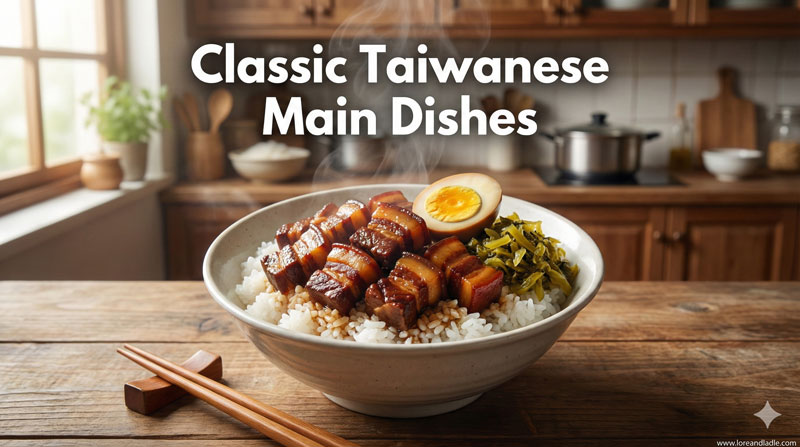
Braised Pork Rice is a compact celebration of aroma and comfort. Small pork pieces braise in soy, sugar, and spices until glossy and tender. The sauce clings to every grain of rice, producing a harmony of savoriness and sweetness. This dish teaches how a few ingredients can carry deep flavor. It functions as a family favorite for weeknight dinners and weekend gatherings alike. It also reflects a home cook’s skill in layering seasonings to achieve a gentle, lingering taste.
Three-Cup Chicken (三杯雞)
Three-Cup Chicken highlights technique and fragrance. The sauce—soy sauce, rice wine, and sesame oil—creates a glossy finish. Garlic and basil bloom as they cook, filling the kitchen with aroma. The dish is quick to prepare, yet it feels special for a family table. It demonstrates how color and aroma can invite conversation and shared bites. The technique favors a careful simmer that preserves tenderness and a rich, comforting sauce.
Oyster Omelette (蚵仔煎)
Oyster Omelette is a coastal favorite that translates well to home kitchens. The mix of eggs, small oysters, and a light starch batter yields a soft interior and a crisp edge. The dish brings umami and brine into a familiar fry-pan moment. It celebrates texture as a social experience—bite by bite, the omelette meets the palate with gentle contrast. This dish shows how Taiwan’s coastal flavors enrich everyday meals and make them feel festive.
Sweet and Sour Pork (糖醋里脊)
Sweet and Sour Pork offers bright color and lively flavor. Crispy pork meets a glossy, tangy-sweet sauce. The balance of crisp texture and vibrant sweetness creates a playful yet comforting dish. It’s a crowd-pleaser for family dinners, easy to portion, and easy to love. The dish reflects a love of contrast: hot, sweet, sour, and savory in one plate. It teaches how careful frying and saucing can produce a memorable centerpiece.
Salt and Pepper Shrimp (椒鹽蝦)
Salt and Pepper Shrimp brings seafood into the home kitchen with clarity and crunch. Lightly seasoned shrimp are fried quickly to keep them tender inside and crisp outside. A kiss of garlic and pepper completes the flavor. This dish highlights freshness and precision in a short, satisfying cook. It’s a perfect choice for sharing plates, where each person takes a bite and savors the simplicity of good ingredients treated well.
Braised Eggplant with Minced Pork (茄子肉末燉)
Braised Eggplant with Minced Pork showcases vegetable-forward cooking that remains deeply satisfying. Eggplant soaks up the braising liquid, while minced pork adds savory depth. The result is a silky, rich dish with a gentle balance of meat and plant flavors. This dish demonstrates how patience and gentle heat can transform everyday vegetables into a comforting main course. It invites households to enjoy a dish that feels nourishing and complete.
How these dishes enrich family dinners in America
Together, these seven dishes offer a complete, flexible menu for family meals. They cover hearty broth, meat-centric, and vegetable-forward options. They encourage shared bowls, individual portions, and a mix of quick and slow cooking. The dishes reflect a cooking philosophy that values harmony, seasonality, and mindful preparation. They help families connect over familiar comfort while exploring new tastes. In America, they become a portal to warmth, hospitality, and culinary delight at the table.
Conclusion
The Top 7 Classic Taiwanese Main Dishes for Family Dinners in America embody cultural value and culinary significance. They celebrate careful technique, balanced flavors, and generous hospitality. Each dish invites a moment of togetherness, a story told through taste, and a memory created around the table. This collection stands as a tribute to home cooking and the joy of sharing good food with loved ones.