
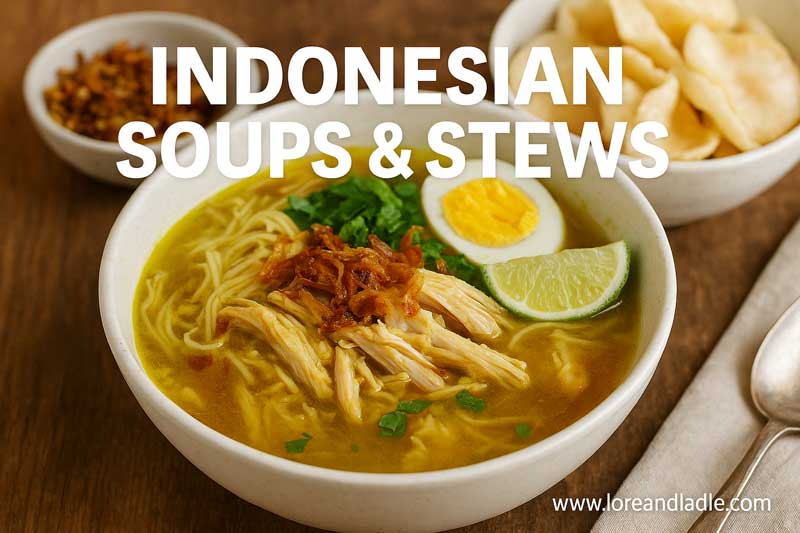
Discovering Bold Indonesian Flavor
Indonesian cuisine shines in soups and stews that glow with aroma, color, and depth. This collection, titled 9 Indonesian Soups & Stews to Try If You Love Bold Indonesian Flavor, invites you to explore how regional ingredients and cooking methods shape everyday meals and festive feasts. Each dish reflects a community’s Love for balance—spice, sour, sweetness, and creaminess all meet at the table. You’ll sense how herbs, chilies, and coconut milk work in harmony to tell a story of place, harvest, and family around a shared pot.
Soto Ayam
Soto Ayam is the classic Indonesian chicken soup beloved across many islands. The broth glows with turmeric, lemongrass, and ginger, creating a bright, comforting base. This dish speaks to everyday hospitality: a pot shared after harvest chores, a warm bowl for guests, a simple meal that still feels festive. Its popularity highlights how a few fresh spices can carry a kitchen’s generosity from a home stove to street stalls.
Soto Betawi
Soto Betawi comes from Jakarta’s Betawi culinary tradition. It is a creamy, coconut-milk broth enriched with beef or offal, and brightened with lime and fried shallots. The richness mirrors the city’s layered flavors and bustling markets. Culturally, its indulgent texture signals celebrations and family gatherings, while still echoing the accessibility of a pot simmered at Home.
Rawon
Rawon stands out with a deep, charcoal-brown broth that gets its color from keluak nuts. The earthy, slightly bitter almond notes mingle with beef to create a signature savory-sweet profile. Rawon is a source of regional pride in East Java, often enjoyed with nasi kucing or simple rice. This dish shows how a single ingredient can define a regional identity and elevate everyday meals.
Sup Buntut
Sup Buntut is an oxtail soup that slowly unlocks its bold character through long simmering with aromatics like garlic, pepper, and herbs. The result is a fragrant, hearty broth sprinkled with scallions and fried shallots. It represents comfort and convivial dining, frequently served during family gatherings and special occasions. The dish highlights Indonesian skill in transforming a tough cut into a silky, homey centerpiece.
Pindang Ikan
Pindang Ikan is a tangy, spicy fish stew popular along Indonesia’s coastlines. Sour notes from tamarind or rimbang blend with red chilies, garlic, and coriander to wake the palate. This dish embodies coastal cooking, where fishermen’s catches become vibrant, sauce-bright meals. Pindang Ikan demonstrates how preservation, brightness, and bold seafood flavors come together in everyday celebrations of the sea.
Sayur Asem
Sayur Asem, a sour vegetable soup, balances tart tamarind with fresh vegetables and aromatics. It is light yet refreshing and often served alongside heartier dishes. In many regions, Sayur Asem represents seasonal abundance and a palate-cleansing counterpoint to richer curries and stews. The dish is a bright reminder that brightness and balance are central to Indonesian flavor harmony.
Sayur Lodeh
Sayur Lodeh is a coconut milk–based vegetable stew featuring eggplant, long beans, sweet corn, and sometimes tempeh. The creamy broth carries spices such as turmeric, coriander, and pandan leaves. This dish embodies the comforting warmth of family meals and the generosity of coconut storytelling in Indonesian kitchens. It also showcases how vegetables can become lush, savory stars in a pot.
Gulai Kambing
Gulai Kambing, a goat curry, is a true celebration of richness and spice. The curry blends turmeric, cumin, coriander, and lemongrass with coconut milk for a velvety, fiery finish. Padang-style gulai speaks to regional pride in bold, layered flavors and slow-cooked tenderness. It’s a dish that turns a simple gathering into a memorable feast of warmth and aroma.
Soto Padang
Soto Padang offers another perspective on soto, with a turmeric-bright broth, tender beef, and a mix of accompaniments like noodles, fried potatoes, or rice. Its West Sumatra roots emphasize the local love of sharp, enveloping flavors and textures. This version of soto illustrates how similar ideas travel and transform across Indonesia’s diverse culinary map.
Bringing It Home
Together, these nine soups and stews reveal how Indonesian cooks layer spice, sweetness, sourness, and creaminess to achieve bold, respectful flavors. They celebrate regional identities while inviting sharing and conversation at the table. If you wish to explore further, seek local markets, home-style restaurants, and cooking classes that highlight these techniques. The beauty of Indonesian soups and stews lies in their ability to welcome and teach, one simmering pot at a time.