
Introduction
9 Classic Indonesian Main Dishes to Try If You Love Bold Indonesian Flavor invites you into a colorful world of taste and tradition. Each dish is a reflection of a place, a season, and a way of sharing with family and friends. The focus here is on cultural value and culinary significance. You will sense pride in regional techniques, seasonal ingredients, and everyday meals that feel ceremonial in spirit. Expect crisp textures, layered spices, and comforting memories that come with every bite. The goal is to explore how these dishes connect people to place, history, and craft. Let’s begin with a lineup that celebrates bold Indonesian flavor in main dishes that fuel gatherings and daily meals alike.
Rendang
Rendang is a slow-simmered beef curry from West Sumatra. It braises in coconut milk with a chorus of spices: lemongrass, galangal, turmeric leaf, garlic, shallots, and chilies. The meat deepens as it cooks, soaking up aroma and warmth. This dish embodies patience and skill, two hallmarks of Padang cooking. Families pass down the method through generations, refining the balance of heat and richness. Rendang often graces festive tables and special occasions, yet it remains a favorite for weeknights too. Sharing rendang speaks of hospitality and generosity. Its long, careful preparation invites conversation about flavor, texture, and time. The result is a dish that feels both grand and approachable, a symbol of Indonesian pride in bold, harmonious spice.
Nasi Goreng
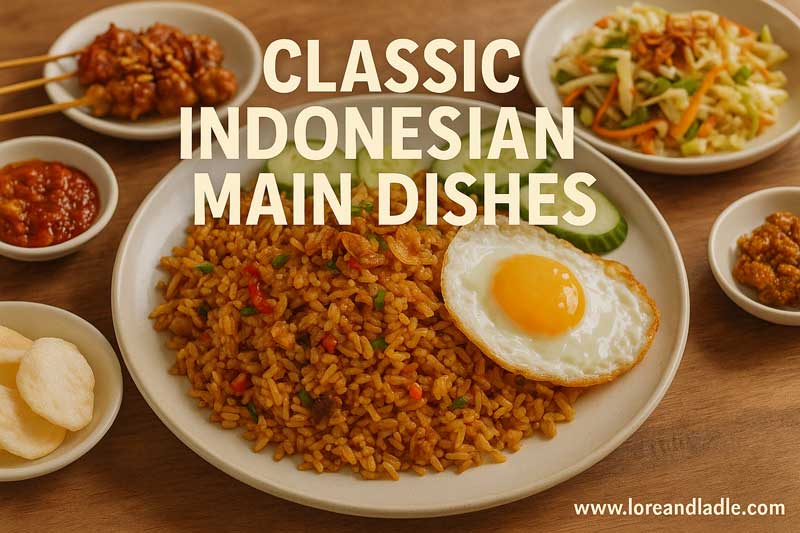
Nasi Goreng translates to “fried rice,” but the flavor profile goes far beyond simple leftovers. Garlic, shallot, and sweet soy sauce wake the rice, turning a humble staple into a vibrant main dish. A fried egg on top adds a bright, inviting finish. This dish is a staple in homes and street stalls across Indonesia. It reflects resourcefulness, where ingredients mingle to tell a story of everyday life. The method is practical, yet the outcome can feel festive when brought to a table with friends. Nasi Goreng also reveals regional character; some versions emphasize shrimp paste, others fresh herbs. Its versatility and comfort make it a bridge between Family Dinners and community meals, a unifier in Indonesian food culture.
Sate
Sate, or skewered meat, travels the archipelago in countless forms. Beef, chicken, lamb, or seafood all find a place on a wooden skewer. Grilling over charcoal creates a smoky depth that lingers in memory. Peanut sauce is a beloved companion, but regional sauces vary with sesame, tamarind, or chili blends. Sate is a social dish, often cooked in groups and shared in markets, homes, and gatherings. The act of skewering, grilling, and dipping becomes a shared ritual. In many communities, presenting a platter of sates signals generosity and celebration. The dish’s simple lines reveal a complex palate, making it a cornerstone of Indonesian flavor culture.
Mie Goreng
Mie Goreng is a classic fried noodle dish. It combines egg noodles, garlic, shallots, sweet soy, and a kiss of chili. Vegetables and sometimes shrimp or chicken join the wok to build color and texture. The result is a lively, comforting main course that can carry a meal with ease. This dish demonstrates how Indonesian cooks harmonize sweet, salty, and umami notes in a quick, satisfying format. Mie Goreng is found from street stalls to family kitchens, showing its adaptability and popularity. It also serves as a social cue for hospitality, inviting guests to Share a plate and conversation. The dish’s bright, approachable profile makes bold flavors feel accessible to all.
Soto Ayam
Soto Ayam is a fragrant chicken soup that sits at the heart of many Indonesian tables. A clear broth carries lemongrass, turmeric, garlic, and ginger, creating a soothing, aromatic base. Shredded chicken, rice or noodles, and a squeeze of lime build a comforting bowl with bright accents. Soto Ayam travels through regions with local twists, yet its essence remains the same: warmth, nourishment, and welcome. The dish plays a central role in daily life and special occasions alike. Its simple beauty lies in balance: clear soup, tender chicken, and lively aromatics. A bowl of Soto Ayam invites calm conversation and shared meals.
Gudeg
Gudeg is a slow-cooked young jackfruit dish from Yogyakarta and Central Java. The jackfruit simmers for hours with palm sugar, coconut milk, and a blend of spices until it becomes tender and deeply flavorful. It is typically served with rice, fried chicken, shrimps, and hard-boiled egg. Gudeg embodies patience and regional identity, reflecting the culinary artistry of Javanese kitchens. The dish is a symbol of celebration and home cooking alike, bringing a sense of place to the plate. Its sweet-savory profile and generous portion reflect the generosity and warmth of Javanese hospitality.
Rawon
Rawon is a distinctive beef soup with a dark broth. The color comes from keluak (a local nut), which also contributes an earthy, nutty depth. Garlic, shallots, coriander, and other spices brighten the soup, while tender beef anchors the flavor. Served with rice and often with emping crackers and greens, Rawon is a testament to Indonesian creativity with ingredients. The dish is rooted in East Java and enjoyed in homes and eateries alike. Its bold color and bold taste invite curiosity and admiration. Rawon showcases how Indonesian cooks transform simple components into a memorable main course.
Ikan Bakar
Ikan Bakar means “grilled fish” and highlights coastline flavors. Fresh fish is marinated with chili, lime, garlic, and herbs, then roasted over fire until the skin crisps and the meat stays juicy. The method honors freshness and balance. This dish travels well from markets to family meals and coastal celebrations. Ikan Bakar reflects regional pride in seafood and spice, with regional rubs and tangy sauces adding character. Grilled to perfection, it presents a clear, bright flavor that resonates with the sea and sun. It is a reminder of Indonesia’s connection to its waterways and its shared love of open-air cooking.
Pepes Ikan
Pepes Ikan is a fragrant fish dish steamed in banana leaves. The leaves trap aroma and steam, infusing the fish with herbs such as lemongrass, turmeric, and chilies. The result is a delicate, aromatic main course with layered flavors. Pepes showcases a traditional cooking technique that honors nature and simplicity. It is popular across Java and Bali, where markets and kitchens celebrate banana leaves as a natural wrapper. The dish embodies balance, restraint, and respect for ingredients. Pepes Ikan invites you to slow down, savor aroma, and appreciate how aroma and texture work together to tell a region’s culinary story.
Conclusion
The nine dishes above reveal a rich tapestry of Indonesian flavor. Each main dish carries cultural value, from regional identity to shared mealtime traditions. They demonstrate how Indonesian cooks honor ingredients, seasonality, and community. These dishes also reveal how bold spice can be harmonious, warm, and comforting. Whether at a family table or a festive gathering, these flavors invite conversation and connection. Exploring them offers not just taste, but a deeper appreciation for Indonesia’s culinary heritage. If you’re seeking bold Indonesian flavor, these dishes provide a respectful and delicious starting point for discovery.