
Introduction: A Table of Taiwan’s Warm Traditions
Taiwanese cuisine shines in weeknight kitchens with dishes that feel like a warm hug. This guide presents nine classic main dishes that brighten weeknights with color, aroma, and comforting texture. Each dish carries cultural value, because cooking is a way to share memory, seasonality, and regional pride. In Taiwan, rice and noodles unite meals, and braises, stews, and wok rituals reveal a balance of sweetness, salt, sour, and umami. These nine dishes reflect farmers’ harvests, vibrant markets, and home kitchen craft. They invite you to cook, savor, and celebrate the beauty of a well-made meal.
1. Lu Rou Fan (Braised Pork Rice)
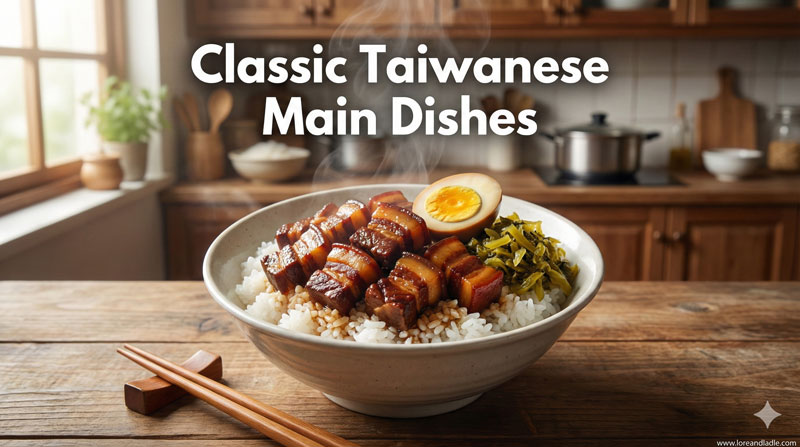
Lu Rou Fan is a humble bowl of braised pork over rice. In Taiwanese homes, it is comfort and everyday ritual. Pork belly braises slowly in soy sauce, sugar, garlic, star anise, and a splash of rice wine until tender and glossy. The result is a savory-sweet sauce that clings to fluffy, steaming rice. The dish centers on patient technique and pantry staples. Its warm amber color and inviting aroma signal a meal for family and friends. Culinary significance lies in its skillful braising, the harmony of flavors, and the central role of rice in daily meals. It is both a weeknight staple and a favorite for gatherings.
2. Beef Noodle Soup (Niu Rou Mian)
Beef Noodle Soup anchors many Taiwanese kitchens and eateries. A rich, aromatic broth carries tender beef, hearty noodles, and greens. The broth blends soy, spices, and sometimes a hint of star anise or fennel, simmered until the meat falls away from the bone. This dish tells a story of slow simmering and patience, values shared across families. The bowls are generous, inviting slow savoring and conversation. Culinary significance comes from balancing depth of meat with bright greens and noodles that glide through the broth. It embodies warmth, nourishment, and community around a shared pot.
3. Three-Cup Chicken (San Bei Ji)
Three-Cup Chicken captures a fragrant trio of flavors with three cups of sauce: sesame oil, soy sauce, and rice wine. Garlic and ginger wake the scent, while fresh basil offers a bright finish. The dish cooks quickly in a hot wok, creating a lacquered glaze on the chicken. Three-Cup Chicken showcases how simple ingredients can create depth through technique and timing. It represents everyday Chinese-Taiwanese cooking that respects both richness and balance. This dish is beloved for weeknight ease and for the way it fills a kitchen with inviting aroma.
4. Gua Bao (Taiwanese Pork Belly Buns)
Gua Bao is a soft steamed bun filled with braised pork belly, pickled mustard greens, crushed peanuts, and cilantro. Each bite blends tender pork, tangy greens, and a touch of crunch. In Taiwan, these buns are a favorite street-food sensation and a common home meal for sharing. The sandwich-like form invites social eating and playful assembly at the table. Culinary significance lies in texture contrasts—the pillowy bun, the meaty filling, the crunch of peanuts—and in honoring pork as a celebratory, everyday ingredient. Gua Bao shows how regional flavors meet joyful, hands-on eating.
5. Oyster Omelette (O-Ah Jian)
Oyster Omelette embodies the coastal flavors of Taiwan. Eggs and a starch slurry create a soft, custardy texture, enriched by plump oysters. A quick wok-fry seals in moisture, while a savory sauce adds brightness. This dish is a staple of night markets and family meals alike, offering a shared moment of tasting and storytelling. Its cultural value rests in celebrating sea harvests and a community-friendly cooking style. Culinary significance comes from its balance of creamy egg, crisp edges, and briny oysters. It is a testament to how street-inspired dishes can earn a place at the dinner table.
6. Oyster Mee Sua (Oyster Vermicelli)
Oyster Mee Sua pairs slender vermicelli with a savory oyster broth and fresh toppings. The noodles borrow lightness from their fine texture, while oysters deliver a mineral, oceanic richness. This dish often originates in coastal towns, where ingredients are plentiful and meals highlight the sea. Its comfort comes from a warm, silky broth and a gentle chew from the mee sua. Culinary value lies in honoring local seafood and crafting a clean, expressive broth that supports the delicate noodles. Oyster Mee Sua demonstrates how Taiwan’s coast meets Home Cooking in a single bowl.
7. Three-Cup Tofu (San Bei Doufu)
Three-Cup Tofu is a plant-forward favorite that uses the same three cups of sesame oil, soy sauce, and rice wine as the chicken version. Garlic, ginger, and a handful of basil finish the dish with fragrance and color. This dish shows that vegetarian meals can be deeply satisfying and deeply Taiwanese. It appears often in family dinners, student meals, and restaurant menus as a versatile main. Culinary significance centers on technique—how tofu soaks up flavor and how the wok delivers a glossy glaze. Three-Cup Tofu celebrates flexibility, balance, and the joy of starring humble ingredients.
8. Salt and Pepper Fried Chicken (Yangzhou-style Taiwanizes Chuan)
Salt and Pepper Fried Chicken is a beloved weeknight staple and a favorite in night markets. Bite-sized chicken pieces marinate briefly, then fry to a crisp, fragrant finish with a light dusting of salt, pepper, and sometimes chili. The result is crackly exteriors and juicy interiors. This dish reflects Taiwan’s love of bold textures and quick, satisfying cooking. It is often shared as a main or a crowd-pleasing plate during gatherings. Culinary significance lies in its balance of savory saltiness and a peppery snap, a hallmark of modern Taiwanese home cooking.
9. Shengjian Bao (Pan-Fried Pork Buns)
Shengjian Bao are small, pan-fried pork buns with a juicy filling and a crisp bottom. They are a favorite morning or late-night snack that also forms a comforting dinner option. The dough yields a soft interior with a pleasantly chewy bite, while the bottom crust adds contrast and depth. This dish highlights technique: sealing juicy filling inside a dough pocket and achieving the perfect golden crust. Shengjian Bao demonstrates Taiwan’s love for dough, pork, and careful pan work. It invites sharing and lively conversation, whether at a home table or a busy market.
A Final Note: Cooking as Cultural Celebration
These nine dishes reveal how Taiwan’s food culture blends homestyle technique with vibrant ingredients. Each dish honors common pantry items, seasonal produce, and the joy of cooking for others. They are more than recipes; they are signals of comfort, hospitality, and regional pride. By trying them, you invite a sense of place into your weeknights. Whether you cook one dish or all nine, you’ll discover how flavor, texture, and aroma can brighten ordinary evenings into something memorable.
If you’d like, I can share simple, step-by-step versions of any of these dishes to fit different skill levels or kitchen setups. in the meantime, choose a dish that calls to you, gather the essential ingredients, and let the kitchen become a space where tradition meets your own table.