
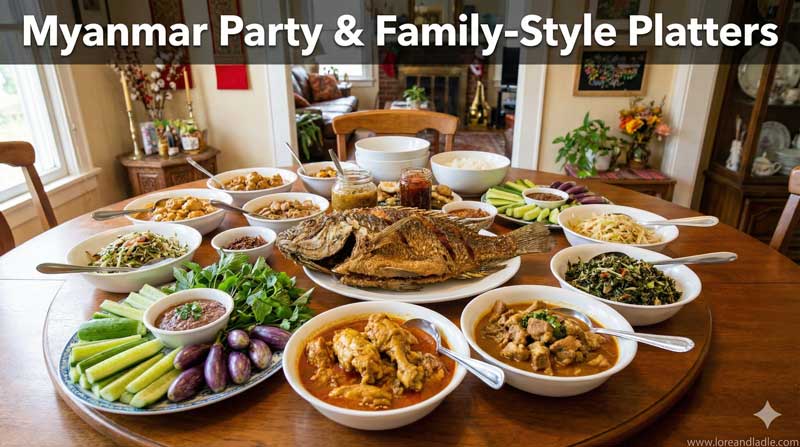
A Welcome Note to a Beloved Platter
The dish Best Myanmar Party & Family-Style Platters Loved in the U.S. Right Now invites you to explore a vibrant way of dining. At its heart is sharing. A table becomes a stage for color, aroma, and conversation. Burmese flavors meet American tables in gatherings that feel warm and inviting. This post highlights the cultural value and culinary significance of these platters, focusing on how they enrich meals with beauty, balance, and a sense of togetherness.
Cultural Value: The Joy of Sharing
Sharing meals sits at the core of Burmese hospitality. The platter format brings people close as everyone samples a little of each item. Plates are arranged to show abundance and care. The act of feeding and being fed is a simple, everyday ritual that builds connection. The platter becomes a canvas for conversation, memory, and momentary delight. In many homes and restaurants across the U.S., these platters turn ordinary dinners into small celebrations of belonging and generosity.
Culinary Significance: Harmony of Flavors and Techniques
Myanmar cuisine excels in balancing five flavors: salty, sour, spicy, sweet, and umami. The platter showcases this harmony in a single sit-down feast. Citric brightness from lime or tamarind mingles with the depth of fermented fish paste or fish sauce. Fresh herbs add cooling notes that lift richer curries. Textures range from crisp vegetables to velvety curries, from creamy sauces to crunchy toppings. The result is a mosaic of sensations that rewards careful tasting and thoughtful pairing. This approach highlights technique, from careful chopping and pounding to the artful layering of sauces and condiments.
Core Components on the Platter
- Lahpet thoke (tea leaf salad) with tomatoes, peanuts, and sesame for a tangy, nutty bite.
- A selection of Burmese curries and sesame-seasoned dishes, often finished with fresh herbs.
- Grilled or lightly fried fish and chicken, brushed with fragrant spice blends.
- Fresh vegetable salads, pickles, and crisp accompaniments to brighten the plate.
- Dips and sauces, including tangy lime, chili oil, and ngapi-based blends for umami depth.
- A bed of fragrant rice or warm flatbread that invites scooping and sharing.
These elements come together so guests can create personal mini-combinations, discovering new favorites with every pass.
Techniques and Ingredients: Freshness and Fermentation
The platter celebrates freshness. Lemongrass, garlic, shallots, turmeric, coriander, and mint appear in many components, lending brightness and warmth. Fermented ingredients, such as ngapi, provide a savory backbone that is characteristic of Burmese cooking. The use of coconut milk in some curries adds sweetness and silkiness. Cracking fresh peanuts or sesame seeds adds a toasty crunch. The result is a kitchen that respects time-honored methods while inviting modern interpretations.
Serving Style: Hospitality in Shared Space
A Myanmar party platter invites guests to participate in a personal tasting journey. Food is placed on a communal table, with each guest serving themselves. Community-style serving encourages eye contact and conversation. The host or chef guides the flow by balancing hot and cool items and offering a mix of spicy, sour, and mellow flavors. This approach highlights hospitality as an everyday practice, turning eating into a cooperative, joyous event.
Regional Inspirations Within Myanmar
Myanmar’s regions contribute subtle nuances to platter offerings. Coastal areas emphasize seafood and coconut notes, while inland regions showcase richer spice blends and earthier vegetables. In the platter, you may encounter a spectrum of flavors that hints at these regional voices. The result is a dynamic menu that feels both local and universally inviting, suitable for varied palates and occasions.
Pairings, Menu Customization, and Hosting Tips
- Build a balance of textures: crisp vegetables, tender curries, and creamy dips.
- Offer a bright citrus element to refresh the palate between bites.
- Include a non-spicy option and a mildly spicy option to welcome guests with different heat preferences.
- Use fresh herbs generously; they lift flavors and add color.
- Present sauces in small bowls with spoons to encourage mindful tasting.
- Arrange platters in a way that invites guests to interact with every dish, not just their favorites.
A Hosting Moment: Creating a Memorable Experience
When you prepare these platters, you craft more than a meal. You create a moment where friends and family gather, share stories, and savor a spectrum of flavors. The beauty of the platter lies in its generosity: many small tastes, many shared smiles. In the U.S. dining scene today, this style of presentation resonates with chefs and home cooks who value diversity, balance, and the joy of communal eating.
Closing: The Beauty of Burmese Platter Culture
The Best Myanmar Party & Family-Style Platters are more than a collection of foods. They are a celebration of balance, craft, and sociable dining. Their cultural value rests in how they invite us to taste widely, listen to each other, and participate in a shared feast. Through these platters, Burmese culinary ideas travel gracefully, enriching gatherings with warmth, color, and a lasting sense of welcome.