
Ultimate Guide to Myanmar Party & Family-Style Platters for U.S. Home Cooks
Welcome to a celebration of shared meals and vibrant flavors. This guide introduces the Myanmar tradition of party and family-style platters, adapted for home kitchens in the United States. The focus is on cultural value and culinary significance. In Myanmar, meals are more than sustenance; they are moments of connection, hospitality, and respect for ingredients. A well-arranged platter invites conversation, encourages tasting curiosity, and honors the care that goes into every dish.
The cultural heart of Burmese platter dining
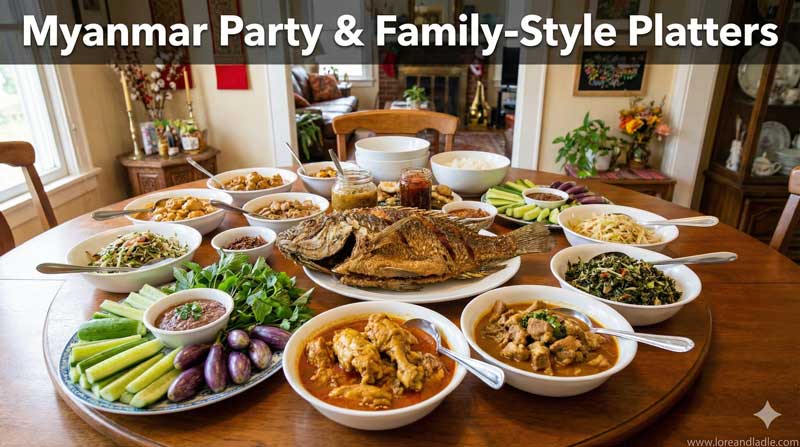
Myanmar’s platter-style meals center on generosity and inclusivity. A round, central spread signals that no single dish stands alone; each item complements the others. Colors—bright greens, deep browns, and sunlit oranges—mirror the country’s gardens, markets, and coastline. Fresh herbs, pickles, cooked curries, and tangy relishes coexist on a single surface, offering a full spectrum of tastes in one sitting. Sharing from a common tray becomes a small ceremony: guests help themselves, pass bowls along, and savor the balance between heat, sourness, and soothing coolness from herbs and yogurt-like accompaniments. This approach honors both tradition and the joy of communal eating.
Core components you’ll see on party and family-style platters
A Burmese platter blends textures and temperatures. Here are core components you’ll often encounter:
- Fresh vegetables and herbs: cucumber ribbons, tomato wedges, crushed peanuts for crunch, and generous sprigs of cilantro, dill, and mint.
- Leafy greens and salads: a bright, spicy tea leaf salad (laphet thoke) or other herb-forward salads that provide crunch and brightness.
- Pickles and relishes: tart and salty notes from pickled vegetables, along with small bowls of fermented fish paste condiments that lift the whole spread.
- Curries and braises: chicken or fish curry, a gently spiced pork or beef curry, and a velvety vegetable curry to balance richness.
- Fried and roasted bites: sesame cakes, lentil fritters, and crisp vegetables; these items add a satisfying contrast in texture.
- Staples and grains: steamed white rice or glutinous rice shaped into neat piles to anchor the platter and invite pairing with sauces.
- Condiments and dips: a trio of sauces—tangy tamarind, garlic-chili oil, and a savory ngapi-based relish—serve as flavor anchors.
- Fresh fruit or light desserts: citrus wedges or seasonal fruit provide a palate-cleansing finish that won’t overpower savory courses.
This combination invites guests to explore a spectrum of flavors in one sitting, from aromatic herbs to tangy pickles and warm curries.
How to assemble and present a Myanmar-style platter at home
A thoughtful assembly makes the experience easier and more inviting. Start with a clean, wide platter or two large platters for larger gatherings.
- Base layer: lay a bed of fresh greens or cucumber slices. This creates a refreshing foundation that helps balance spicier or richer items.
- Centerpieces: place three to five larger dishes in the center—one curry, one fish or protein dish, and a fragrant herb salad. Keep a little space between items to avoid mixing too soon.
- Sauces in labeled bowls: situate small bowls for ngapi relish, tamarind sauce, and chili oil near the edge for Easy dipping. Label or describe if you’re hosting guests unfamiliar with the ingredients.
- Side stacks: arrange rice and flatbread in neat stacks at one end, with smaller bowls of pickles and fresh herbs nearby.
- Textural contrast: include at least one crispy item and one soft item to keep the palate engaged.
- Accessibility: ensure serving utensils are clearly placed for each dish. If the platter is shared, keep napkins or washcloths nearby to encourage clean hands.
A well-arranged platter invites guests to move through the spread, tasting in sequence or dipping and pairing as they please. The key is balance, color, and legibility of each component.
Flavor profiles and balance that shine
Myanmar’s cuisine is a study in balance. The most memorable platters offer a harmony of:
- Heat and brightness: chilies or pepper with fresh lemon or lime to lift the flavor.
- Sweet and sour contrasts: a touch of palm sugar or jaggery paired with tangy tamarind or pickled ingredients.
- Savory depth: ngapi and fish pastes provide umami notes that soothe curry spices.
- Fresh herb lift: mint, cilantro, and green leaves cut through richness and refresh the palate.
- Texture variety: creamy curries sit beside crisp fritters and crisp vegetables, making every bite satisfying.
When building your platter, aim for at least three distinct flavor profiles in close proximity. This intentional variety is what makes the dining experience memorable and deeply satisfying.
Regional twists and seasonal ideas
Within Myanmar, regional cuisines bring subtle variations to the platter concept. Coastal regions emphasize fish curries and citrusy notes from lime and tamarind. Inland areas favor heartier curries with mustard greens and sesame. In season, you’ll find more fresh herbs, ripe fruits, and lighter preparations that highlight the moment. In a U.S. kitchen, you can honor these regional vibes by selecting items that reflect similar contrasts—seafood-forward components near a turmeric-golden curry, or a lime-bright salad alongside a sesame-laced fritter. This flexibility keeps the essence of the platter alive while making it accessible to Home Cooks.
Serving etiquette and table setup
Sharing on a single surface is a core part of the experience. Here are simple guidelines:
- Use clean serving spoons and tongs for each dish.
- Place napkins or a dedicated cloth for hands nearby, since many diners enjoy a touch of hands-on sharing.
- Encourage guests to sample a little of everything. A gentle rotation through the platter helps everyone experience the range of flavors.
- Keep hot dishes warm and cool items fresh. Small warming cups or chafing dishes can help maintain ideal temperatures.
The spirit is hospitable and inclusive. The goal is to create a warm, inviting space where guests feel welcome to explore and savor.
Beverage pairings and accompaniments
Burmese meals often pair with lightly brewed tea, fresh lime water, or neutral beverages that cleanse the palate between bites. For a festive party platter, consider:
- Burmese tea or green tea served with mint and a touch of sugar.
- Sparkling water with a slice of lime to amplify brightness.
- A light, citrusy juice that complements the herbal notes on the platter.
These beverages support the flavors without overpowering them, helping guests enjoy longer conversations around the table.
Practical tips for U.S. home cooks
- Shop with flexibility: visit an Asian market for authentic items like laphet (tea leaf salad ingredients), ngapi or its substitutes, fresh herbs, and curry pastes.
- Substitutions: if ngapi is hard to find, use a small amount of miso, fish sauce, or a vegetarian option to achieve umami. Adjust salt carefully.
- Make ahead: many components can be prepared a day in advance. Curries often deepen overnight, and herb salads stay bright when kept chilled.
- Plating seasonally: swap in seasonal fruits, cucumber varieties, and herbs to keep the platter fresh and inviting.
- Safety: carry a clean hand-washing station and separate utensils for raw and cooked items if you are including multiple meat or seafood dishes.
A tasting menu blueprint for U.S. home cooks
- Starter: fresh herb salad with lime and sesame; laphet thoke as a signature starter.
- Central: a mild chicken curry and a delicate fish curry.
- Textures: lentil fritters and crisp vegetables for crunch.
- Accents: ngapi-based relish, tamarind sauce, and chili oil in small bowls.
- Finish: seasonal fruit and a small, fragrant dessert option or fruit-based sweet.
This blueprint captures the spirit of Myanmar party platters while giving you flexible choices to suit your kitchen and guests.
Conclusion: celebrating food, culture, and community
The Myanmar party and family-style platter is a beautiful expression of hospitality, balance, and shared delight. It invites cooks to honor ingredients, to weave textures and flavors into a single table, and to welcome others with generosity. In U.S. homes, these platters become bridges between culinary worlds—an invitation to taste, discuss, and celebrate the artistry of Burmese cooking. By focusing on culture and culinary significance, you can create a memorable dining experience that honors the beauty and communal spirit at the heart of Myanmar’s food traditions.