
Embracing Shared Dining: The Core Idea
Budget-Friendly Myanmar Party & Family-Style Platters for Families in the U.S. center on warmth, exchange, and togetherness. This concept invites families to gather around a single, colorful spread. First, the goal is clear: enjoy a variety of Burmese flavors without complexity. Next, the platters encourage everyone to sample different dishes and to connect through eating. Finally, the focus remains on hospitality—an open table where everyone contributes and everyone savors.
Flavor Foundations: What Makes Burmese Cuisine Unique
Burmese cooking blends fresh herbs, bright citrus, and gentle spice. The aroma of garlic, shallots, and ginger often leads into savory curries and vibrant salads. Lemongrass, turmeric, and coriander seeds add warmth and depth. Lime or tamarind brings a tangy lift, while fish sauce or fermented seasonings deepen the savory notes. The result is a balance of salty, sour, spicy, and savory flavors. The plate often echoes a harmony of textures: soft curries, crisp fritters, and crunchy, refreshing salads. In this repertoire, rice serves as a reliable stage for sauces and curries to shine. These elements combine to create a cuisine that is comforting, bright, and inviting to the palate.
The Platter Experience: Colors, Textures, and Sharing
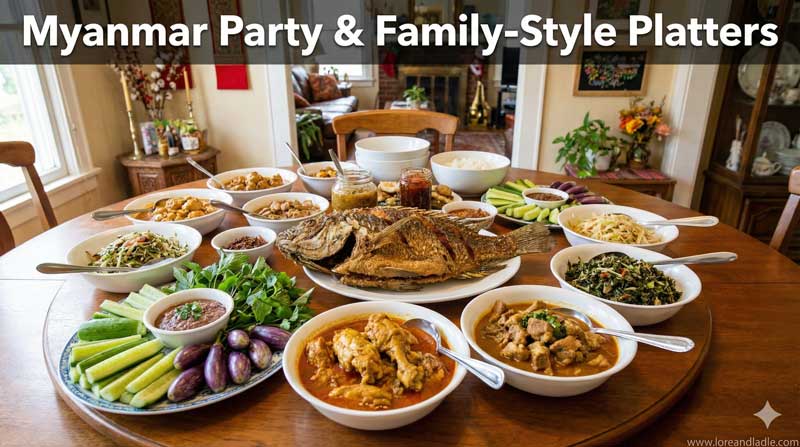
A Burmese party platter is a celebration of variety. Imagine a centerpiece bowl of steaming rice surrounded by several smaller dishes. Each dish offers a distinct rhythm: a silky curry, a bright leaf-vegetable stir-fry, a tangy salad, and a crisp fritter. The tea leaf salad, if included, provides a playful tofu-tender bite with nutty and sour notes. Crisp vegetables, marinated pickles, and a touch of sweetness from palm sugar or coconut balance the table. The beauty lies in contrast: smooth curries beside tangy pickles, soft cubes next to crunchy bites. Guests mingle with forks and spoons as they create their own combinations. In this setting, sharing feels natural and joyful, turning dinner into a lively, familial ritual.
Budget-Friendly Design: How to Build the Platters
This approach keeps quality high while keeping costs sensible. Start with a few reliable staples: steamed rice, a couple of main curries (such as a chicken or fish curry) and a vegetable dish. Add a tangy salad and a crisp fritter for texture. Choose produce that is in season and affordable, then use them across several dishes to reduce waste. For presentation, pick a few versatile platters and bowls that can be reused. Label dishes simply with small cards or a chalkboard to help guests navigate tastes. Finally, plan for portion sizes that allow all guests to sample a little of everything, no one feels left out, and leftovers feel welcome for tomorrow’s meals.
Cultural Significance: Hospitality and Food as Social Glue
Food in Burmese culture often centers on hospitality and sharing. A well-arranged platter says, “You are welcome here.” It invites conversation as people pass bowls and compare flavors. The act of gathering around a shared spread reinforces bonds, from parents to children and from neighbors to friends who visit for family meals. The beauty of the platter lies not only in color and aroma but in the sense of inclusion it creates. Each dish invites small stories of family favorites, spice preferences, and memories of home kitchens. In this way, the platter becomes more than food; it becomes a gentle conduit for connection and warmth.
Practical Tips for Hosting
- Plan to offer 4 to 6 dishes in a single spread for balance and variety.
- Prepare sauces and base components ahead of time to keep cooking calm on party day.
- Use vibrant herbs, lime wedges, and sesame seeds to add brightness without high cost.
- Label each dish with a short, friendly description so guests can explore new flavors confidently.
- Keep a simple flow for guests to serve themselves, then return to the table to share.
- Store and reheat carefully to preserve texture and taste during service.
Pairings and Fresh Ideas for the Table
Enhance the Burmese flavors with light accompaniments. Iced jasmine tea or plain lime water refreshes the palate between bites. Fresh cucumber rounds add cool contrast to spiced curries. A small bowl of bean sprout garnish can provide a crisp lift. If you wish, offer a mild yogurt-based dip as a gentle companion to balance heat. For dessert, simple fruit slices or a coconut-milk–based sweet can close the meal with a soft, comforting finish. The goal is harmony: each addition should complement rather than overwhelm the main flavors.
A Closing Note: Welcoming Burmese Flavors to American Tables
The Budget-Friendly Myanmar Party & Family-Style Platters for Families in the U.S. celebrate a tradition of sharing and warmth. They invite families to explore Burmese flavors through a practical, inviting format. With thoughtful planning, a few well-chosen dishes, and attention to presentation, any home can host a memorable spread. In the end, the beauty of this approach lies in its accessibility and its ability to bring people together. It is a doorway to new tastes, a bridge of shared meals, and a joyful reminder that great food belongs to everyone at the table.