
Introduction
Slow-Cooked Myanmar Party & Family-Style Platters for Deep, Rich Flavor invites readers into a kitchen where time, care, and generosity shape every bite. This dish stands as a tribute to gatherings that bring people together around one big, fragrant table. The beauty lies in how gentle heat, layered spices, and bright, fresh ingredients mingle to create depth and warmth. By design, it rewards sharing, conversation, and a slow, attentive approach to cooking. The result is a dish that feels like a festival of Home Cooking, yet remains approachable for everyday meals with loved ones.
The Dish at a Glance
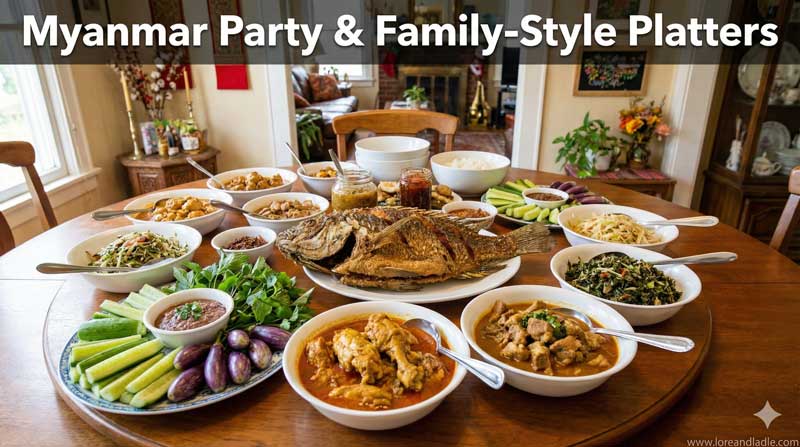
This platter-oriented dish centers on a generous braise that serves many. Meats or sturdy vegetables are gently simmered in a sauce that blends aromatic elements such as garlic, shallots, ginger, lemongrass, turmeric, and chili. A soft kiss of coconut milk or a similar creamy note adds depth and balance. The sauce coats each piece with a velvet finish, inviting guests to scoop, dip, and pass plates around. Served on a wide platter, the dish showcases color, texture, and steam, encouraging a feast where everyone can partake together. The presentation itself echoes the spirit of togetherness that defines Myanmar-style celebrations.
A Cultural Mirror: Shared Tables and Community
At its heart, this dish celebrates shared tables. In Myanmar cooking, meals often center on large platters that invite multiple generations and friends to eat side by side. The act of gathering around one surface fosters conversation, storytelling, and mutual care. Serving from a single platter signals hospitality and respect for guests. The visual rhythm—golden sauce, emerald herbs, and red chilies—mirrors a social rhythm: work and kitchen time lead to communal pleasure, while slow cooking creates anticipation that heightens the moment of tasting. In this way, the dish becomes a cultural emblem of generosity and connection.
Slow Cooking as a Cultural Practice
Patience is a virtue in the kitchen that this dish embraces wholeheartedly. Slow braising allows flavors to unfold gradually, building depth and roundness. The technique rewards restraint: heat is kept gentle, liquids simmer slowly, and aromatics release their character over time. The result is a robust, layered sauce that speaks of time spent cooking for friends and family. This method also celebrates resourcefulness—turning humble ingredients into a memorable centerpiece. In practice, the dish becomes a ritual of care, turning cooking into an expression of welcome and calm hospitality.
Aromatics, Techniques, and Depth
The flavor foundation comes from a well-crafted spice and aromatics blend. A fragrant paste or spice bouquet may include garlic, shallots, turmeric, coriander seeds, and pepper, often toasted to heighten their notes. Fresh elements such as lemongrass and ginger brighten the profile, while chilies add gentle heat. To deepen richness, a touch of fish sauce or a fermented element can balance sweetness with savoriness. The final braise thickens into a glossy sauce that clings to meat or vegetables, coating each bite with warmth. The layering of textures—from tender chunks to silky sauce—creates a sensory experience that lingers in memory.
Platter as Plate: Food, Color, Table
Presentation matters in this dish. The spacious platter showcases a mosaic of colors: the deep amber of the sauce, the pale glow of braised meat, and pops of green from herbs and vegetables. The textures invite variety: melt-in-your-mouth tenderness, a velvety sauce, and crisp-edged morsels from the edges of the braise. The platter’s size signals abundance and welcome, inviting guests to calibrate portions themselves. When guests gather to Share, the sight and scent become part of the experience, elevating ordinary meals into festive, heartwarming moments.
Pairings and Regional Flair
This dish pairs beautifully with simple staples and bright accompaniments. Steamed rice provides a clean base that soaks up the sauce. Fresh herbs add brightness, while pickles contribute sharp contrast and crunch. Light salads or slaws with citrus notes offer balance without overpowering the main flavors. Small bowls of fresh chilies, lime wedges, or a mild dipping sauce can encourage customization, letting each person shape the heat and tang to their liking. The regional flair comes through in the choice of aromatics and the balance between creamy sauce and crisp textures, making each serving feel both familiar and distinct.
Crafting the Experience: Hospitality and Atmosphere
Beyond the recipe, the dish creates an atmosphere of welcome. The aroma invites all to gather, while the act of passing bowls and sharing from one surface reinforces bonds. A simple ritual—tea poured for guests, a moment of quiet appreciation before tasting, a toast to togetherness—enhances the sense of belonging. The kitchen becomes a stage for conversation, gratitude, and joyful movement as people reach for seconds and share stories. In this way, the Slow-Cooked Myanmar Party & Family-Style Platters for Deep, Rich Flavor becomes more than nourishment; it is a cultural practice that honors hospitality and community.
A Celebration of Craft and Craftsmanship
Culinary craft shines in this dish. The slow braise demands attention to timing, balance, and temperature. Careful preparation of the aromatics, proper toasting of spices, and thoughtful layering of flavors yield a sauce with depth and resonance. The method honors traditional know-how while inviting modern kitchens to explore. The result is a dish that respects its roots yet remains accessible to cooks who enjoy the joys of simmering, tasting, and refining. The craftsmanship is evident in every delectable mouthful and in the shared smile of those gathered around the platter.
Closing Thoughts
Slow-Cooked Myanmar Party & Family-Style Platters for Deep, Rich Flavor offers more than a meal. It is a celebration of togetherness, a demonstration of how time and care translate into depth of flavor, and a reminder of the beauty found in sharing. By embracing slow cooking, vibrant aromatics, and generous presentation, this dish honors a rich culinary heritage and the people who keep it alive at every gathering. If you seek a dish that warms the heart and invites connection, this platter-style feast is a compelling, delicious place to start.