
Celebrating Shared Meals in Myanmar
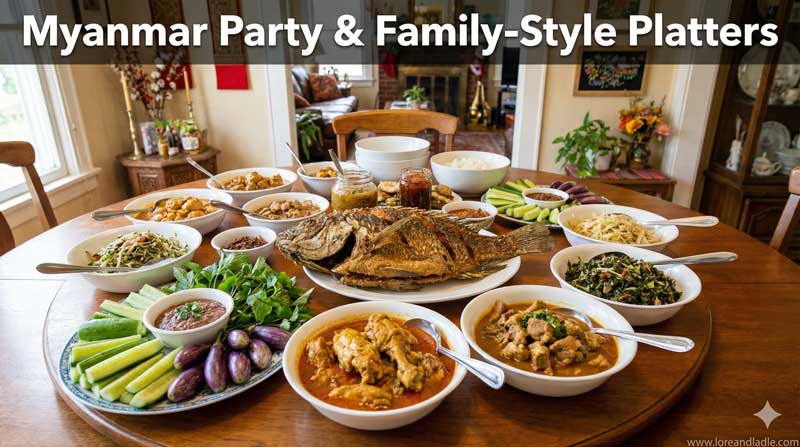
Entertaining Guests with Myanmar Party & Family-Style Platters Made Simple invites readers into a warm tradition. Myanmar cuisine shines when food travels from kitchen to table on large, inviting platters. The idea is simple: a circle of dishes that guests gather around, choosing what they like. This approach honors guests with abundance and care. The style feels effortless, yet it carries a deep sense of hospitality and pride in craft.
What the Platter Reveals About Hospitality
A party platter is more than food; it is a gesture of welcome. Cooks balance many flavors in one setting. Bright herbs, tender curries, crisp vegetables, and tangy pickles sit side by side. The host often guides the rhythm of the meal, signaling when to taste a new dish or pass a platter to the next person. This choreography makes eating a shared experience, strengthening bonds and offering a moment of calm delight amid daily life.
The Flavor Palette on a Party Platter
A Myanmar-style platter blends colors, textures, and aromas. Think silky fish or chicken curry, fragrant with turmeric and garlic. Pair it with vegetable curries and simmered greens for color and contrast. Add pickled vegetables, Burmese salads, and a spoon of ngapi or a lime wedge for brightness. A tea-leaf salad, known as laphet thoke, brings a tangy bite that awakens the senses. Fresh herbs, roasted chilies, and sesame seeds complete the spectrum. Each component respects the others, so the platter feels cohesive rather than crowded.
Techniques that Unite Dishes on One Table
Technique matters as much as taste. Simmered curries release depth without heaviness, while crisp vegetables add lift. The balance of salty, sour, and slightly sweet creates harmony across dishes. Plating emphasizes accessibility: small portions, easy spoons, and plenty of fresh condiments on the side. The result is a table that invites guests to explore, share, and discover new favorites without ceremony.
The Social Dance of Serving and Eating
Sharing on a single set of platters turns eating into a social ritual. Guests move naturally from dish to dish, using clean utensils or tingers to sample a little of each option. Passing dishes clockwise becomes a gentle rhythm in the room. Conversation blooms as flavors unfold, and everyone savors the moment of togetherness. This approach to dining values presence, generosity, and the joy of discovery.
Hosting Made Simple: A Practical Guide
- Plan a core trio of proteins, a couple of vegetables, and one bright salad or pickle.
- Include a staple like rice and a few fragrant sauces to tie the spread together.
- Use large platters or wooden boards to create a warm, communal feel.
- Label dishes with simple notes for guests who may be trying new flavors.
- Keep serving tools handy and encourage guests to dip and share.
These practical touches help any home cook present Myanmar-style platters with ease and grace.
A Window into Cultural Significance
The Myanmar party platter celebrates community and nourishment. It honors farmers and makers who contribute each ingredient. It respects seasonality, as fresh herbs, greens, and daily specialties appear at their best. The sharing format fosters inclusion, where no single dish dominates and every guest has a voice in the meal. In this light, the platter becomes a living picture of everyday culture: welcoming, mindful, and crafted with care.
A Final Note on Beauty and Craft
Entertaining guests with Myanmar party and family-style platters made simple is a celebration of culinary artistry and social warmth. The beauty lies in balance—between spiced depth and bright brightness, between quiet simmer and lively crunch, between individual tastes and shared joy. This approach to dining invites everyone to slow down, taste thoughtfully, and savor the beauty of food that brings people together.