
How to Build a Full Menu Around Myanmar Rice & Noodle Bowls in the U.S.
Myanmar rice and noodle bowls offer a warm invitation to savor bright aromatics, comforting textures, and balanced flavors. in the United States, a well-curated menu built around these bowls can become a celebration of everyday eating. The goal is to highlight cultural richness through ingredients, technique, and thoughtful plating. This approach invites both new tasters and seasoned enthusiasts to explore a cuisine that favors harmony and hospitality.
Core Flavors and Textures of Myanmar Bowls
Myanmar bowls blend fresh herbs, tangy pickles, and savory broths or curries. The base often features jasmine or steamed rice or rice noodles, providing a delicate canvas for toppings. Proteins range from tender chicken and beef to fish, shrimp, or plant-based options like tofu. Stocks and curries carry warm spices such as turmeric, lemongrass, garlic, and shallots, brightened by lime or tamarind. Crisp fried onions add aroma and crunch, while fresh herbs like cilantro or mint finish the dish with a lift of freshness. Pickled vegetables or mustard greens contribute a welcome tang that balances richness. The result is a bowl that feels inviting and complete, with each bite presenting a new layer of flavor.
Techniques that Elevate the Experience
In Myanmar-inspired bowls, technique supports the flavor story. A light, fragrant broth or curry provides a gentle backbone, never overpowering the ingredients. Noodles are quickly tossed or briefly warmed to keep their texture lively. Fresh herbs are added just before serving to preserve their aroma. A touch of fish sauce or ngapi paste can deepen the savory note, used sparingly so it remains a subtle, savory whisper rather than a dominant taste. Layering textures—soft rice, silky broth, crisp toppings—creates a dynamic eating experience that feels crafted and respectful of tradition.
Building the Menu: A Balanced Lineup
To create a full menu, aim for variety within a cohesive theme. Consider these core components:
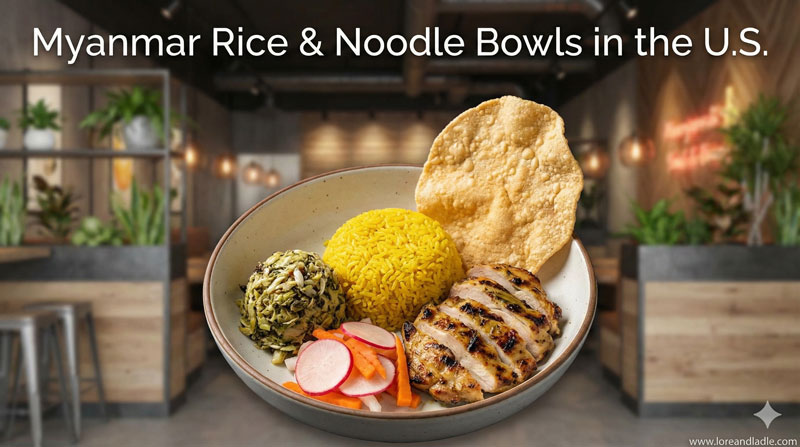
- A hearty rice bowl with turmeric rice, coconut curry chicken, cucumber-basil relish, and pickled greens.
- A noodle bowl featuring thin rice noodles in a light fish-broth base, topped with scallions, fried shallots, and a squeeze of lime.
- A vegetarian option with mushroom or tofu, ginger-garlic aromatics, and a tangy tamarind glaze.
- A Shan-inspired rice bowl using aromatic turmeric rice, tomato-onion relish, and a gentle curry with ground spices.
- A lightly spiced bowl that emphasizes herbal brightness—mint, cilantro, lime, and crisp vegetables.
Pair these with small sides that echo the same philosophy: pickled vegetables, a small salad with herbs, and crispy fried onions. Offer a tea or a light citrus drink to complement the bowls without overpowering the flavors. This structure gives guests a clear arc from starter to main, with multiple textures and flavors to explore.
Sourcing and Seasonality for Fresh, Honest Dishes
Local markets offer a wealth of herbs, greens, and peppers that brighten Myanmar-inspired bowls. Fresh cilantro, mint, Thai basil, and scallions should feature prominently. For proteins, choose options that best fit your kitchen’s rhythm and your guests’ preferences. If ngapi is used, present it as an optional accent rather than A Must-have, so diners can tailor their experience. Stock up on lime, garlic, shallots, lemongrass, and turmeric; these staples define the aroma and color of many bowls. When possible, source sustainable fish and poultry, and select vegetables that are in peak season. Seasonal produce keeps the bowls vibrant and affordable.
The Cultural Value of Myanmar Bowls in Everyday Dining
These bowls bring a sense of craft and care to the table. They honor a tradition of layering flavors with intention, where warmth, brightness, and balance meet in each serving. Sharing bowls invites conversation and exploration, turning a meal into a small celebration of taste. The approach respects skill and patience, from simmering a fragrant curry to finishing with fresh herbs. In this way, the bowls become more than food; they become a bridge for diners to experience a cuisine known for its thoughtful flavor composition and hospitable spirit.
Plating, Hospitality, and the Joy of Eating
Presentation matters because it signals care. Use simple, sturdy bowls that showcase the colors of turmeric rice, pale noodles, green herbs, and bright lime wedges. A modest drizzle of a flavorful sauce can unify the dish without overwhelming the core ingredients. Encourage guests to customize their bowls with the toppings they love—crisp onions, herbs, or a squeeze of lime—creating a personalized moment of delight. A warm, welcoming atmosphere enhances the dining experience, inviting guests to linger a little longer and enjoy the journey through Myanmar-inspired flavors.
Closing Thoughts
A full menu built around Myanmar rice and noodle bowls in the U.S. offers a thoughtful, flavorful path for exploring a regional cuisine. It celebrates aroma, texture, and balance while inviting guests to engage with a diverse set of dishes in a friendly, accessible way. With careful ingredient choices, mindful technique, and a focus on hospitality, these bowls become a memorable part of daily dining and a vivid reflection of culinary craftsmanship.