
A Glimpse Into the Best Classic Taiwanese Main Dishes Recipes Loved Across the U.S.
This post introduces the Best Classic Taiwanese Main Dishes Recipes Loved Across the U.S. as a curated collection of comforting, crowd-pleasing mains. The dishes showcase Taiwan’s love of balanced flavors, careful technique, and thoughtful presentation. Each recipe invites Home Cooks to explore glossy braises, silky noodles, and hearty portions that feel both familiar and exciting. The collection travels through kitchens big and small, celebrating how a single dish can become a welcome centerpiece at family meals, gatherings, and everyday dinners.
Cultural Value: Food as a Shared Experience
Food acts as a universal language. In these Taiwanese mains, the aroma, texture, and color tell a story of seasons, local markets, and time-honored methods. First, flavor bridges generations. Second, preparation builds patience and precision. Third, serving these dishes creates moments of connection around the table. The recipes emphasize harmony: a tender protein, a fragrant sauce, and a nourishing base like steaming rice or noodles. As you cook, you honor a tradition that thrives on generosity, skill, and the simple joy of a well-made meal shared with others.
Classic Dishes in Focus
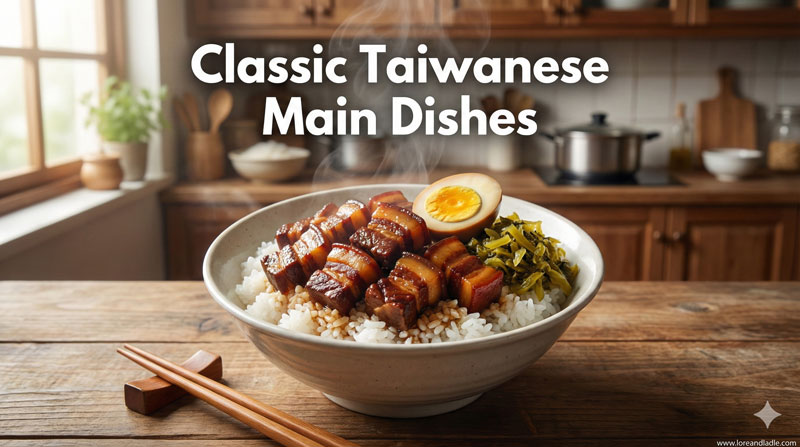
Lu Rou Fan (braised pork over rice) anchors the collection with its deep, caramelized glaze and tender meat. The pork melts into a glossy sauce that clings to every grain of rice, inviting you to slow down and savor. Next, San Bei Ji (Three-Cup Chicken) showcases a fragrant balance of sesame oil, soy, and rice wine. The chicken remains juicy and glossy, its coating of aromatics creating a comforting aroma that fills the kitchen. Finally, Beef Noodle Soup stands out with a rich, slowly simmered broth and al dente noodles. Each dish is easy to love and easy to prepare at home.
Flavor, Technique, and Texture
These dishes share a common culinary language. The technique of braising and simmering builds depth without heaviness. A quick sear locks in color and flavor, while a gentle simmer draws out sweetness from soy and a hint of spice. Texture matters: tender meat, silky sauce, and a satisfying bite from rice or noodles. The flavor palette leans on salty-sweet harmony, toasted sesame, ginger, garlic, and sometimes a touch of chili. This combination creates a recognizable, comforting profile that many home cooks learn to recreate with confidence.
Ingredient Notes and Accessibility
The beauty of these classics lies in their approachable ingredients. Common pantry staples—soy sauce, sugar, rice wine or cooking wine, garlic, and ginger—anchor each dish. Fresh pork, chicken, or beef becomes the star with careful timing. Vegetables such as mushrooms, leafy greens, or scallions add color and texture. In the United States, these ingredients are widely available, and fresher options can elevate the flavors even more. This accessibility helps home cooks bring authentic Taiwanese character to their kitchens without needing hard-to-find items.
Techniques that Elevate the Dishes
Key techniques include precise searing, steady braising, and careful reduction of sauces. Begin with a hot pan to develop color and aroma. Then, simmer slowly to let ingredients mingle and the sauce thicken. Resting the meat after braising helps retain moisture and deepen flavor. Finally, balance your plate with a clean, simple starch like steamed rice or fresh noodles, so the main flavors stay vivid. By mastering these steps, you unlock the full potential of each recipe in the collection.
Serving Moments and Menu Context
These mains shine in a variety of settings. A cozy weeknight dinner becomes a small festival when paired with a crisp cucumber pickle and a side of lightly dressed greens. For weekend gatherings, offer a trio of dishes—Lu Rou Fan, San Bei Ji, and Beef Noodle Soup—so guests can compare textures and savor different sauces. Tea, light soups, or a bright citrus finish can cleanse the palate between bites. In every setting, the aim is to celebrate flavor, warmth, and togetherness around the table.
A Path for Home Cooks: Making the Best Classic Taiwanese Mains Your Own
Start with the dish that appeals to you most, then adjust sweetness or salt to your taste. Use fresh aromatics, taste as you go, and note how each ingredient changes the sauce’s character. As you gain confidence, experiment with toppings like scallions, chili oil, or pickled vegetables. The heart of these recipes is their adaptability and warmth. With patience and practice, the Best Classic Taiwanese Main Dishes Recipes Loved Across the U.S. become a reliable, joyful cornerstone of your culinary routine.