
Introduction
Best Classic Taiwanese Main Dishes Recipes to Brighten Up Your Weeknights invites you into a warm, flavorful world. These dishes are crafted to be reliable, comforting, and full of character. The collection highlights how simple, well-balanced meals can brighten busy evenings and celebrate the everyday table in Taiwan. Each recipe blends heritage, technique, and fresh ingredients to create something both familiar and exciting. As you read, you’ll feel the rhythm of a kitchen that welcomes everyone to share in the aroma of garlic, soy, and citrusy notes. This post focuses on the cultural value and culinary significance of these beloved weeknight staples.
The Heart of Taiwanese Home Cooking
In Taiwan, main dishes do more than fill a plate. They anchor the rituals of family meals and careful use of ingredients. Markets offer bright greens, mushrooms, pork, and seafood, ready to become bright centerpieces at Home. Cooking at night often relies on a few dependable methods: a quick stir-fry with a bold sauce, a fragrant braise that thickens with time, or a soothing soup that warms the day’s end. The Best Classic Taiwanese Main Dishes Recipes to Brighten Up Your Weeknights reflect this rhythm—efficient, flavorful, and deeply connected to daily life. You’ll notice how a single pot or a wok can host a shared moment around the table.
Signature Flavors and Techniques
Taiwanese flavors harmonize sweet, salty, sour, and umami. Soy sauce and rice wine provide a savory backbone, while sugar adds warmth. Ginger and garlic bring brightness, and sesame oil provides a toasty finish. Techniques such as lu (braising) yield tender meat in glossy sauces. Wok hei—the breath of the wok—adds a subtle smoky depth to stir-fries. A well-made beef noodle broth carries depth and balance; a pork braise melts the palate with comfort. This collection emphasizes these elements, guiding home cooks to transform a few ingredients into memorable dishes with everyday tools.
A Look at Classic Dishes Included
- Three-Cup Chicken (Sanbeiji): Chicken simmers in equal parts soy sauce, sesame oil, and rice wine, with garlic and basil. The result is glossy meat and a soothing aroma that lingers.
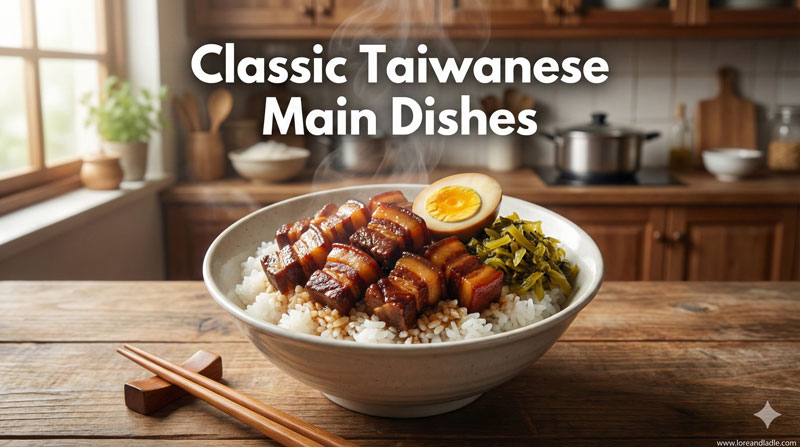
- Braised Pork Rice (Lu Rou Fan): A slow, patient braise creates tender pork and a savory-sweet glaze, served over steaming rice for a comforting bowl.
- Beef Noodle Soup (Niurou Mian): A rich broth, flexible noodles, and tender beef combine for a satisfying, nourishing bowl.
- Oyster Omelette (Oyster Omelette): Oysters mingle with eggs and a light starch batter, turning into a soft, savory pancake topped with a glossy sauce. These dishes illustrate how texture and balance play across weeknight menus.
Practical Tips for Weeknights
To fit these dishes into busy evenings, plan ahead and keep a few essentials ready. Do mise en place: chop aromatics, measure sauces, and trim proteins before you start cooking. A sturdy pot or wok handles braises well, and a pressure cooker can shorten time for braises like Lu Rou Fan. Use braising liquid wisely: stir in greens for a quick one-pot meal, or drizzle it over rice to deepen flavor. These recipes are designed to be friendly for weeknights while still inviting you to savor the process and finish with a bright, well-balanced plate.
Cultural Value and Culinary Significance in Everyday Life
These dishes embody a spirit of sharing and care. They honor seasonal ingredients and regional flavors found in markets and home kitchens alike. The act of preparing and eating these meals reinforces family bonds, supports mindful cooking, and invites cooks of all levels to learn and adapt. The recipes celebrate texture, aroma, and color, turning a weekday meal into a small celebration of place and craft. By presenting classic techniques alongside everyday ingredients, the collection helps you see how tradition stays lively, relevant, and deeply rewarding in modern weeknights.
Conclusion
Best Classic Taiwanese Main Dishes Recipes to Brighten Up Your Weeknights offers more than guidance for cooking. It shares a gentle philosophy of nourishment, community, and careful flavor-building. Each dish speaks to the heart of Taiwanese cooking: simple ingredients, thoughtful timing, and a joyful shared table. If you seek meals that feel both dependable and inspiring, this collection stands ready to brighten your evenings and enrich your appreciation for Taiwan’s culinary artistry.