
Introduction: A Toast to Classic Taiwanese Main Dishes
Best Classic Taiwanese Main Dishes Dishes Loved Across the U.S. invites readers to savor more than taste. It celebrates the cultural value and culinary significance of dishes that quietly shape everyday life, family meals, and neighborhood restaurants. These main dishes blend patience, skill, and bright flavors to create meals that feel like home. They invite cooks to honor tradition while inviting new cooks to join the kitchen story. In American tables and kitchens, these dishes appear as welcome guests, ready to share authenticity, warmth, and a smile.
Core Qualities: Flavor, Technique, and Balance
Taiwanese main dishes emphasize balance. Sweet, salty, sour, and savory notes mingle with aroma and texture. The cooking techniques—braising, slow simmering, quick stir-frying, and careful braising with aromatics—turn simple ingredients into memorable meals. Freshness matters, as herbs, garlic, ginger, and scallions lift dishes with bright notes. Across the country, these main dishes connect cooks to a shared sense of craft, whether a family weekday dinner or a weekend gathering with friends.
Signature Dishes: Classics Loved Across the U.S.
-
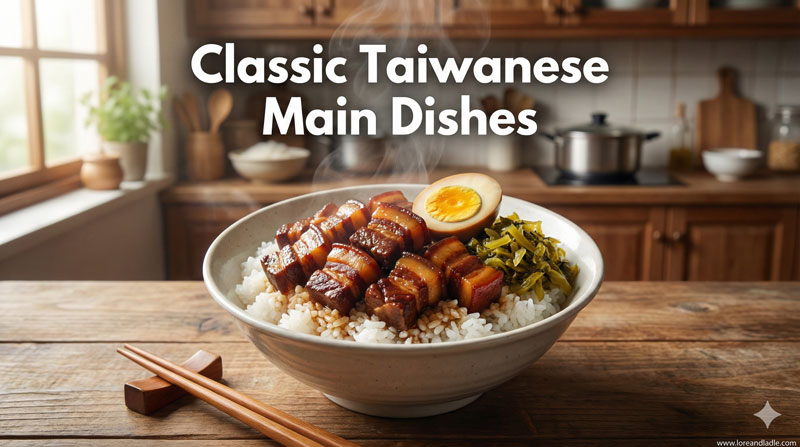
Lu Rou Fan (Braised Pork Over Rice): A humble dish with deep, caramelized pork and savory sauce. It teaches slow braising, the art of reducing flavors, and serving over fragrant rice. Its comfort is in the harmony between meat, fat, and soy glaze.
-
Beef Noodle Soup: This dish builds warmth and comfort in a bowl. Tender beef, a rich-but-light broth, and springy noodles create a timeless appeal. It highlights patience in broth-making and the joy of shared bowls with family or friends.
-
Three-Cup Chicken (San Bei Ji): Aromatic sesame oil, soy sauce, and rice wine mingle with garlic and basil. The technique is simple yet expressive, showing how a few ingredients can create a fragrant, soulful main dish.
-
Oyster Omelette (O-A-Jian): A textural treasure with crisp edges, soft interior, and briny sweetness. It celebrates seafood and vegetables in a single, satisfying plate, a favorite at many Taiwanese tables.
-
Gua Bao (Taiwanese-Style Pork Bun): A soft steamed bun filled with braised pork, pickled vegetables, and herbs. This dish illustrates the elegance of assembly and the joy of taking the bite through layers of flavor.
-
Mei Cai Kou Rou (Braised Pork with Preserved Vegetables): The salty-sweet glaze meets preserved greens for depth. It honors home cooking and the skill of layering flavors with modest ingredients.
Techniques and Ingredients: The Threads That Bind Them
-
Braising and simmering: These methods render meat tender while developing depth in sauce. They show how time and patience transform everyday ingredients.
-
Soy, rice wine, and sesame oil: The trio provides base, aroma, and a gentle sweetness. They anchor dishes with familiar, comforting notes.
-
Aromatics and greens: Garlic, ginger, scallions, and herbs brighten dishes and invite fresh textures.
-
Preserved vegetables and seafood: A touch of saltiness or ocean flavor adds complexity without overwhelming the dish.
-
Rice and buns as canvases: Steamed rice and soft buns offer perfect stages for saucy pork or braised fillings, highlighting the central role of starch in Taiwanese meals.
Cultural Value: Food as Memory and Craft
These dishes carry memory and technique across families and kitchens. They teach respect for time, balance, and seasonality. They welcome cooks of all levels to contribute their own warmth, from slow-simmered sauces to the final plate that invites conversation. In restaurants and homes, these dishes become signature experiences that visitors remember and friends share. The cultural value lies in their reliability, generosity, and the way they invite everyone to gather around the table.
Regional Variations and Personal Touches
Within Taiwan, each city and village adds its own touch—slightly different braises, broth profiles, or toppings. In the United States, chefs adapt with local ingredients while preserving core flavors. A beef noodle broth might lean toward a lighter, fragrant profile in one city and into a richer, heartier form elsewhere. The common thread remains: a dish that invites slow enjoyment, shared stories, and a sense of place.
Pairings, Serving and Dining Moments
These main dishes pair beautifully with light pickles, fresh herbs, and a hot bowl of tea. They suit family dinners, casual meals with friends, and celebratory gatherings alike. The act of serving—placing a steaming bowl down, offering a sauce-ladle, or sharing a bite with a loved one—adds to the cultural texture, turning food into a warm ritual.
Modern Expressions: Taiwanese Main Dishes in American Kitchens
In homes and restaurants across the U.S., these classics inspire modern riffs. Home Cooks adapt braising times to fit busy days, while chefs craft lighter broths or add seasonal vegetables. The beauty lies in the continuity: a dish remains rooted in tradition, yet it grows with each kitchen it enters. This living dialogue between tradition and adaptation highlights the culinary significance of Taiwanese main dishes in a broad, welcoming culinary culture.
A Friendly Invitation to Explore
If you are beginning your journey, start with a simple Lu Rou Fan or a comforting Beef Noodle Soup. Observe how the braising sauce thickens, how noodles soak up the broth, and how the plate carries a story of careful cooking. With each bowl, you learn more about balance, technique, and the grace of a well-prepared meal.
Conclusion: A Vibrant Food Culture You Can Taste
Best Classic Taiwanese Main Dishes Dishes Loved Across the U.S. invites readers to savor authenticity, craft, and shared meals. These main dishes celebrate flavor, texture, and the quiet magic of well-made food. They remind us that culture can be tasted in a bowl, enjoyed at a table, and carried forward through everyday cooking. Through these dishes, the beauty of Taiwanese culinary traditions finds a warm, ongoing home across the United States.