
Introduction: a warm invitation to Taiwan’s main dishes
Best Classic Taiwanese Main Dishes Ideas to Try in the U.S. is more than a list. It is a doorway into Taiwan’s culinary heart. These dishes carry memories of family meals, night markets, and neighborhood kitchens. They celebrate simple ingredients transformed by time, care, and technique. This post remains focused on cultural value and culinary significance. Each dish offers a story told through flavor, texture, and aroma. Let’s explore how these classics enrich meals here in the United States and why they hold a special place in Taiwan’s food culture.
The cultural palette of Taiwanese main dishes
Taiwanese cooking blends farmers’ markets, sea shores, and bustling streets. The result is a cuisine that favors harmony: salty, sweet, sour, and umami all in balance. Fresh vegetables, herbs, and seafood meet slow braises and quick stir-fries. Home cooks and cooks in markets alike pass down techniques from one generation to the next. The dishes we celebrate here demonstrate patience, precision, and a love of warmth in every bite. They invite gathering, share, and a sense of place at the table. This is how culture flavors every main course.
Beef Noodle Soup: a homestyle icon
Beef Noodle Soup is a symbol of comfort and craft. A robust broth anchors tender beef and hearty noodles. Aromatics such as star anise, cinnamon, ginger, and garlic weave through the stock. On the stove, patience reveals depth: simmer until the meat is melt-in-your-mouth soft, the broth velvety and bright. In Taiwan, this dish appears in family kitchens and bustling restaurants alike. The bowl brings people together, sparking conversations across generations. The noodles soak up the seasoned broth, carrying a memory with every swallow. Its cultural value lies in the ritual of slow simmering and the joy of sharing a steaming bowl with friends or family.
Lu Rou Fan: comfort braise
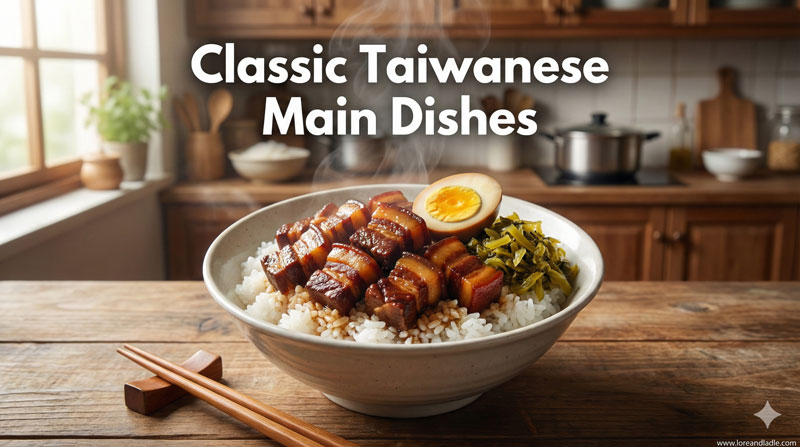
Lu Rou Fan is a deeply comforting braise of pork belly and soy. Layers of fat melt into a glossy sauce, enriched with sugar, garlic, and five-spice. The dish rests on a bed of steamed rice, letting each bite hug the palate with savory-sweet balance. Cultural significance shows in the care given to a simple pot and a well-tended kitchen. Home cooks time the braise to perfection, tasting and adjusting with quiet confidence. In restaurants, Lu Rou Fan remains a beloved staple for everyday meals and celebratory dinners alike. The harmony of texture—tender pork, silky sauce, fluffy rice—captures a core idea in Taiwanese cooking: humble ingredients can yield profound warmth and satisfaction.
Three-Cup Chicken: aromatic harmony
Three-Cup Chicken earns its name from the classic ratio of sesame oil, soy sauce, and rice wine, used generously in the cooking process. Garlic, ginger, and fresh basil perfume the dish as it braises briefly, then finishes with a bright burst of herb fragrance. This dish embodies balance: bold aromatics meet a light, clean finish. In households and eateries, Three-Cup Chicken showcases technique and attention to aromatics. It invites dipping and spooning, letting diners savor the layered flavors in a single bite. The cultural value comes from its versatility and its ability to evoke a homey kitchen mood in any setting.
Oyster Omelette: textural delight
The Oyster Omelette blends eggs with small oysters and a starch batter to create a crisp-edged, tender-centered plate. Its coastline influence is clear in the use of seafood and the light, starchy binding. When fried just right, the outer crust offers crunch while the interior stays soft and succulent. A dash of chive or scallion adds color and aroma, while a sauce—often gently spicy or savory—complements the dish. This is more than a meal; it is a memory of night markets, family gatherings, and the shared joy of discovering texture and contrast in one plate. The Oyster Omelette stands as a proud example of how Taiwanese cooks master both technique and coastal flavors.
Mei Cai Kou Rou: earthy depth
Mei Cai Kou Rou features pork belly braised with preserved vegetables (mei cai). The dish marries fat, savoriness, and a hint of tang from the vegetables. The preserved greens perfume the sauce, lending an earthy layer that deepens with slow cooking. Served with steamed rice or simple greens, it becomes a table centerpiece for family meals. In Taiwan’s regional kitchens, this dish carries memories of farmers and markets where preserved vegetables symbolize the clever use of what’s on hand. Mei Cai Kou Rou teaches that patience and balance can yield a deeply comforting plate with every spoonful.
Fresh ingredients, seasonal spirit, and regional touches
These dishes share a common respect for seasonality and the available pantry. They invite cooks to adapt with care: adjusting salt, sweetness, or spice to suit local tastes and ingredient freshness. Regional influences appear as small differences in spice blends or braising times, offering subtle variety without losing the essence. The beauty of Taiwanese main dishes lies in their clarity and confidence: they let ingredients shine while inviting cooks to participate in the crafting of flavor. The result is cuisine that travels well in home kitchens and taste buds alike.
How to honor these dishes in the United States
To honor these classics, start with good stock, fresh produce, and honest technique. Build flavors deeply, but keep things in balance so each bite feels bright and clean. Respect the cooking times: braises need patience; omelettes require careful timing. Serve with simple accompaniments that complement rather than overwhelm. A light vegetable side, a bowl of rice, and a simple pickled item can complete the meal. Sharing with friends in a relaxed setting honors the spirit of these dishes: they are meant to be enjoyed together, in good cheer and mutual appreciation of craft.
A closing note on the cultural journey
These Best Classic Taiwanese Main Dishes Ideas to Try in the U.S. offer a doorway to Taiwan’s culinary traditions. They reflect a culture that values family, skill, and a well-balanced plate. Each dish carries history through technique, aroma, and texture. By exploring them, readers can feel connected to Taiwan’s food culture in a respectful and appreciative way. The journey is as much about savoring flavors as it is about honoring craft, memory, and the joy of sharing a meal.