
Introduction
Welcome to a thoughtful look at a cherished collection: the Best Classic Taiwanese Main Dishes Ideas Loved Across the U.S. This article centers on cultural value and culinary significance. It explores how simple ingredients and careful technique create meals that feel like home. The focus stays on taste, memory, and everyday beauty found in the kitchen. By highlighting tradition, skill, and shared meals, we celebrate why these dishes endure at dining tables and in menus across the United States.
The Flavor Core of Taiwanese Main Dishes
Taiwanese cooking centers on balance. Savory soy notes meet warm aromatics like ginger, garlic, and scallions. Sesame oil and five-spice powder add depth, while rice wine lends gentle sweetness. Simmering, braising, and quick wok-frying are common techniques that shape both texture and aroma. Each dish reveals a quiet discipline: patience in a braise, precision in a simmer, and care in choosing fresh greens and herbs. The result is meals that feel comforting and refined at the same time. These flavors tell a story of home cooking, market stalls, and the daily ritual of gathering around a table.
Classic Dishes in Focus
This collection centers on several beloved main courses, each with a distinct character and cultural resonance.
- Beef Noodle Soup (Niu Rou Mian): A hearty broth, tender beef, and springy noodles come together. The dish invites quiet savoring and easy sharing, making it a centerpiece for families and friends.
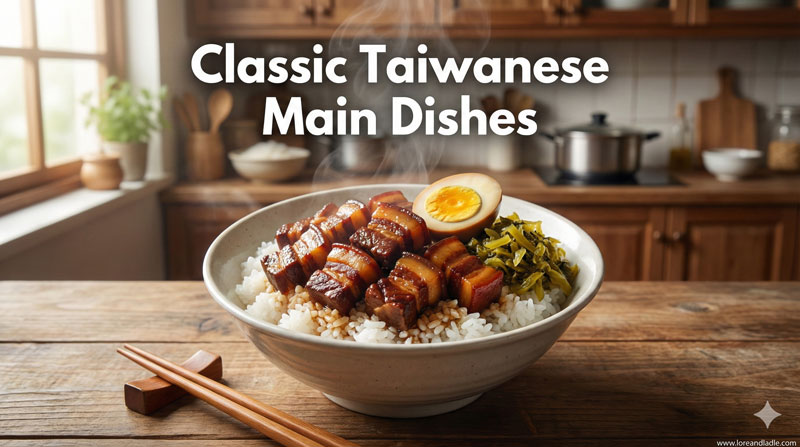
- Lu Rou Fan (Braised Pork Belly over Rice): Slow-braised pork belly rests on a bed of steamed rice. The harmony of soy, sugar, and spices creates a comforting, mouth-filling experience.
- Three-Cup Chicken (San Bei Ji): Chicken braised in equal parts sesame oil, soy sauce, and rice wine, with garlic and basil. Rich, aromatic, and satisfying, it showcases how simple ingredients can sing.
- Oyster Omelet (Oyster Dan): Eggs meet delicate oysters and starch for a unique texture. Its taste blends sea-bright freshness with a soft, comforting bite, a favorite in many households.
- Gua Bao (Taiwanese Steamed Bun with Pork): A fluffy bun cradles braised pork, pickled greens, and herbs. This dish captures street-food charm and the joy of assembling textures and flavors.
- Braised Tofu with Mushrooms: A robust vegetarian option that uses tofu and mushrooms braised in a savory sauce. It demonstrates balance, warmth, and a deep, clean savor.
Each dish is more than sustenance; it is a piece of culinary culture that travels well—from home kitchens to restaurant menus—carrying memories of family meals, seasonal ingredients, and careful technique.
Techniques, Textures, and Why They Matter
These dishes share a few guiding ideas. First, patience matters. Slow braises coax collagen into velvet tenderness and deepen flavor. Second, aromatics build character. Ginger, garlic, scallions, and star anise wake the palate without overpowering the main ingredients. Third, texture contrasts delight the senses. Tender meat, silky broth, crisp greens, and a soft-to-chewy noodle or bun create a satisfying rhythm at the table. Finally, balance is key. Salt, sweetness, and umami meet in harmony, allowing each component to shine while supporting the whole dish. This balance is a reason the collection remains relevant in diverse kitchens and menus.
Cultural Value in Cooking Scenes
These dishes encode everyday culture in a tasteful, accessible way. They invite family and friends to gather, share, and learn together. The act of braising pork, simmering a beef broth, or assembling a bao becomes a small ceremony—meals crafted with care, served with warmth, and enjoyed with conversation. They teach reverence for ingredients, patience in process, and joy in meals that taste like home. At their heart, these classics celebrate craft, seasonality, and hospitality, values that resonate in many food traditions.
Practical Tips for Home Cooks
If you want to explore these classics at Home, start with a flexible approach:
– Choose a base stock or braising liquid that suits your pantry. A simple mix of soy, sugar, and stock works well.
– Layer flavors gradually. Add aromatics in stages to build depth without overpowering the main ingredient.
– Watch texture. For noodles, cook just to al dente; for pork shoulder or pork belly, braise until very tender.
– Balance salt and sweetness. Taste often and adjust gently as the dish progresses.
– Serve with fresh greens or pickled vegetables to provide brightness and contrast.
Conclusion
The collection named Best Classic Taiwanese Main Dishes Ideas Loved Across the U.S. invites you to savor culture through food. These dishes honor traditional techniques while inviting modern Home Cooks to participate. They reward patience, appreciation for texture, and a gentle respect for balance. Whether shared in a family kitchen or enjoyed in a cozy restaurant setting, these meals remind us of the beauty of careful craft and the warmth of communal eating.