
Introduction
Best Classic Taiwanese Main Dishes Ideas for Taiwanese Food Lovers in America is a warm invitation to explore Taiwan’s kitchen. This collection celebrates the cultural value and culinary significance of beloved Taiwanese mains. It highlights how these dishes connect family, seasonal ingredients, and time-honored techniques. In America, these flavors travel with care and find a place at homes and tables, inviting curiosity and joy. The focus here is on taste, craft, and the meaning of sharing a well-made dish.
Core ideas behind Taiwanese main dishes
Taiwanese main dishes center on balance. They blend savory, sweet, and aromatic notes in harmony. Fresh ingredients stand at the core, and the cooking methods lift their natural flavors. Techniques like braising, simmering, and wok cooking bring depth without overpowering the ingredients. This approach creates meals that feel both comforting and precise. The result is a menu of dishes that travelers and locals alike can recognize and savor.
Beef Noodle Soup (牛肉麵)
Beef Noodle Soup is a symbol of warmth and care. The broth carries depth from slow simmering, tender meat, and fragrant aromatics. In every bowl, noodles, meat, and greens come together with a lingering savory finish. This dish embodies patience and craft, inviting you to savor layers of flavor. In America, it travels well in home kitchens and restaurants, offering the familiar comfort of a well-made noodle soup.
Lu Rou Fan (滷肉飯)
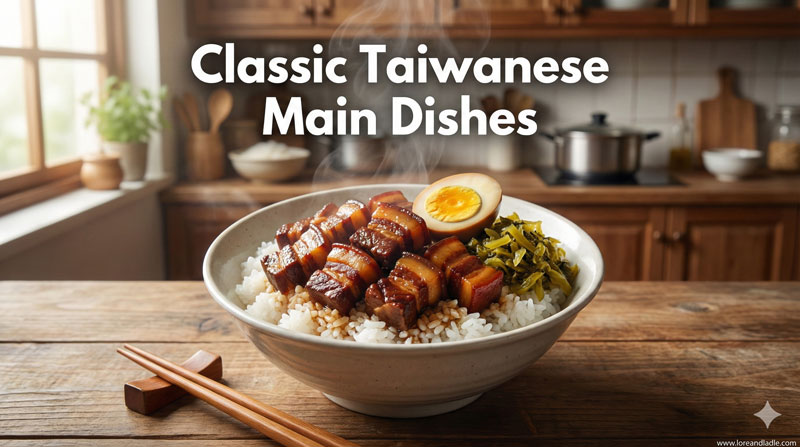
Lu Rou Fan, a braised pork over rice, reflects everyday abundance. The meat glows with a glossy, lacquered sheen and a scent of soy and spice. Served over simple rice, it becomes a complete, satisfying meal. This dish celebrates frugality and generosity—small portions of pork become a hearty, flavorful dish through careful braising. It is a reminder that comfort can be simple, honest, and deeply flavorful.
Three-Cup Chicken (三杯雞)
Three-Cup Chicken showcases fragrant harmony. The name hints at the equal role of soy sauce, sesame oil, and rice wine, plus a kiss of garlic and ginger. The skillet technique concentrates aromas, producing a glossy sauce that clings to tender chicken. The result is a bright, comforting main with a touch of sweetness. In American kitchens, it travels well with steamed vegetables or rice, keeping its bright character intact.
Oyster Omelette (蚵仔煎)
Oyster Omelette brings the brininess of seafood together with a delicate, starchy batter. The dish offers a pleasing contrast: soft omelette, chewy oysters, and a crisp edge. It feels both generous and refined, a testament to how Taiwan blends texture and flavor. The dish often shines as a centerpiece at tables, reminding us that a simple recipe can become a memorable experience.
Taiwanese Fried Chicken (鹽酥雞)
Taiwanese Fried Chicken is a beloved crowd-pleaser. The crust is light and crisp, while the interior remains juicy. The aroma draws people to the table, inviting sharing and conversation. This dish embodies street-food charm that translates to home cooking, party platters, and intimate dinners alike. In America, it stands as a vivid example of Taiwan’s knack for turning a snack into a main event.
Scallion Pancake with Egg (蔥抓餅)
The Scallion Pancake with Egg is a comforting staple that travels well in memory and on the plate. The pancake offers a crisp exterior and a soft, flavorful interior. Folded with egg, it becomes a satisfying, versatile main. The dish highlights the value of simple, accessible ingredients transformed by technique and patience. It invites experimentation while honoring traditional flavor.
Why these dishes matter to Taiwanese food lovers in America
These mains connect tradition with modern tables. They show how shared cooking can bridge generations and地域 flavors. Each dish emphasizes balance, texture, and a clear, welcoming aroma. When prepared with care, they become a celebration of home, family, and craft. For American kitchens, they offer approachable flavors that honor Taiwan’s culinary heart.
Techniques and flavor profiles to notice
- Braising and simmering: build depth with time and patience.
- Wok heat and quick sear: preserve brightness and texture.
- Soy, garlic, ginger, and sesame: foundational aromatics that define many classics.
- Fresh greens and pickles: add color, balance, and crunch.
- Sweet-soy balance: a hallmark of many iconic sauces.
These elements give Taiwan’s classics their distinct voice and enduring appeal.
Sourcing ingredients in America
- Look for good-quality soy sauce, rice wine, and sesame oil from reputable brands.
- Seek fresh yams, greens, and mushrooms at farmers’ markets or Asian grocers.
- For seafood like oysters, choose fresh, plump options and follow safe handling.
- Use accessible regional ingredients when needed, and substitute thoughtfully to maintain flavor.
- Stock pantry staples so you can quickly recreate the core flavors at Home.
Serving ideas and table presence
- Serve beef noodle soup with a bright garnish of scallions and cilantro.
- Lu Rou Fan shines with pickled vegetables on the side and a soft-boiled egg.
- Three-Cup Chicken pairs well with steamed rice and lightly dressed greens.
- Oyster Omelette looks inviting with a crisp edge and a glossy sauce.
- Fried Chicken works beautifully with a citrus-soy dip and a simple salad.
- Scallion Pancake with Egg makes a comforting, shareable centerpiece.
A thoughtful plate arrangement and warm presentation elevate each dish’s cultural value.
The beauty of Taiwanese mains in America
These dishes reveal a culinary philosophy that values harmony, craftsmanship, and generosity. They invite cooks to care for ingredients, time, and technique. The result is flavors that feel both familiar and fresh, inviting people to explore and savor. In America, this collection helps home cooks and chefs honor Taiwan’s culinary voice while celebrating shared meals.
Conclusion
Best Classic Taiwanese Main Dishes Ideas for Taiwanese Food Lovers in America offers a gentle portal into Taiwanese cuisine. It centers on cultural value and culinary significance, guiding you to appreciate flavor, technique, and the joy of gathering. Through these mains, you can taste patience, balance, and hospitality—the core spirit of Taiwan’s kitchen. May these ideas inspire fresh menus, warm gatherings, and new stories around the dinner table.