
Introduction
Best Classic Taiwanese Main Dishes Ideas to Brighten Up Your Weeknights invites you to explore dishes that are both comforting and culturally rich. These meals come together in home kitchens with clear rhythms: prep, simmer, and savor. The focus here is on flavor depth, technique, and the everyday beauty of Taiwanese cooking. By looking at a handful of classics, you’ll see how simple ingredients can carry meaningful traditions from stove to table. This guide emphasizes culinary value and cultural significance, keeping a neutral and respectful tone throughout.
The Cultural Value of Taiwanese Main Dishes
Taiwanese home cooking centers on balance, seasonality, and shared meals. Families gather around a pot and watch flavors unfold as the sauce thickens and aromas fill the room. Fresh ingredients from markets—meat, greens, mushrooms, and pantry staples like soy sauce, rice wine, and ginger—shape everyday menus. The dishes prize texture as well as taste: tender meat, glossy sauces, and the satisfying bite of noodles or rice. Night markets and family kitchens both celebrate the same idea—food as a daily ritual that nourishes body and spirit. These main dishes illuminate a respect for seasonality, practical techniques, and mindful flavor layering. The result is a cuisine that feels approachable, comforting, and deeply rooted in daily life.
Lu Rou Fan: Braised Pork Over Rice
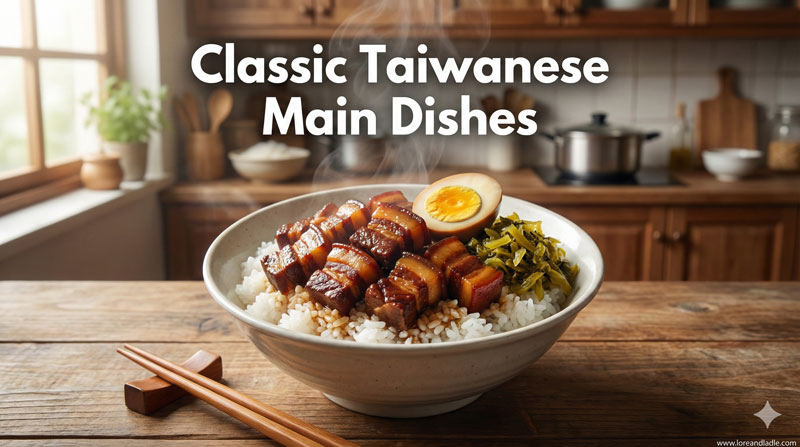
Lu Rou Fan is a beloved staple that highlights the beauty of braising. Pork belly is slowly simmered with soy sauce, sugar, garlic, and spices until the meat is tender and glossy. The kitchen fills with a savory-sweet aroma as the glaze thickens. Serve the savory pork over plain white rice, and you have a balanced plate where fat, salt, and caramel notes sing together. In households, this dish often anchors weeknight dinners or weekend gatherings, showing how simple pork, time, and patience can yield remarkable depth. The technique emphasizes layering flavors: searing for color, then braising to meld flavors with a kiss of cinnamon and star anise. The result is Comfort Food that carries a note of tradition in every bite.
Three-Cup Chicken (San Bei Ji)
Three-Cup Chicken centers on a fragrant trio: sesame oil, soy sauce, and rice wine. Chicken thighs or drumsticks absorb these elements as garlic, ginger, and scallions rise in the pan. The name hints at the equal parts used in the cooking method, but the real magic lies in the way the sauce reduces to a glossy glaze that clings to each piece of chicken. Cooking in a clay pot or wide skillet creates a rich surface texture and a deeply savory aroma. This dish embodies warmth and hospitality, inviting everyone to gather and share. The technique rewards patience: simmer gently, stir thoughtfully, and watch the flavors concentrate. The final plate is glossy, sticky, and satisfying—a testament to how careful balance can elevate everyday ingredients.
Beef Noodle Soup (Niú Ròu Miàn)
Beef Noodle Soup is a cornerstone of Taiwanese comfort food, known for its hearty broth, tender meat, and chewy noodles. The broth often starts with beef bones and aromatics, then evolves with ginger, star anise, and pepper. Slow simmering creates a clear, deeply flavorful base that carries notes of sweetness and savoriness without heaviness. Beef Noodle Soup is more than a meal; it’s a ritual of nourishment. The noodles provide a satisfying bite that contrasts with the soft beef and the broth’s smooth warmth. In homes and eateries alike, this dish invites slow enjoyment and generous portions, reinforcing the idea that good food should be shared and savored.
Oyster Omelette: Textures and Market Freshness
Oyster Omelette blends soft eggs with a silky batter and plump oysters for a delightful textural contrast. The batter—often incorporating tapioca starch—creates a slightly chewy exterior that croaks with crisp edges when fried. Fresh oysters lend briny sweetness, complementing scallions and a touch of cornstarch slurry to bind flavors. This dish captures a sense of street food charm and market freshness. It demonstrates how Taiwanese cooks marry diverse textures—soft, chewy, and crisp—in one skillet. The omelette’s popularity at markets and home tables underscores the social joy of sharing something flavorful and vibrant, even on a busy weeknight.
Braised Tofu with Mushrooms: A Gentle Yet Deep vegetarian Main
Braised Tofu with Mushrooms offers a comforting, plant-forward option without sacrificing depth. Tofu holds flavors from soy sauce, ginger, garlic, and a hint of aromatics, while mushrooms contribute savory density. The dish often features a glossy, savory sauce that coats every bite, inviting you to savor the contrast between silky tofu and meaty mushrooms. This main demonstrates how Taiwanese cooking values balance and texture, delivering a satisfying, nutritious option for variety in weeknight menus. It also showcases how vegetarian ingredients can shine in classic flavor profiles with careful technique.
Signature Techniques and Ingredients
Taiwanese cooking often relies on a few shared techniques that yield big results. Wok hei, the subtle smokiness from quick, high-heat stir-frying, adds complexity to many dishes. Gentle braising creates tenderness and a rich glaze, especially in pork and chicken dishes. Thick, glossy sauces emerge from careful reduction, with soy sauce, sugar, and rice wine as common anchors. Ginger, garlic, and scallions appear as fragrant foundations that lift each dish. Staples like rice, noodles, and tofu anchor menus and provide a versatile canvas. The beauty lies in how everyday ingredients are transformed through technique, timing, and balance. These methods create meals that feel both familiar and special.
Weeknight Menu Ideas: Building a Light, Flavorful Plan
To brighten weeknights, you can rotate a few core dishes and pair them with bright vegetables or simple sides. Begin with Lu Rou Fan for a comforting start to the week, then move to Three-Cup Chicken for a fragrant midweek treat. Add Beef Noodle Soup as a weekend-by-weeknight option when you want a hearty, satisfying bowl. Include Oyster Omelette on a market night when you’re craving texture and brightness, and finish with Braised Tofu with Mushrooms for a lighter, protein-rich option. Make-ahead components help: braise pork in advance, and simmer broth for noodles later. This approach keeps meals doable, delicious, and culturally rich without becoming repetitive.
Practical Tips for Home C chefs
- Use fresh aromatics: ginger, garlic, scallions, and a splash of rice wine brighten every dish.
- Aim for glossy sauces: a gentle simmer reduces quickly and coats meat or tofu.
- Balance salt and sweetness: add soy sauce gradually, then adjust with a touch of sugar or mirin as needed.
- Practice texture: for omelettes, let edges crisp while centers stay soft; for beef noodles, cook noodles to al dente for better bite.
- Plate with care: a nod to color—green vegetables, pale rice, and a glossy dark sauce—makes the meal inviting.
Final Thoughts
These Best Classic Taiwanese Main Dishes Ideas to Brighten Up Your Weeknights celebrate cultural value through flavor, technique, and shared meals. Each dish shows how everyday ingredients, prepared with patience and respect, can become a source of warmth and connection. By exploring these classics, you’ll discover the beauty of Taiwanese cooking as a living tradition that thrives in home kitchens and small restaurants alike. Use these ideas to craft weeknight menus that feel special yet approachable, and let the flavors guide you toward new memories around the table.