
Introduction
Here is a thoughtful guide to the dish featured as “Top 9 Classic Taiwanese Main Dishes Recipes for Taiwanese Food Lovers in America.” This collection spotlights dishes that carry rich cultural value and clear culinary significance. Each recipe reveals how Taiwanese cooks balance aroma, texture, and color. In American kitchens and kitchens near bustling markets, these plates invite curiosity, comfort, and a shared love of good food.
Beef Noodle Soup
Beef Noodle Soup stands as a warm emblem of Taiwanese hospitality. The braised beef, simmered until tender, pairs with a deeply flavored broth and chewy noodles. This dish teaches patience and technique, as simmering time unlocks complex flavors from soy, herbs, and spices. In America, it often acts as a bridge between home cooking and restaurant traditions, inviting diners to savor a timeless harmony of meat, broth, and greens.
Three-Cup Chicken
Three-Cup Chicken showcases a fragrant trio: soy, rice wine, and sesame oil. The technique emphasizes quick, careful cooking that coats the chicken with a glossy, aromatic glaze. The result is a dish that feels both rustic and refined, highlighting how simple ingredients can become deeply flavorful. In American kitchens, it demonstrates how Taiwanese cooks layer fragrance and savor to celebrate everyday meals.
Lu Rou Fan (Braised Pork Over Rice)
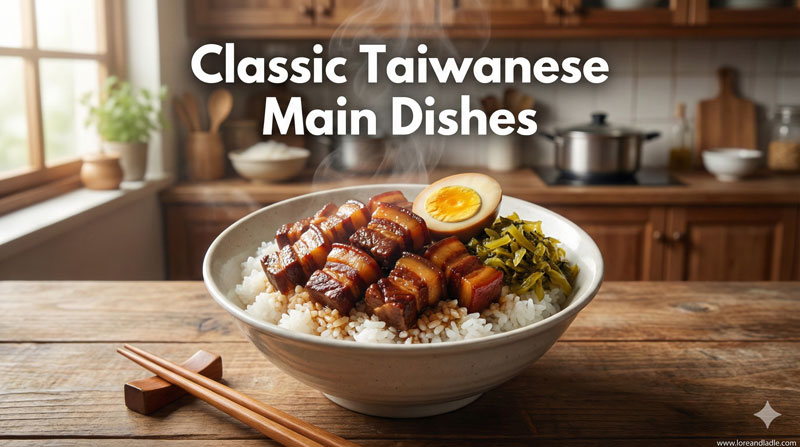
Lu Rou Fan is a humble, comforting staple. Tender pork braised with soy, aromatics, and a hint of sweetness rests atop warm rice. This dish speaks to home-grown flavors and slow, deliberate cooking. It carries a sense of family meals and shared bowls, where a single plate captures the warmth of Taiwan’s home kitchen traditions.
Oyster Omelette (Oyster-egg Pancake)
The Oyster Omelette blends textures in a memorable way: a crisp edge, a tender interior, and briny oysters. The dish uses bite-sized pieces to tell a story of street markets meeting family dinners. Its sauce brings a gentle sweetness that complements the ocean notes. In America, it invites meals that celebrate contrast—soft, crunchy, and savory all at once.
Mei Cai Kou Rou (Braised Pork with Preserved Vegetables)
Mei Cai Kou Rou pairs saucy pork with preserved vegetables for a delightful balance. The salty greens cut the richness of the pork, creating a satisfying, layered bite. This dish reflects how Taiwan’s farmers-and-hellip markets inspired cooks to combine textures and tastes. It remains a favorite for those who enjoy depth and memory in a single plate.
Sesame Oil Chicken
Sesame Oil Chicken is prized for its aroma. Ginger, garlic, and sesame oil mingle while the chicken braises gently, yielding tender meat with a silky sauce. The dish embodies nourishment and warmth, often featured as a comforting choice in cooler seasons. In American settings, it offers a fragrant reminder of home-cavored cooking and family gatherings.
Gua Bao (Taiwanese Pork Belly Bun)
Gua Bao puts a soft, steamed bun at the center of a playful balance: pork belly, pickled greens, and fresh herbs. The result feels elegant yet approachable, a testament to how a few components can create a complete experience. It captures the joy of finger foods that transform a quick snack into a fulfilling main.
Three-Cup Eggplant
Three-Cup Eggplant applies the same three-cup technique to a vegetarian favorite. Eggplant soaks up the glossy sauce, becoming lush and savory. The dish highlights versatility in Taiwanese cooking, where vegetables stand proudly beside meat dishes. It helps broaden the sense of a balanced table—richness, sweetness, and depth—all in one bite.
Sweet and Sour Pork
Sweet and Sour Pork brings brightness to the table with a glossy glaze and vibrant notes. The harmony of sweet, sour, and savory makes it a bright centerpiece for family meals and gatherings. This dish reflects Taiwan’s ability to blend bold flavors into a cohesive, approachable main.
Conclusion
The nine dishes above illustrate how Taiwanese cuisine blends technique, ingredient harmony, and cultural memory into main courses that feel both familiar and new in America. Each plate invites exploration, celebration, and a respectful appreciation for shared meals. Whether cooking at Home or enjoying a restaurant rendition, these classics offer a vibrant window into Taiwan’s culinary spirit and its enduring love of flavor, balance, and community.