
Introduction
Welcome to a celebration of texture, aroma, and warmth. The dish called Best Taiwanese Noodle And Soup Bowls Recipes for Your Next At-Home Feast invites Home Cooks to explore a beloved facet of Taiwanese food culture. This collection shines a light on noodles in broth, bright toppings, and careful technique. It reveals how a simple bowl can carry memory, craft, and shared meals. Each recipe speaks to the heart of family kitchens, street stalls, and thoughtful home cooking. Dive in and discover the beauty of balance found in these bowls.
The Cultural Heart of Taiwanese Noodle Bowls
Taiwanese noodle bowls connect people through everyday meals and seasonal flavors. Markets bustle with fresh herbs, greens, and fragrant broths. Home cooks grow more confident as they learn to layer flavors with patience. In Taiwan, a bowl is more than food; it is a moment of welcome, a chance to slow down, and a way to say “you are cared for.” The bowls honor tradition while inviting experimentation. That openness is part of the culture’s charm. The result is a cuisine that feels both deeply rooted and inviting to new tasters.
Core Techniques Behind the Bowls
Great bowls rely on three pillars: a clear yet flavorful broth, the right noodles, and precise toppings. First, simmer bones or seafood to draw depth without heaviness. Next, choose noodles that hold their texture when hot and silky in the broth. Then, finish with fresh herbs, pickles, or mildly spicy condiments for brightness. Additionally, balance salt, sweetness, and acidity to keep every spoonful lively. Finally, pay attention to temperature and portioning. A well-tuned bowl feels comforting without being heavy. These techniques translate easily to home kitchens and elevate everyday meals.
Beef Noodle Soup: A Classic Portrait
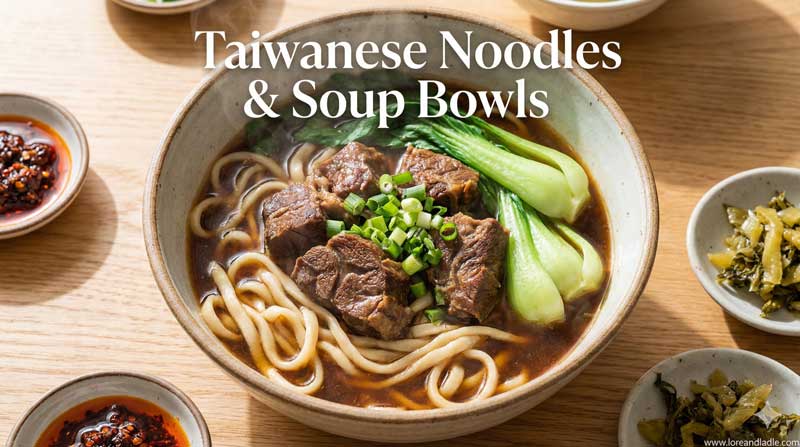
Beef noodle soup is a cornerstone of the collection. Rich braising liquid coats tender meat, while star anise and cinnamon offer warm spice notes. The noodles soak up the broth, delivering a satisfying bite. In many homes, this bowl marks a celebration or a comforting end to a long day. Its depth comes from patient simmering and careful skimming. The result is a fragrant, robust bowl that remains bright with scallions and greens. It stands as a vivid example of how technique and tradition meet in one steaming bowl.
Oyster Noodle Soup: Ocean Freshness in a Bowl
Oyster noodle soup highlights the sea’s generosity. Briny oysters pair with light, slippery noodles. The broth often carries a gentle sweetness from aromatics and a touch of white pepper. This bowl emphasizes freshness and texture. A squeeze of citrus or a dash of chili can lift the flavors without masking them. It is a reminder that seafood and greens can live happily together in harmony with noodles. The experience is clean, crisp, and deeply satisfying.
Braised Pork Noodle Bowls: Comfort in Every Bite
Braised pork nods to home-style cooking. Slow braising creates tender meat that shreds easily into the broth. Soy, garlic, and five-spice deepen the flavor without overpowering the dish. The noodles carry the savory notes and catch small bits of fat and meat. This bowl offers a cozy, everyday luxury. It teaches patience and balance, turning a simple dinner into a cherished ritual.
Mushroom and Vegetable Noodle Bowls: Light, Fresh, and Bright
Vegetarian and light options showcase seasonal greens and mushrooms. Earthy shiitake or wood ear mushrooms bring texture and depth. Fresh herbs, a splash of sesame oil, and a bright broth keep the bowl lively. These bowls honor plant-forward cooking while remaining deeply satisfying. They invite a broader audience to enjoy the core idea: noodles, broth, and toppings in harmony.
Sea And Sun: Seafood Bowls for Variety
Seafood bowls introduce a lighter, buoyant character. White fish, shrimp, or squid can join a clear broth with ginger and scallions. The result is a fresh, zippy bowl that feels like a seaside stroll. This variant demonstrates the versatility of Taiwanese noodle bowls. It keeps the collection dynamic and engaging for at-home feasts.
Building an At-Home Feast: Presentation and Accessibility
A visually inviting setup elevates any meal. Use a mix of large and small bowls to create a pleasing table rhythm. Arrange a few toppings in separate bowls so guests customize their bowls. Fresh herbs, chili oil, pickled vegetables, and citrus wedges add color and aroma. Pair the bowls with a simple tea or light beer to complement the flavors. Keep the flavors approachable so guests can enjoy a personal tasting journey.
Tips to Elevate Flavor at Home
- Start with a clear broth base and season gradually.
- Cook noodles to the exact texture you prefer, then shock briefly in cold water if needed.
- Layer toppings in stages for a balanced bite.
- Taste frequently and adjust salt, acidity, and heat.
- Use fresh herbs just before serving to preserve brightness.
- Present bowls in warm dishes to keep the experience comforting from first bite to last.
Conclusion
The Best Taiwanese Noodle And Soup Bowls Recipes for Your Next At-Home Feast offers more than meals. It provides a connection to a rich culinary tradition that thrives in the home kitchen. Each bowl celebrates balance—between broth and noodle, meat and greens, warmth and freshness. It invites cooks to slow down, savor, and share. In every spoonful, you taste culture, craft, and care. This collection is an invitation to bring a beloved Taiwanese dining moment into your own dining room, turning ordinary evenings into a gentle, flavorful celebration.