
Introduction: A Bowled Celebration of Taiwan’s Noodle Traditions
Today we explore the dish Best Taiwanese Noodle And Soup Bowls Ideas That Are Trending Right Now, a curated look at bowls that reveal the depth of Taiwan’s food culture. This is a celebration of textures, scents, and the warm ritual of gathering around a steaming bowl. The focus stays on cultural value and culinary significance, guiding readers to appreciate how each bowl tells a story of place, technique, and memory.
The Cultural Value of the Noodle Bowl
In Taiwan, a bowl is more than a meal—it is a moment shared with family, friends, and neighbors. Noodle and soup bowls anchor daily life in markets, homes, and small eateries. They are flexible canvases for seasonal ingredients, regional flavors, and personal family twists. The act of assembling a bowl mirrors care: simmering a broth, cooking noodles to the right bite, and balancing toppings to finish. Because bowls are often prepared in homes and sold by small vendors, they carry a sense of community and continuity. Each bowl invites conversation, ritual, and a gentle pace in a busy day.
Noodle bowls also reflect a respect for technique. Slow braising, careful simmering, and precise seasoning create layers of aroma and taste. The ingredients—bone broth, fresh noodles, greens, and bright aromatics—each contribute to a harmony that is both comforting and sophisticated. This harmony is the cultural heartbeat of Taiwanese bowls: a reverence for craft, a generosity of flavor, and a practice that welcomes everyone to the table.
The Culinary Significance: How Taste, Texture, and Technique Align
At the core of these bowls is balance. Broth provides warmth and depth; noodles offer chew and comfort; toppings introduce contrast and brightness. The best bowls honor this trio through thoughtful technique and high-quality ingredients. A rich broth often begins with bones, aromatics, and a gentle simmer that releases sweetness and umami. Noodles are chosen for their texture: springy, yet tender enough to carry the broth’s flavors. Toppings—greens, pickles, herbs, and sometimes citrus or chili—add texture and an uplifting aroma.
Herbs and spices in Taiwanese cooking are rarely loud for their own sake. Instead, they create an inviting fragrance and a nuanced depth. Soy, sesame, garlic, ginger, and peppercorns mingle with star anise, cinnamon, or chili oil in measured ways. This restraint allows the natural flavors of meat, seafood, and vegetables to shine. The result is bowls that feel both comforting and precise, a testament to culinary care passed down through generations.
Trending Bowls: A Curated Menu of Popular Noodle and Soup Bowls
-
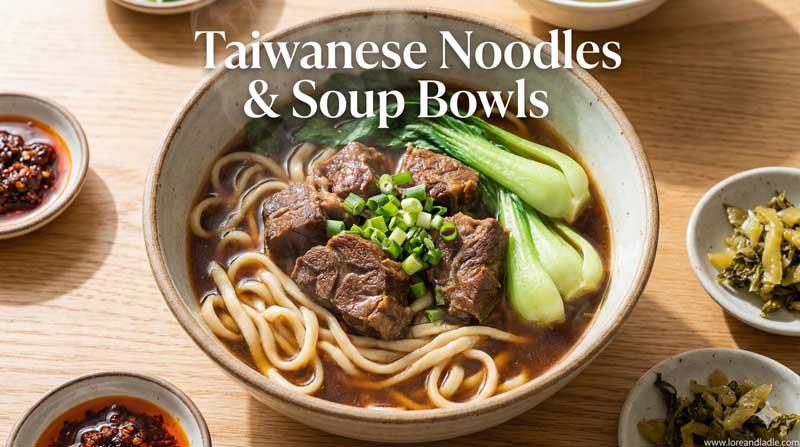
Beef Noodle Soup Bowl (Niu Rou Mian)
A flagship bowl, this one centers a deeply flavored broth and tender beef. It invites slow sipping and careful tasting to catch layers of soy, spice, and meat. The noodles stay firm yet silky, soaking up the broth without losing their bite. This bowl embodies generosity and tradition in one steaming bowl. -
Braised Pork Noodle Bowl (Lu Rou Mian)
Braised pork belly meets noodles in a soft, glossy sauce of soy, aromatics, and a touch of sweetness. It honors family recipes and the patience of braising. The result is a fragrant, comforting bowl with a balance of fat, salt, and savoriness that lingers pleasantly. -
Oyster Vermicelli Bowl (Oyster Mee Sua)
A seaside favorite, this bowl pairs briny oysters with smooth vermicelli and a light, fragrant broth. The texture contrast—slippery noodles, chew in the oysters, and a broth that glows with garlic and scallion—creates a refined, coastal mood in every bowl. -
Fish Ball and Noodle Soup Bowl
Fresh fish balls brighten a clear or lightly seasoned broth, offering a delicate sweetness and clean aroma. Noodles provide substance, while greens and herbs lift the bowl with fresh, bright notes. It’s a celebration of sea flavors expressed through precise balance. -
Vegetarian Sesame-Ginger Mushroom Noodle Bowl
A modern favorite that honors farmers’ markets and seasonal produce. Earthy mushrooms, sesame oil, and a hint of ginger build a comforting, umami-forward bowl. This option demonstrates how bowls can be inclusive and equally expressive without animal proteins.
Techniques and Craft: Bringing a Taiwanese Noodle Bowl to Life
-
Broth crafting: Start with a clear plan for simmering. A good broth rests on time, not heat alone. Gentle simmering releases depth from bones, vegetables, and aromatics without becoming bitter. Skim often to keep the liquid bright.
-
Noodle preparation: Cook noodles to the correct chew. Overcooked noodles lose their character; undercooked ones resist the broth. The timing matters as much as the sauce or toppings that finish the bowl.
-
Finishing touches: Fresh herbs, a splash of citrus, or a drizzle of sesame oil can transform a bowl at the end. These finishing notes brighten and unify the flavors, turning a good bowl into something memorable.
-
Textural balance: Include elements with different textures—soft noodles, tender meat or seafood, crisp greens, and a touch of crunch from pickled vegetables. The contrast delights the palate and enhances aroma.
Ingredients Spotlight: Core Flavors and the Language of Finish
-
Broth: A foundation that can be clear or rich. Its color and aroma guide the overall mood of the bowl.
-
Noodles: Selected for texture—al dente bite or a softer chew—depending on the dish and broth.
-
Protein and seafood: Beef, pork belly, chicken, prawns, or fish balls. Each protein brings distinct savoriness and tenderness.
-
Aromatics: Garlic, ginger, scallions, and onion form the aroma base. They guide the fragrance without overpowering the main notes.
-
Seasoning: Soy sauce, rice wine, sugar, and a touch of pepper create gentle sweetness and a balanced salty profile.
-
Greens and toppings: Bok choy, choy sum, cilantro, pickled mustard greens, sesame seeds, and chilies add color, nutrition, and a pop of brightness.
How to Enjoy These Bowls at Home: Tips for a Respectful, Flavorful Experience
-
Start with stock principles: Choose a clear, light broth for some bowls and a heartier one for others. Let the base set the tone.
-
Respect the noodle texture: Cook the noodles just right, and consider serving them separately in some bowls to preserve texture for longer meals.
-
Layer flavors gradually: Add toppings in stages to appreciate aroma and color. A final herb or citrus zest can lift the whole bowl.
-
Present with care: A well-arranged bowl invites the eye and the nose before the first bite. Small garnishes matter.
Preserving Craft in Modern Kitchens
These bowls thrive when cooks honor tradition while embracing fresh ingredients. Use seasonal produce to reflect the pantry of the moment. Maintain a respectful balance between time-tested methods and creative adaptations. The beauty of these bowls lies in their adaptability and their capacity to welcome new flavors without losing their core character.
Conclusion: A Warm Welcome to Taiwanese Noodle Bowls
The Best Taiwanese Noodle And Soup Bowls Ideas That Are Trending Right Now spotlight bowls that carry cultural value and culinary significance. They show how a simple bowl can express regional flavors, craft, and community. Whether you savor beef, pork, seafood, or a vegetarian option, these bowls invite you to slow down, taste mindfully, and celebrate the beauty of Taiwan’s noodle traditions. May each bowl be a doorway to warmth, memory, and shared meals.