
Introduction
This post highlights the cultural value and culinary significance of the Best Taiwanese Noodle And Soup Bowls Favorites for Taiwanese Food Lovers in America. These bowls are more than meals; they are a doorway to shared memories, regional flavors, and daily ritual. Each bowl blends slow-simmered broth, lively textures, and inviting aromas that tell a story of care, craftsmanship, and community. Here, we explore how these soups and noodles stand as a warm thread in the fabric of Taiwanese food culture, and how they find warmth in American kitchens and restaurants.
Core Elements of Taiwanese Noodle Bowls
At the heart of every Taiwanese noodle bowl lies balance. A well-made broth carries depth from simmered bones, aromatics, and seasonings. Noodles provide the body—chewy or silky, depending on the cut and technique. Toppings add color, texture, and contrast—from braised meat or seafood to leafy greens and fragrant herbs. Finishing touches like chili oil, minced garlic, and fresh scallions bring brightness and spark. The beauty of these bowls is in how each component supports the others, creating a cohesive, comforting experience that feels both familiar and adventurous.
Signature Bowls to Treasure
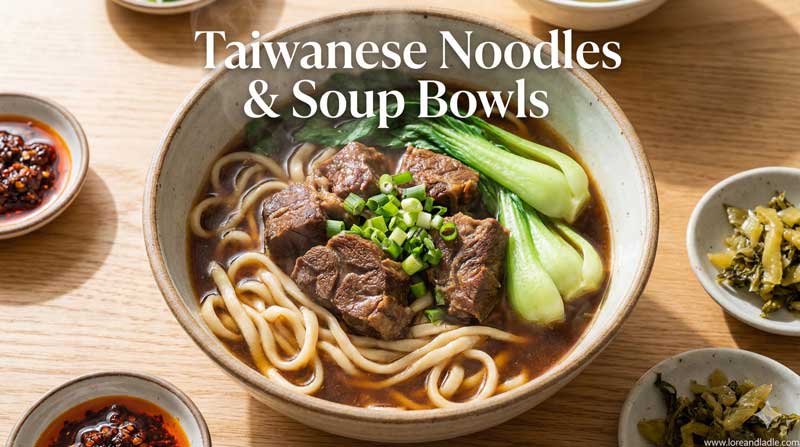
- Beef Noodle Soup (niu rou mian): A bowl of braised beef, rich broth, and springy noodles. Its aroma invites you to slow down, savor the meat’s tenderness, and enjoy the broth’s savory perfume with each sip.
- Oyster Vermicelli (oyster mee sua): A delicate, silky soup featuring fresh oysters and thin vermicelli. It charms with a soft mouthfeel, echoed by a savory oyster-laced broth and a whisper of garlic and sesame.
- Braised Pork Belly Noodle Soup: Thin noodles drift in a glossy, soy-bright broth with tender pork belly and greens. This bowl celebrates a balance of sweet, salty, and savory notes that linger pleasantly.
- Seasonal Mushroom Noodle Soup (vegetarian option): Hearty mushrooms and greens in a clear or lightly seasoned broth. It highlights the vegetable-forward side of Taiwanese cooking while remaining deeply comforting.
- Seafood and Green-Leaf Noodle Bowls: Fresh seafood groups with greens and noodles in a light, aromatic broth. The catch of the day brings bright ocean flavors that shine within the bowl.
Each of these bowls offers a doorway to different regions, techniques, and ingredients. They showcase how Taiwan’s culinary artistry adapts to various palates while preserving a core sense of harmony and warmth.
Craft and Technique: From Broth to Slurp
Crafting these bowls begins with the broth. A good broth gains its depth from patience, careful skimming, and the right mix of aromatics—ginger, garlic, scallions, star anise, cinnamon, and a touch of soy. Slow simmering unlocks sweetness and roundness, turning bones and scraps into a comforting elixir. Noodles are chosen for their texture—chewy for beefy bowls, delicate for seafood bowls—so they hold up to the broth and toppings without becoming heavy. Toppings are selected to introduce contrast: crisp greens, tender meat, and a final drizzle of fragrant oil or chili to wake the senses. The artistry lies in the rhythm: simmer, taste, adjust salt and brightness, then assemble with care. When served, these bowls invite you to experience texture, aroma, and temperature in a single, satisfying moment.
Senses in Play: Texture, Aroma, and Color
Texture plays a starring role. The chew of a properly cooked noodle meets tender slices of meat and a silky broth, creating a satisfying chorus in the mouth. Aroma invites you in: the scent of braised meat, toasted sesame, and spices can spark anticipation before the first slurp. Color adds warmth—green leaves, golden oil, and glossy meat hills make the bowl visually inviting. Taken together, these elements celebrate the sensory beauty of Taiwanese cooking and reinforce the idea that food is a communal, multi-sensory experience.
Serving Traditions and Shared Enjoyment
Serving these bowls is an invitation to share. In many settings, bowls arrive steaming hot, and guests are encouraged to savor slowly, sip the broth, and appreciate the layers of flavor. Slurping is a natural sign of enjoyment for many diners, signaling appreciation for the broth’s depth and the noodles’ texture. The act of eating together reinforces hospitality, conversation, and connection—central aspects of Taiwan’s culinary culture. The bowls become a common language that welcomes friends, family, and neighbors to a table of comfort and curiosity.
Treasuring These Flavors in America
In America, Taiwanese noodle and soup bowls thrive in both homes and eateries. Chefs adapt to available ingredients while preserving the core techniques and flavor philosophy. Home Cooks can recreate classics with accessible components like beef shanks, fresh oysters, mushrooms, greens, and quality noodles. Local markets often carry soy sauce, star anise, and sesame oil that mirror traditional flavors. Restaurants emphasize broth patience, precise cooking of noodles, and thoughtful toppings. The result is a living tradition that travels well, inviting new audiences to fall in love with Taiwan’s noodle bowls.
Sourcing, Seasonality, and Respect for Ingredients
Seasonality shapes the bowls as much as technique does. Fresh greens brighten bowls, while seasonal mushrooms or oysters add specific character to a dish. Good broth depends on quality ingredients, patience, and respectful handling. Simple steps—skimming carefully, balancing salt, and tasting as you go—preserve the natural sweetness and savor of the ingredients. If you’re experimenting at Home, consider maintaining a small pantry of essential aromatics and a few trusted proteins. This approach honors the culinary craftsmanship behind each bowl.
A Personal Invitation to Explore
Whether you are in a bustling city or a quiet neighborhood, these Taiwanese noodle and soup bowls offer a doorway into a refined, comforting world of flavor. They celebrate balance, patience, and the joy of sharing a warm bowl with others. Seek out beef noodle soups, oyster vermicelli, and braised pork belly bowls to experience the range of textures and aromas that Taiwan’s kitchens have perfected. Embrace each bowl as a small ceremony of taste, memory, and gratitude.
Closing Thoughts
The Best Taiwanese Noodle And Soup Bowls Favorites for Taiwanese Food Lovers in America stands as a tribute to culinary craft and cultural heritage. They remind us that a good bowl is more than nourishment—it is a story told through broth, noodles, and toppings. May your next bowl invite curiosity, comfort, and a sense of welcome at the table.