
Best Taiwanese Desserts And Sweet Treats Favorites for New Home Cooks in the U.S.
This article introduces a carefully chosen collection of Taiwanese desserts. It highlights cultural value and culinary significance. The goal is to inspire new home cooks in the U.S. to savor a rich dessert tradition with confidence and joy. Each treat shown here brings balance, texture, and a sense of hospitality to the table. You’ll notice how simple ingredients become meaningful in the hands of a thoughtful cook.
The Taste Philosophy Behind Taiwanese Sweets
Taiwanese desserts celebrate harmony. Flavor sits at the center, but texture speaks just as loudly. Smooth tofu puddings meet chewy taro balls. Creamy coconut milk partners with delicate beans or refreshing shaved ice. Fresh fruit and fragrant syrups finish every bite. This balance makes the desserts approachable for new cooks while inviting experimentation for seasoned ones. The philosophy is practical and poetic: use what is in season, treat ingredients with care, and let each component contribute its own story to the dish.
The Craft That Makes Each Treat Special
Culinary technique is approachable in these desserts, yet it reveals depth when you observe closely. Douhua, or tofu pudding, relies on gentle soy milk preparation and a light set. Grass jelly is softly firm, with a clean herbaceous note that pairs with sweet syrup. Mango sago combines ripe fruit with tiny pearls of starch and a touch of dairy or coconut milk. Taro balls offer a chewy contrast that delights the palate. Pineapple cake showcases flaky, fragrant pastry and a bright jam filling. Each craft step teaches balance: simmer slowly, cool properly, and assemble with care. The result is a chorus of textures and flavors that is distinctly Taiwanese in character.
Iconic Desserts in This Favorites Collection
- Douhua (Tofu Pudding) with brown sugar or ginger syrup and peanuts. A silky base that invites personal toppings and creates a comforting, adaptable dessert.
- Grass Jelly with syrup and toppings. A cool, slightly herbal counterpoint to sweeter elements, often enjoyed as a refreshing finish.
- Mango Sago Dessert. A sunny bowl of mango puree, sago pearls, and light milk or coconut milk that sings of summer fruit and bright days.
- Taro Balls with Coconut Milk. Chewy taro spheres float in a creamy coconut bath, offering an earthy undertone that pairs well with sweet milk.
- Pineapple Cake (Fengli Su). A refined pastry with a tart pineapple filling, celebrated as a treasure of Taiwanese bakery craft.
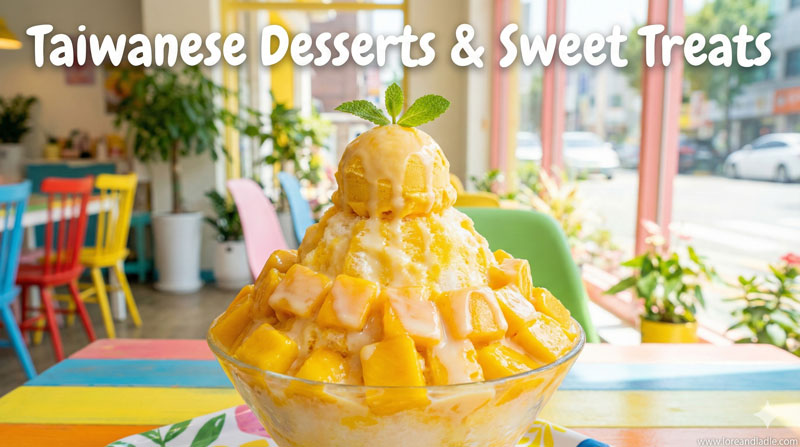
- Mango Shaved Ice (Bao Bing) with fresh fruit and condensed milk. A vibrant, comforting parfait-like experience on warm days.
- Red Bean Soup (Hong Dou Tang) and similar warm or cold bean desserts. A gentle, familiar sweetness that grounds the collection in traditional flavors.
These treats show how Taiwan’s sweet repertoire can be both everyday and special. They invite home cooks to explore ingredients they may already know while discovering new textures and combinations. The collection is designed to be approachable, so you can start with one dessert and gradually expand to others as you gain confidence.
Cultural Value: Hospitality, Seasons, and Shared Moments
Desserts are more than dishes; they are invitations to share. In Taiwan, a simple bowl of douhua or a cup of grass jelly can signal welcome and care. The desserts reflect seasonal abundance—mangoes in summer, beans in cooler months, coconut milk that evokes tropical warmth, and fresh herbs that lift the palate. This culinary language teaches generosity and attentiveness. When you prepare these sweets for family and friends, you participate in a long-standing practice of hospitality that feels both intimate and universal.
The textures themselves tell a story. The silky feel of douhua speaks of gentle craft. Chewy taro balls celebrate the tactile joy of tasting. The crunch of pastry in a pineapple cake adds a surprising counterpoint to the soft fillings. Together, these desserts offer a balanced sensory experience that is easy to share at gatherings, tea time, or a casual weekend treat.
Practical Tips for New Home Cooks in the U.S.
- Start with accessible staples. Douhua kits and grass jelly are widely available at Asian markets or online. If you cannot find them, you can still enjoy similar desserts by using silken tofu with a light syrup and a touch of vanilla.
- Source ingredients thoughtfully. Look for fresh mangoes in season for mango desserts. For taro balls, you can use taro root or taro powder to achieve a chewy texture. Sago pearls or small tapioca pearls create the signature bite in mango sago and shaved ice.
- Manage textures in steps. For cold desserts, chill bowls and spoons. For warm desserts, hold off on toppings until serving to preserve the intended temperature and texture.
- Substitutions with care. If grass jelly is unavailable, try a mild-float jelly with a hint of citrus peel to mimic freshness. For pineapple cake, you can start with a simple pineapple jam wrapped in a light butter crust, then progress to a full bakery-style version as you gain skill.
- Presentation matters. Serve in small bowls or clear cups to show layers and colors. A drizzle of syrup or a sprinkle of toasted sesame seeds can elevate the dish visually and aromatically.
- Pairing ideas. Tea enhances many Taiwanese desserts. A gentle oolong or jasmine tea complements the sweetness and cleanses the palate between bites.
How This Dish Supports Growing Confidence in the Kitchen
The Best Taiwanese Desserts And Sweet Treats Favorites for New Home Cooks in the U.S. is designed to nurture curiosity and build technique. Each dessert teaches a simple principle: small, deliberate steps yield satisfying results. You learn to balance ingredients, adjust sweetness, and appreciate textures. As your confidence grows, you can experiment with toppings, fruit combinations, and presentation. The result is a personalized set of desserts that honors a cultural tradition while fitting into modern American kitchens.
A Thoughtful Conclusion
Exploring these Taiwanese desserts offers more than flavors; it offers connection to a vibrant dessert culture. The dishes celebrate precision and playfulness in equal measure. They welcome new home cooks to a kitchen where technique meets family comfort. With the right ingredients and a patient approach, you can recreate the beauty of these sweets in your own home. The collection invites curiosity, respect, and enjoyment—an invitation to savor tradition, one bite at a time.