
Introduction: A Flavorful Entry into Taiwanese Tea Culture in the U.S.
This post introduces the dish “Best Taiwanese Boba And Tea Drinks Dishes to Try in the U.S.” as a celebration of tea, texture, and taste. It highlights how boba, milk tea, and related drinks become a doorway to shared culinary joy. The focus is on culture expressed through flavor, technique, and everyday ritual. You will read about the craft, the balance of ingredients, and the way these drinks enrich social dining in the United States. The tone stays warm, curious, and respectful, inviting you to savor rather than rush.
The Craft Behind Boba and Tea Drinks
The heart of the dish lies in careful technique. Tea forms the foundation, and chefs select blends that show the tea’s natural aroma. Black, green, oolong, and jasmine teas appear in harmony with milk or cream. Tapioca pearls, or boba, provide a distinct chew that many lovers describe as “QQ” — a playful, satisfying texture. The pearls are cooked to the right chew, then cooled and sweetened so their flavor remains bright when mixed with tea.
Equipment and timing matter too. Shakers, strainers, and precise ice levels help keep every sip balanced. The act of brewing, cooling, and combining is a ritual that blends science with sensory artistry. This discipline is a small, daily tradition in many shops and homes, turning a simple drink into a crafted experience.
Flavors and Textures That Define the Dish
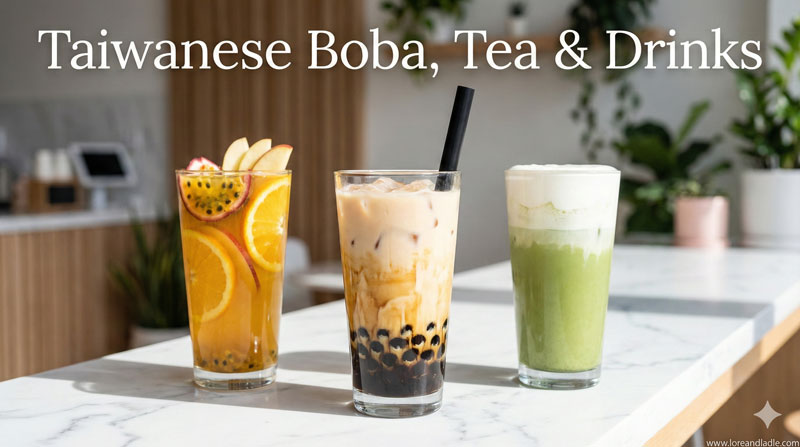
The flavors respond to the drinker’s mood and the season. Classic milk tea offers a gentle sweetness that lets the tea’s character breathe. Brown sugar boba adds a caramel depth that lingers in the mouth. Taro, matcha, and fruit teas show how Taiwanese tea can meet a wide range of tastes. Texture matters as much as taste; the pearls bring a soft, springy bite, while aloe, grass jelly, or fruit bits provide contrast and crunch.
Slightly salted cream tops or foam layers can add a creamy spark without overwhelming the tea’s backbone. The result is a balance: the tea’s aroma, the pearls’ bite, and the sweetness’s lightness all work together. This balance is the essence of the dish’s culinary value.
A Tour of the U.S. Landscape: Where the Dish Shines
Across the United States, many cities host shops that celebrate Taiwanese boba and tea drinks. In each spot, you can sense a shared enthusiasm for tea culture, refined technique, and fresh ingredient ideas. Shops often feature rotating specials that reflect seasonal produce and local favorites, while keeping the core elements of tea, milk, and pearls intact. This creates a lively mosaic of styles that still feels recognizably Taiwanese in its roots. The experience invites conversation, curiosity, and a gradual appreciation for subtle regional twists.
The Social and Culinary Value
This dish offers more than a drink; it cultivates moments of connection. Friends meet for a sip, students study with a cool glass beside their notes, and families share a sweet break after a busy day. The beauty lies in accessibility: a well-made boba drink can be enjoyed alone or as part of a larger snack, dessert, or light meal. The ritual of choosing a flavor, adjusting sweetness, and deciding ice level becomes a tiny ritual that echoes larger traditions of tea and shared meals. In this way, the dish becomes a bridge between cultural appreciation and everyday enjoyment.
Tips for Savoring the Best Taiwanese Boba Drinks
- Start with the tea: observe how different teas carry aroma and taste.
- Adjust sweetness and ice to your preference. A little tweak can reveal new nuances.
- Pay attention to texture: fresh pearls feel different from slightly older ones. Fresh pearls are usually springier.
- Pair thoughtfully: light teas go well with fruit bites; richer options complement desserts or pastries.
- Listen for aroma: a good tea release enhances the sip before you even taste the drink.
Conclusion: Celebrating Craft, Flavor, and Culture
The dish “Best Taiwanese Boba And Tea Drinks Dishes to Try in the U.S.” stands as a vibrant example of culinary craft and cultural value. It showcases how simple ingredients—tea, milk, pearls, and sugar—can combine into a refined, respectful expression of tradition and innovation. The result is a food culture moment that invites careful tasting, shared enjoyment, and continual exploration. Embrace the variety, savor the textures, and celebrate the thoughtful artistry behind each cup.