
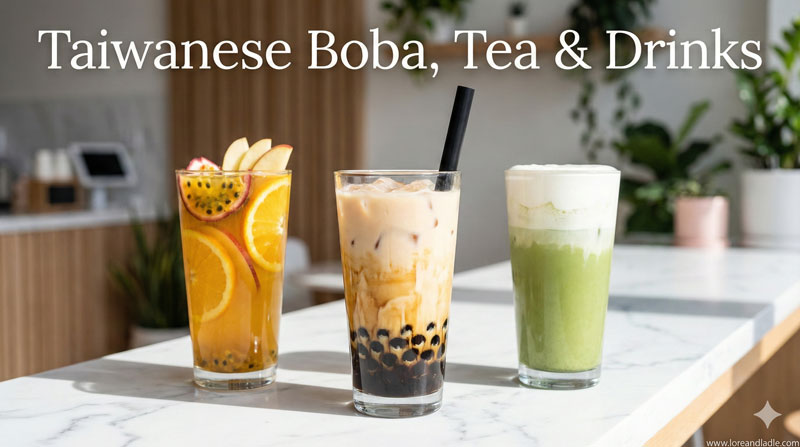
Best Taiwanese Boba And Tea Drinks Dishes for Your Next At-Home Feast
What you hold in a glass can tell a story. The Best Taiwanese Boba And Tea Drinks Dishes for Your Next At-Home Feast invites you to slow down, savor texture and aroma, and share a moment at table. This collection centers on boba drinks and their close companions in tea culture. It celebrates hospitality, craft, and the quiet joy of a well-made cup passed from hand to hand.
A Window into Everyday Culture
Tea is not just a beverage; it is a daily ritual that welcomes conversation, settles a busy mood, and marks simple gatherings. In Taiwan’s tea culture, the act of brewing, cooling, and tasting becomes a shared experience. Boba pearls add a playful texture, inviting bites between sips. This blend of discipline and delight mirrors how people treasure small, social moments. When you prepare these drinks at Home, you carry that same spirit—an invitation to slow down, listen, and enjoy.
The Culinary Significance: Texture, Balance, and Technique
The culinary beauty of boba and tea lies in balance. The tea provides a fragrant, nuanced foundation; the dairy or non-dairy element offers body and creaminess; the pearls supply chew and surprise in every bite. Together, they create a harmony of temperature, texture, and taste. The skilled cook varies brew strength, sugar level, and toppings to suit the moment and the guest. In craft terms, this is a study in precision: timing the pearl cooking just right, extracting tea with care, and layering flavors with restraint. The result is a drink that feels both comforting and refined.
Core Ingredients and Techniques: Building Blocks of Flavor
- Tapioca pearls: The signature chew comes from pearls that are simmered slowly and then finished in a glossy syrup. The texture should stay springy, not mushy.
- Tea base: Strong, well-steeped tea forms the backbone. Black tea offers depth; green or oolong adds brightness; purple tea or flavored blends can expand the palette.
- Dairy or non-dairy: Milk, creamer, or plant-based options bring creaminess and body. The choice shapes mouthfeel and sweetness perception.
- Sweeteners and syrups: Brown sugar syrup is iconic for its caramel notes; simple syrups keep sweetness even and adjustable.
- Toppings and accents: Popping pearls, grass jelly, taro, mango puree, or whipped cream add color, aroma, and texture contrasts.
For home preparation, start with a clear plan. Boil the pearls gently, rinse, and douse with syrup to glaze them. Brew tea to a robust strength, then blend with milk or a dairy-free alternative. Sweeten to taste, then add toppings last to preserve contrast in each sip. This sequence preserves aroma and chew, so every cup feels deliberate and satisfying.
Flavor Profiles and Presentation: A Palette for Your Table
Classic milk tea with brown sugar pearls remains a timeless favorite. It delivers a warm, caramel aroma and a glossy pearl bead that glints in the glass. Matcha and taro offer earthy sweetness and a soft lavender-tinted hue, ideal for taking photos and sparking conversation. Fruit-forward teas, like mango or passion fruit, bring brightness and a tropical lift that pairs well with light bites. Present each drink in clear glasses to showcase pearls, color, and layering. A tidy setup invites guests to customize sweetness and strength, making the experience personal and inclusive.
At-Home Feast Setup: Crafting a Welcoming Tea Bar
To host an at-home tea feast, create a small, elegant tea bar. Prepare a few core bases: classic milk tea, a fruity tea, and a bold black tea. Set out pearls in small bowls, syrups in labeled bottles, and toppings in easy-to-reach trays. Provide cup sizes and straws, along with spoons for pearl scooping. Offer a quick guide card with steps for each drink and suggested pairings. Keep a thermometer handy for precise heat, and have a timer to time the pearl cooking. The right setup makes guests feel cared for and invites relaxed experimentation.
Pairings and Menu Ideas: Complementary Bites
Light bites complement boba drinks beautifully. Consider gentle steamed dumplings, sesame balls, or a small plate of fresh fruit. Creamy desserts such as mochi or panna cotta echo the drinks’ texture in a sweet, balanced way. If you want something savory, choose bites with mild spice and clean flavors to avoid overpowering the tea’s subtleties. The goal is to assemble a cohesive, inviting spread that respects the drink’s delicate character while supporting a satisfying feast.
Regional Inspirations and Modern Takes
Taiwan’s boba and tea tradition embraces variation. Classic milk teas anchor the story, while modern takes experiment with flavors and textures. You can honor tradition by staying close to traditional brewing and familiar toppings. You can also explore contemporary twists—fruity infusions, creamy textures, or layered presentations—so long as the core philosophy remains: balance, aroma, and texture that invite sharing. This openness is what keeps the tradition alive and evolving in homes and small gatherings around the world.
Respectful Craft and Appreciation
Approach these dishes and drinks with curiosity and respect. Appreciate the skill behind precise pearl timing, the care in brewing, and the joy of presenting a well-made glass. When you share a drink, you share a moment. The cultural value lies in hospitality, attentiveness, and the generosity of offering something crafted with attention. Your at-home feast becomes a small stage for that generosity—an occasion to welcome, listen, and celebrate.
Conclusion: A Gentle Celebration of Flavor and Community
The Best Taiwanese Boba And Tea Drinks Dishes for Your Next At-Home Feast invites you to honor flavor, texture, and shared moments. By blending thoughtful technique with inviting presentation, you bring a beloved tea culture into your home. This approach makes every gathering feel special, easy to savor, and quietly ceremonial. Enjoy the beauty of the drink, the simplicity of good ingredients, and the warmth of good company.