
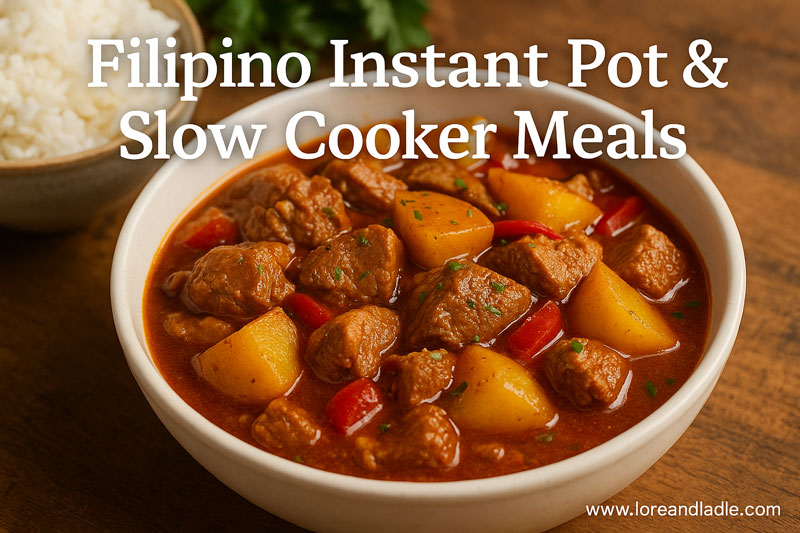
Hook
On a rainy Tuesday, a quiet kitchen invites a family to linger. A pot of Kaldereta simmers, filling the room with tomato, garlic, and a soft warmth from paprika. The table waits, bowls stacked, rice steaming, and gentle laughter rises with each shared story. In moments like this, everyday life feels a little brighter, and the scent of a slow-cooked stew becomes a small celebration. “How to Make Authentic Slow Cooker Kaldereta at Home Americans are loving” is a line you might hear from friends who have tried this dish, and it captures the sense of comfort people discover in a familiar, unfussy method.
The Trust Indicator
Jump to Recipe summary:
– What it is: A comforting beef stew flavored with tomato, garlic, peppers, olives, and a savory-sour edge, adapted for the slow cooker.
– Flavor profile: Rich tomato base, light sweetness from peppers, savory depth from meat and optional liver spread, a gentle tang from tomatoes and seasoning.
– Core ingredients (high level): Beef chunks, tomato sauce or crushed tomatoes, onions, garlic, bell peppers, olives, carrots or potatoes, bay leaves, paprika, a touch of salt and optional soy sauce or fish sauce.
– Texture and feel: Tender meat that melts apart in the mouth, velvety sauce, tender vegetables, and a finishing brightness from olives and peppers.
– Occasions: Everyday family dinners, Weekend Gatherings, potlucks, casual fiestas, or any time you want a warm, shareable meal with rice or crusty bread.
– How it’s enjoyed: Scooped over rice, with the sauce spooned over vegetables, or with a simple side salad; many families customize with extras like pickles for tang or a splash of citrus.
– Ease of prep: Minimal active time, hands-off cooking, and flexible ingredients that suit what’s in the pantry.
For readers curious about How to Make Authentic Slow Cooker Kaldereta at Home Americans are loving, this overview helps you picture the dish before you cook.
The Deep Dive
How Kaldereta fits into daily life is as telling as its taste. In many households, this dish is a celebration of everyday warmth—beef browned to develop a gentle crust, then softened in a tomato-forward sauce that carries hints of garlic, onion, and paprika. The olives and peppers lend a briny sweetness and a pop of color that makes the bowl feel inviting. The slow cooker becomes a quiet partner, turning a busy day into a meal that arrives at the table ready to share.
Flavor balance matters here. The tomato base gives a vivid, comforting tang, while meat juices enrich the sauce into something silky. The peppers—red and sometimes green—offer sweetness and a slight crisp that contrasts with the tenderness of the meat. A small amount of liver spread or pâté is sometimes stirred in for depth, adding a rich, unctuous character that Filipino takes on Kaldereta often savor. This dish is not about heat; it’s about a layered savor: savory meat, soft vegetables, and a bright, balanced sauce that clings to rice or bread.
Culturally, Kaldereta is a dish people reach for when they want to feed a crowd without spending the whole day in the kitchen. It travels well across regions and ages, adapting to what’s on hand—different peppers, potatoes, or even alternative proteins. It sits at family tables during simple Sunday meals, weeknight gatherings, and casual celebrations with neighbors. The setting itself matters as much as the flavor: a shared pot on a kitchen counter, the clink of spoons, a chorus of “More rice, please,” and the comforting rhythm of a meal that invites seconds.
People often speak about the dish with fond precision—how the sauce coats the rice, how the meat falls apart after a long, gentle simmer, how the olives and peppers punctuate the bite with bright notes. Kaldereta is a dish that travels with a family’s routine, becoming a reliable, familiar friend on the table. It is a good fit for gatherings that blend friends and relatives, for casual dinners after a long day, and for those moments when something warm and nourishing is exactly what’s needed. The ritual of serving, sharing, and savoring makes it more than a meal; it becomes a small tradition that families return to, again and again.
“How to Make Authentic Slow Cooker Kaldereta at Home Americans are loving” captures the idea that the dish is approachable and adaptable. The slow cooker method fits modern life—set it in the morning, come home to a ready meal, and savor the way the whole kitchen feels transformed by hours of quiet simmering. The dish’s beauty comes from balance: a simple base that invites personal touches, a texture that comforts, and a flavor profile that feels both familiar and gently new with every family tweak.
The Recipe Card
Core ingredients (high level):
– Beef chunks or stewing meat
– Tomato sauce or crushed tomatoes, optionally a small amount of tomato paste
– Onions and garlic
– Bell peppers (red and/or green)
– Olives (green or black) and, if desired, pickles for a tang
– Carrots and/or potatoes
– Bay leaves and paprika (smoked or sweet)
– Salt and pepper
– Optional depth notes: soy sauce or fish sauce, liver pâté or spread (for richness)
– Optional brightness: a splash of vinegar or calamansi juice
High-level method (no step-by-step instructions): Brown the beef to develop color and flavor, then combine it with the tomato-based sauce, aromatics, and vegetables in a slow cooker. Let the dish cook until the meat is tender and the sauce is lush, letting olives and peppers join near the end for a fresh contrast. The result pairs well with rice or crusty bread and can be adjusted for richness or lightness depending on taste. How to Make Authentic Slow Cooker Kaldereta at Home Americans are loving is a common takeaway, as the dish offers comfort with ease and a sense of shared warmth.
If you’d like to adapt further, consider regional touches like a softer tomato note, a touch more sweetness from bell peppers, or a crunchier final vegetable addition. The key is to keep the sauce balanced, the meat tender, and the mood of the meal generous and uncomplicated. This approach lets How to Make Authentic Slow Cooker Kaldereta at Home Americans are loving remain a friendly, reliable centerpiece for many gatherings, small and large.