
The Allure of Traditional Lagman
Traditional Lagman – Uzbekistani Rice & Pilaf Specialties Flavor You’ll Love is more than a dish. It is a living thread in a tapestry of daily life and celebration. In kitchens across Uzbekistan and neighboring regions, cooks welcome friends and family to bowls that tell a story. The dish blends hand-pulled noodles, a savory broth, tender meat, and a chorus of vegetables. Each spoonful carries memories of markets, harvests, and shared meals. The balance between comforting warmth and bright, fresh notes invites you to linger, to notice the texture of the noodles, and to savor the depth of the broth. This timeless plate invites curiosity and calm, offering a small journey with every bite.
Cultural Significance in Uzbek Cuisine
Lagman holds a cherished place in Uzbek culinary culture. It appears in home kitchens as a weeknight staple and in festive gatherings as a centerpiece that welcomes guests. The dish reflects careful technique, patience, and a taste for balance. Across towns, cooks bring their own touches—slightly different noodle thickness, a preferred mix of vegetables, or a unique blend of spices—yet the core idea remains the same: a nourishing bowl that embodies hospitality. The act of preparing lagman honors craft, from kneading and shaping the noodles to simmering the broth to a clear, confident finish. In this way, lagman serves as a bridge between generations, a way to pass down aroma, technique, and a sense of belonging to a shared culinary heritage.
The Craft: Noodles, Broth, and Vegetables
The heart of lagman is the noodle. When the noodles are fresh and flexible, the bowl sings. Some cooks roll and cut the dough by hand; others use long strands pulled to just the right thickness. The broth follows, built from beef or lamb bones, slow-simmered to extract sweetness and depth. Tomatoes, bell peppers, onions, and carrots join the pot, bringing color and brightness. A chorus of spices—garlic, cumin, coriander, and a touch of chili—gives warmth without overpowering the dish. Finally, the dish comes together with a careful layering: noodles first, broth poured over, and vegetables arranged like a colorful bouquet. The result is a harmonious balance of chewy texture, savory richness, and crisp, fresh bite.
The Harmony with Rice & Pilaf Traditions
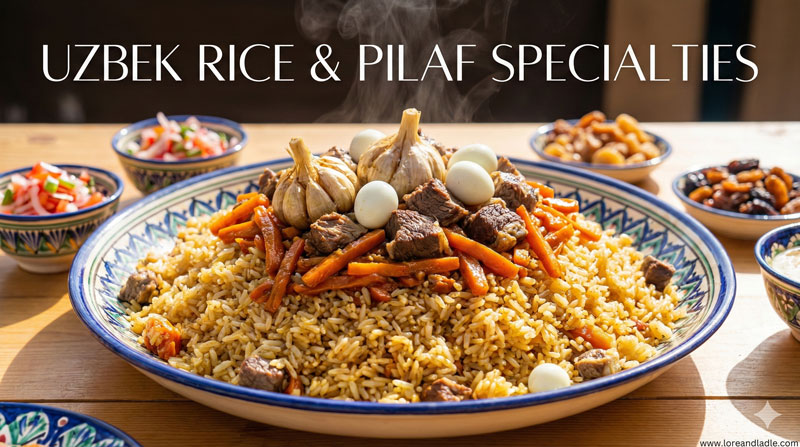
In Uzbek cuisine, rice and pilaf hold a prominent place alongside lagman on many tables. The flavors of lagman and a well-made plov or other pilaf complement one another beautifully. Lagman offers a comforting, broth-forward contrast to the nutty, fragrant grains of pilaf. This pairing highlights the region’s love of layered textures and seasonal produce. The blend of meat, vegetables, and spice in lagman resonates with the savor of pilaf’s glossy rice, carrots, and dried fruits. For diners, the combination presents a complete meal that honors both the earth’s bounty and the skill of traditional cooking. This synergy—between lagman’s warmth and pilaf’s brightness—gives the meal a distinctive, welcoming character that many households treasure.
Hospitality and Social Rhythm
Sharing lagman is a social ritual as well as a meal. Families gather around a large pot or several bowls, speaking softly as steam rises. Guests are welcomed with bright tea and a smile, and bowls are passed with care. The act of serving lagman becomes an expression of generosity and respect. In markets and eateries, the aroma draws in passersby, inviting them to pause, sample, and learn about the dish’s heritage. This social dimension—how a pot of lagman invites conversation, connection, and comfort—helps explain why the dish remains vibrant in homes and public spaces alike. It is food that invites you to slow down, listen, and appreciate the craft behind every ingredient.
Tips to Cook Traditional Lagman at Home
If you wish to experience lagman at Home, start with balance. Use a good cut of beef or lamb for a broth that holds up to long simmering. Prepare the noodles fresh or choose a shop with quality, springy strands. Layer vegetables with care so the plate looks as inviting as it tastes. Keep spices bright but restrained; a gentle hand with cumin, garlic, and coriander preserves the dish’s warmth without overpowering the broth. Finally, take a moment to arrange the bowl with care—place noodles, pour the steaming broth, and nestle vegetables in a colorful circle. This mindful approach echoes the dish’s cultural spirit: patience, precision, and a Love For sharing.
A Taste Worth Exploring: Markets, Homes, and Everyday Tables
Lagman offers a taste that lingers beyond the meal. It invites curiosity about ingredients, technique, and the stories behind each family recipe. In markets, you can discover fresh noodles, vibrant vegetables, and aromatic spices that capture the essence of the dish. In homes, lagman becomes a canvas for memory and tradition, a way to celebrate seasonal produce and time-honored methods. The dish’s beauty lies not only in the flavor but in the care of its preparation and the warmth it brings to the table. Whether you approach it as an everyday supper or a special weekend dish, lagman stands as a bright reminder of culinary craft and cultural appreciation.
If you’re drawn to the flavors of Central Asia, seek out Traditional Lagman – Uzbekistani Rice & Pilaf Specialties Flavor You’ll Love in thoughtful, well-made versions. Let the noodles carry you gently into a world of texture, aroma, and tradition. Each bite will affirm the dish’s place in the culinary arts: a staple that nourishes, teaches, and delights, all at once.