
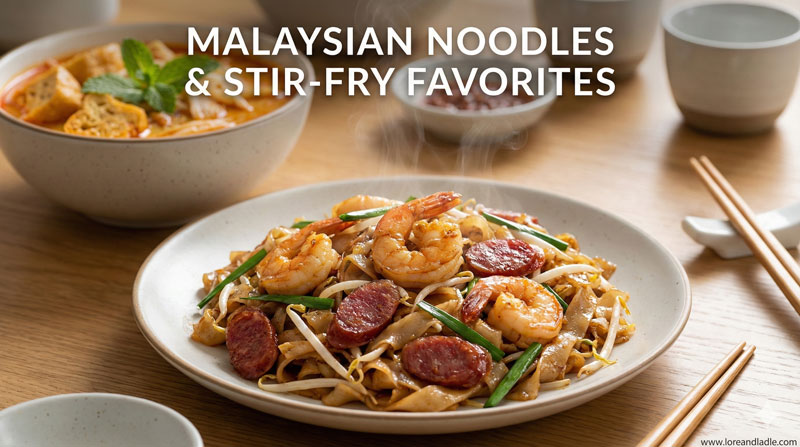
What Char Kway Teow Is
Char Kway Teow is a beloved stir-fried noodle dish that shines with bold flavors and quick, precise technique. The base is flat rice noodles, fast-sautéed in a hot wok until they gain a smoky aroma. The dish usually carries shrimp, a few bite-sized slices of Chinese sausage, and a handful of beansprouts and chives. Eggs mingle with the noodles, adding richness, while a mix of soy sauces deepens the color and strengthens the savor. In many stalls, you’ll still see a touch of lime, chili, and sometimes cockles, which bring a distinctive briny bite. The result is a plate that looks simple but delivers layers of texture and flavor. Char Kway Teow travels beyond borders in spirit, landing in faraway kitchens as a vivid reminder of street food’s immediacy and charm. in the United States, food lovers are craving Char Kway Teow right now because it offers a punchy, comforting experience that feels both familiar and new.
The Sizzle and Wok Hei
The magic of Char Kway Teow rests on the sizzle of the wok and the concept of wok hei—literally the breath of the wok. A blazing hot surface is essential. The fastest movements, the constant toss, and the quick flipping of ingredients all contribute to a light caramelized edge on the noodles. This is not a slow simmer; it is a rapid choreography that preserves brightness in the bean sprouts and the snap of the shrimp. Achieving the right wok hei means using a sturdy carbon-steel or seasoned iron wok, preheating until it shimmers, and adding oil that lightly coats the surface without pooling. The result is a dish that tastes bright, slightly charred, and deeply savory. Clear transition and motion help the flavors cooperate, letting garlic, soy, and brine from the seafood harmonize in a single, exhilarating bite.
Textures and Flavor Notes that Tell a Story
Char Kway Teow is a study in texture. The noodles are soft and glossy, yet they remain pleasantly chewy. Beansprouts stay crisp, offering a fresh counterpoint to the richness of eggs and meat. Shrimp contribute juiciness, while the Chinese sausage brings a subtle sweetness and a touch of fat that rounds the sauce. The sauce itself is a balance of salty, sweet, and umami notes. Light soy sauce provides depth and brightness, while a dash of dark soy adds color and a hint of molasses-like sweetness. Some cooks finish with a final drizzle of oyster sauce and a pinch of white pepper, which lifts the entire plate. The aroma is unmistakable: a smoky, savory perfume that invites you to lean in and take a bite.
Cultural Significance in Food Culture
Char Kway Teow embodies a spirit of shared food culture and technique. It is a dish that many households and stalls master through practice, discipline, and a love for rapid-fire cooking. Its presence on busy street corners and in bustling markets speaks to a culture that values quick nourishment, communal eating, and the joy of watching cooks perform a deft wok toss. The dish invites creativity within a clear framework: noodles, eggs, protein, crisp vegetables, and a sauce that ties everything together. Across towns and neighborhoods, you’ll hear differences in the balance of salt and sweetness, or the choice between shrimp and clams, which reflects local tastes and available ingredients. Yet the core idea remains the same: a fast, flavorful, shareable plate that signals hospitality and satisfaction. For many, Char Kway Teow is more than a meal—it is a celebration of skilled technique, bright contrast in textures, and the warmth of a kitchen that welcomes all who seek a satisfying bite.
Why U.S. Food Lovers Are Craving It Now
Today’s food landscape in the United States finds appeal in dishes that deliver bold flavor with clear technique. Char Kway Teow fits beautifully in this scene. It offers a concise story of heat, smoke, and balance. The dish invites the palate with a savory-sweet melody and a smoky finish that lingers pleasantly. Its modular nature—noodles, vegetables, seafood, and a vivid sauce—makes it approachable for home cooks while also preserving the excitement of a street-food specialty. For food lovers who enjoy a quick, chef-driven flavor experience, Char Kway Teow presents both challenge and opportunity: the challenge of achieving the right level of wok hei, and the opportunity to tailor ingredients to personal taste. In this moment, the dish resonates as an accessible, satisfying bridge between home cooking and the vibrant energy of a market stall. Its appeal lies in the way it celebrates technique, aroma, and the simple joy of sharing a hot plate with friends and family.
A Simple Char Kway Teow Recipe to Try
Here is a straightforward way to bring Char Kway Teow into your kitchen while keeping the focus on balance and technique. This version emphasizes the key elements: noodles, a smoky finish, a touch of brine, and a clean, bright finish.
- Ingredients (serves 2-3)
- Flat rice noodles (about 400-500 g)
- 200 g shrimp, peeled and deveined
- 2 Chinese sausages, thinly sliced (optional)
- 2 eggs
- 1 cup bean sprouts
- A small handful of chives, cut into 2-inch pieces
- 2 cloves garlic, minced
- 1–2 tablespoons light soy sauce
- 1 tablespoon dark soy sauce
- 1 tablespoon oyster sauce (optional)
- 1–2 teaspoons sugar (optional)
- 2–3 tablespoons neutral oil
- Salt and white pepper to taste
-
Optional garnish: lime wedges and chopped chili or chili paste
-
Method
1) Heat a well-seasoned wok over very high heat. Add 1 tablespoon oil and swirl to coat.
2) Add garlic and quickly stir for about 10 seconds until fragrant. Push to the side.
3) Pour in beaten eggs, scrambling briefly, then mix with garlic.
4) Add the shrimp and cook until pink. If using Chinese sausage, add now and toss.
5) Add the noodles, breaking them apart. Stir-fry briskly for 1–2 minutes to coat with oil.
6) Pour in light soy sauce, dark soy, and oyster sauce. Toss to distribute evenly.
7) Add bean sprouts and chives. Toss 30–60 seconds, cooking just enough to soften sprouts.
8) Taste and adjust with a pinch of sugar, salt, and white pepper. Finish with a final quick toss.
9) Remove from heat. Serve immediately with lime and chili if desired. -
Tips for success
- Use very hot, quick movements to maximize wok hei.
- If the noodles stick, loosen them gently with a chopstick instead of breaking them.
- Cockles or clams, when available, add brightness; if absent, stick to shrimp for a clean, sweet bite.
- Keep the vegetables crisp by adding them near the end of the cooking time.
Char Kway Teow is a dish that invites experimentation while staying faithful to its core appeal: a fast, smoky, deeply satisfying plate. Whether you cook it at Home or seek it at a market stall, the experience remains rooted in technique, balance, and the joy of sharing. As you savor the dish, you’ll feel the beauty of a cultural practice that honors patience, precision, and the unifying power of good food.