
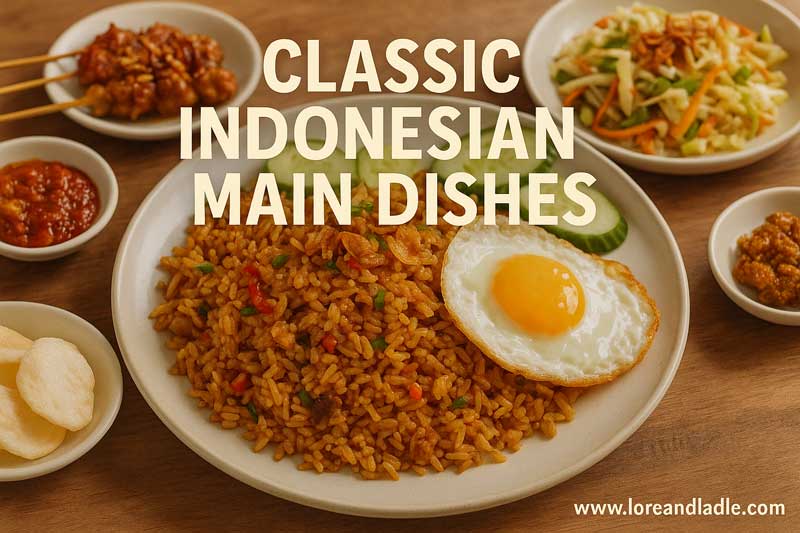
9 Classic Indonesian Main Dishes to Try If You Love Bold Indonesian Flavor
Introduction
Indonesian cuisine shines through bold aromas, bright colors, and a careful balance of sweet, salty, sour, and spicy. This collection presents nine classic main dishes that showcase the country’s rich culinary culture. Each dish speaks to regional flavors, time-honored techniques, and the joy of sharing a meal with family and friends. Whether you visit a bustling street stall or a quiet family kitchen, these dishes invite you to taste Indonesia’s culinary heart. in the pages that follow, you’ll find dishes that celebrate technique, seasonality, and the love of cooking that travels from farmers to tables.
Nasi Goreng
Nasi Goreng, or fried rice, is a morning-to-night staple found across Indonesia. Chefs flavor the rice with garlic, shallots, and a touch of kecap manis for sweetness. A quick toss in a hot wok creates a light smoky aroma known as wok hei. Typical toppings include a fried egg, sautéed vegetables, and shrimp crackers for texture. This dish embodies frugality and creativity: leftover rice becomes a satisfying, comforting main dish. It also marks togetherness, as families gather to enjoy a simple yet deeply satisfying meal after a long day. The dish’s flexibility reflects regional tastes, with fish, chicken, or prawns adding variety while keeping its bold, savory core.
Rendang
Rendang is a slow-cooked beef curry that celebrates depth and balance. Beef braises in coconut milk with turmeric, ginger, lemongrass, galangal, garlic, and chilies until it becomes tender and deeply colored. The key is patience: the liquid reduces slowly, intensifying flavors and producing a velvety sauce that clings to the meat. Rendang often appears at festive gatherings and special occasions, where its rich aroma fills the room and signals celebration. Its culinary significance lies in technique as much as taste: mastering the long, gentle simmer and the spice blend yields a dish that is both comforting and grand.
Satay
Satay features skewered, grilled meat brushed with a fragrant marinade. Common versions include chicken, beef, or lamb, marinated with turmeric, coriander, garlic, and coconut milk before grill-time. The meat develops a smoky crust and a juicy interior, then meets a creamy peanut sauce that balances sweetness, salt, and heat. Satay links street-corner creativity with family-style meals. It invites communal dining and is often shared at gatherings, markets, and celebrations. The pairing of meat, smoky aroma, and peanut sauce makes Satay a quintessential expression of Indonesian flat-out flavorful cuisine.
Rawon
Rawon is a distinctive beef soup known for its dark, almost black broth. The color comes from keluak (kluwek) seeds, which infuse the stock with earthy, nutty notes. Fresh spices—garlic, shallots, coriander, and lime leaves—lift the dish, while the meat stays tender from slow simmering. Rawon is commonly served with rice, boiled eggs, and fresh herbs, creating a layered contrast of textures. Regional pride runs through Rawon, especially in East Java. The dish invites conversation and shared enjoyment, turning a simple bowl into a cultural moment around the table.
Soto Ayam
Soto Ayam is a bright, comforting chicken soup that carries golden warmth from turmeric and aromatics like lemongrass and lime leaves. The broth rests on clear, clean flavors, while toppings such as rice vermicelli, shredded chicken, scallions, fried shallots, and a squeeze of lime brighten each bite. Soto Ayam is versatile: it appears in markets, at family meals, and on festive spreads. Its accessibility and gentle complexity make it a beloved introduction to Indonesian flavors, inviting guests to savor a soothing, everyday celebration of balance and clarity in soup form.
Ikan Pepes
Ikan Pepes is fish enveloped in banana leaves with herbs, chilies, and spices, then steamed or grilled to perfume. The banana leaf wrapper awards a delicate smokiness and a fragrant aroma that carries through the kitchen. Common spices include turmeric, garlic, shallots, lemongrass, and chilies, which mingle with the fish’s natural sweetness. This method honors ingredients and tradition, connecting coastal and inland communities through a shared technique. Ikan Pepes is a gentle, aromatic way to experience bold Indonesian flavors in a single, fragrant package.
Gudeg
Gudeg is a slow-simmered, deeply fragrant jackfruit stew. Young jackfruit breaks down into tender shreds, absorbing coconut milk, palm sugar, and a bouquet of spices. The result is a sweet-savoury dish with a distinctive, comforting aroma. Gudeg is often served with rice, boiled eggs, tofu, and tempeh, creating a colorful plate that tells a story of preparation and patience. Central Java and the city of Yogyakarta celebrate Gudeg as a cultural treasure, where long cooking reflects care, hospitality, and a love for layered flavors that linger on the palate.
Ayam Bakar Kalasan
Ayam Bakar Kalasan is roasted chicken from Kalasan, Java, marinated in a mixture that may include coconut milk, garlic, coriander, and other spices. The chicken develops a crisp, caramelized skin and juicy, tender meat inside. This dish highlights the skill of timing and technique in Indonesian roasting methods. Served with rice and accompaniment sauces, Ayam Bakar Kalasan brings fragrant aroma and comforting richness to the table. It embodies the region’s culinary artistry and the joy of sharing a well-prepared, flavorful meal with loved ones.
Mie Goreng
Mie Goreng, or fried noodles, captures Indonesia’s love of quick, delicious meals. Noodles are wok-tossed with garlic, onion, vegetables, meat or seafood, and a glossy mix of sweet soy sauce and chili sauce. The result is a savory, slightly sweet dish with a satisfying bite. Mie Goreng travels well across islands and seasons, adapting to what’s available while preserving its bold, memorable character. It is a favorite for casual dinners, friendly gatherings, and street-side dining, reflecting how Indonesian flavor can be both quick and deeply satisfying.
If you’re exploring Indonesian cuisine with curiosity and respect, these nine dishes offer a delicious doorway. Each one speaks to a place, a family recipe, and a moment of sharing. Enjoy them as you learn about the country’s culinary artistry, and let the bold flavors guide your appreciation for Indonesian food culture.