
Gudeg Jogja: A Crown Jewel of Yogyakarta
Gudeg Jogja stands as a cherished symbol of Central Java’s warm hospitality. Its character unfolds slowly, like a story told over a shared meal. The dish centers on young jackfruit, or nangka muda, simmered in coconut milk with palm sugar and a bouquet of spices. The result is a tender, silky texture and a sweet-savored aroma that fills the room. This dish is more than sustenance; it is a ritual of patience, care, and balance between sweetness and depth.
In Yogyakarta, gudeg is often served with rice, boiled egg, fried tempeh, and a side of krecek (crispy chili-soaked beef skin). Each component adds texture and contrast, inviting a slow, mindful tasting. The vibrant color, the soft fruit, and the fragrant coconut milk together create a meal that feels like a quiet celebration of everyday life. For Indonesian food fans in the U.S., gudeg offers a gateway to the heart of Javanese table rituals and the artistry of long, careful cooking.
The Craft Behind Gudeg
The beauty of gudeg lies in technique as much as in flavor. The jackfruit releases its starches and absorbs the sweetness of palm sugar in a low, gentle simmer. Coconut milk enriches the sauce, while spices weave notes of warmth throughout. The process rewards patience: time allows the flavors to harmonize and the fruit to take on a character that is both plush and fragrant.
Serving gudeg is an act of generosity. It invites sharing and conversation, as family and friends gather around a pot or a large platter. The dish’s simplicity—few ingredients, one thoughtful method—creates space for appreciation: the way the spices bloom, the way the jackfruit shreds into bite-sized tenderness, the way the coconut aroma lingers.
Gudeg in Yogyakarta Culture
Gudeg is deeply rooted in the social fabric of Yogyakarta. It marks seasons of the year, family celebrations, and weekend meals after late prayers. The dish embodies a philosophy of harmony, where sweetness and savoriness sit side by side, inviting balance in every mouthful. In homes and in small eateries, gudeg tells a story of place: of markets that supply nangka muda, of coconut groves, and of cooks who refine their craft with quiet confidence. For fans in the U.S., gudeg offers not just flavor but a connection to a city’s tempo, its morning markets, and the shared joy of a well-made meal.
Indonesian Soups & Stews: A Palette of Flavors
Beyond gudeg, Indonesia’s soups and stews present a spectrum of regional voices. Each bowl mirrors local ingredients, climate, and culinary memory. From clear, bright broths to dark, richly spiced stews, these dishes celebrate how soup can comfort, energize, and bring people together. In every variety, you taste the land, the markets, and the family recipes that travel from kitchen to table.
Soto Ayam: Comfort in a Bowl
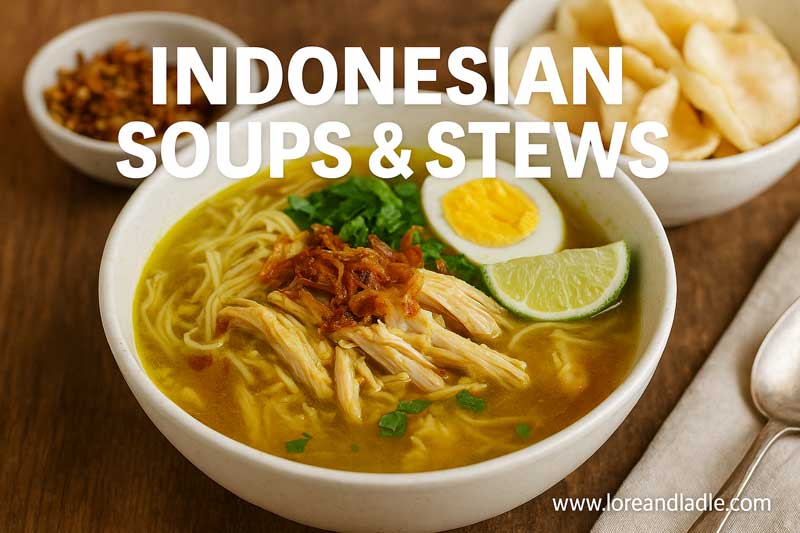
Soto Ayam is a versatile, welcoming soup. A clear, aromatized broth carries notes of ginger, lemongrass, and turmeric. Shredded chicken adds light, comforting substance, while herbs and lime brighten each spoonful. This soup is a friend at casual lunches and a gentle host at gatherings. It shows how simplicity and freshness can create a memorable, satisfying meal.
Rawon: The Black Gold of East Java
Rawon is famous for its deep, dark broth, colored by keluak nuts. The nut’s earthy aroma creates a unique, rich foundation that complements tender beef and hearty greens. Rawon invites careful tasting: a little lime, a dab of sambal, and a crust of crackly fried shallots transform the dish. It is a dish of contrasts—bold and mellow, rustic and refined—woven from regional ingredients and a thoughtful kitchen hand.
Sup Buntut: The Hearty Oxtail Soup
Sup buntut delivers warmth and heartiness in a single bowl. Slow-simmered oxtail becomes lush and yielding, with carrots, potatoes, and tomatoes adding body and sweetness. A squeeze of lime and a touch of chili paste can brighten the broth, turning a comforting staple into a memorable centerpiece for family meals or friendly gatherings.
Bringing the Flavors Home in the U.S.
For Indonesian food fans in the U.S., these soups and gudeg offer accessible paths to authentic flavors. Seek Indonesian markets for fresh nangka muda, coconut milk, and local spice blends. When fresh ingredients are scarce, dried or frozen options can help maintain flavor. For gudeg at Home, you can start with a small batch to appreciate the slow build of sweetness and aroma, then expand as you refine your technique. The joy lies in the careful balance of textures, colors, and scents that remind us of home in every bite.
This is a celebration of culture through food. Gudeg Jogja and Indonesia’s soups and stews invite you to taste memory, craft, and community. They welcome you to explore their beauty with respect, curiosity, and delight.