
Tahu Goreng and Indonesian Soups & Stews Favorites for Indonesian Food Fans in the U.S.
Tahu Goreng, a beloved fried tofu snack, sits at the heart of Indonesian kitchens. When paired with a gentle broth of spices, a tangy or sweet dipping sauce, and a sprinkle of fresh herbs, it becomes more than a bite. It becomes a gesture of welcome, a signal that a meal is more than sustenance—it is a moment for sharing, learning, and savoring. This post also gathers a group of Indonesian soups and stews that many fans in the U.S. treasure. Together, they highlight how hunger meets heritage, how simple ingredients become meaningful rituals, and how cooking connects people across kitchens and continents.
Tahu Goreng: Crispy Comfort with a Soft Heart
Tahu Goreng begins with humble tofu. The block is pressed, sliced, and lightly coated, then fried to a crisp exterior while the inside stays tender. The contrast—crisp skin, tender core—exemplifies Indonesian culinary aesthetics: balance through texture. The dish is versatile. It can arrive with a drizzle of kecap manis, a bright chili sauce, or a squeeze of lime, inviting a dance of sweet, salty, and tangy notes. In many homes, Tahu Goreng is a ready choice for breakfast, a snack between chores, or a quick shareable plate during gatherings. Its accessibility makes it a daily ambassador of plant-based protein, reminding cooks that flavor grows from technique as much as from ingredients. In the U.S., tofu lovers discover a familiar texture with Indonesian personality when it meets a pepper-scented oil or a peanut-laced dipping sauce. Tahu Goreng thus serves both comfort and curiosity in one warm bite.
Why Tahu Goreng Holds Cultural Significance
Tofu is a staple in many Indonesian kitchens, valued for its versatility and protein-rich appeal. Tahu Goreng has a democratic spirit: it’s simple enough for everyday meals and adaptable enough for festive spreads. The dish invites social moments—shared plates, open conversations, the gentle clatter of utensils at a table. Its preparation can be a cooperative activity: pressing, slicing, coating, frying, and sharing. This makes Tahu Goreng a quiet cultural ambassador, showing how a single ingredient can travel through time and place, absorbing regional flavors while preserving a universal warmth that welcomes all who gather to eat.
Indonesian Soups & Stews: A Palette of Warmth
Beyond Tahu Goreng, Indonesian soups and stews reveal a broader culinary language. Aromatic broths, bright herbs, and slow-simmered meats or vegetables produce comforting bowls that are equally at Home on a weeknight table and at a celebration table. These soups and stews emphasize balance—evidence that Indonesian cooking often harmonizes sweet, sour, salty, and savory in a single dish. Each recipe carries regional fingerprints, yet the core idea remains: broth as a living conversation between spice, aroma, and texture.
Soto Ayam: Turmeric Brightness in a Bowl
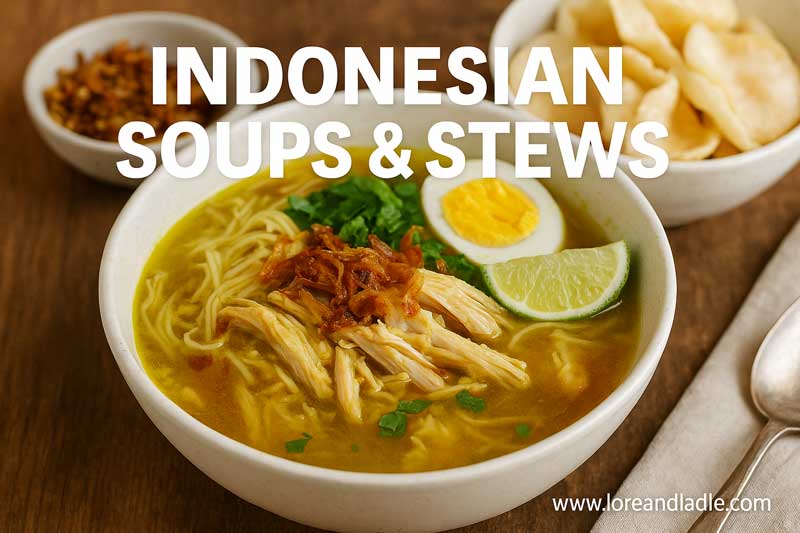
Soto Ayam is a golden, fragrant chicken soup. The broth glows with turmeric, lending a sunny hue and a gentle peppery warmth. Lemongrass, galangal, and kaffir lime leaves add citrusy lift, while garlic and shallots enrich the base. Common toppings include boiled egg slices, fried shallots, lime wedges, and rice cakes or noodles. Soto Ayam is both everyday nourishment and a comforting ritual—simple enough for daily meals, special enough for family gatherings. Its aroma invites everyone to the table, and its bright taste invites conversation about shared memories and meals in new places.
Rawon: Deep, Earthy, and Celebratory
Rawon earns its distinctive character from keluak seeds, which color the broth to a deep, almost ebony shade. The result is a beef soup that tastes rich, slightly nutty, and deeply comforting. The broth carries garlic, shallots, and coriander, with star anise and cardamom providing a fragrant backbone. Rawon’s striking appearance and complex aroma make it a dish to savor slowly, often paired with sambal, lime, and bean sprouts. In Indonesian culinary culture, Rawon is a dish that signals warmth, generosity, and a sense of occasion, inviting tables to gather for a shared, flavorful moment.
Bakso: Subtle Comfort in a Broth
Bakso soup centers on meatballs plucked from a clear, aromatic broth. The broth often arrives with garlic, pepper, and a touch of sweetness, while toppings like fresh herbs, fried shallots, noodles, and a squeeze of lime brighten each bowl. Bakso embodies everyday hospitality: it’s a comforting option at street stalls, family kitchens, and cozy home cafes. Its universal appeal lies in its balance—soft meatballs, clean broth, and bright accompaniments—an invitation to slow down and enjoy conversation as flavors deepen.
Opor Ayam and Other Rich Stews: Coconut, Spice, and Gentle Indulgence
Opor Ayam braises chicken in coconut milk with lemongrass, turmeric, and a kiss of coriander. The result is a mellow, creamy stew that feels like a warm embrace. It pairs beautifully with rice or bread and is often associated with festive meals, family gatherings, and special occasions. Other Indonesian stews share this love for mellow richness—coconut milk softens heat while a blend of spices lingers on the palate, turning a meal into an experience of comfort and care.
Tahu Goreng in the U.S.: A Kitchen Bridge
In the United States, Indonesian fans bring these flavors into homes and local eateries with thoughtful adaptations. Tahu Goreng translates well to a kitchen that values quick, crisp textures and a savory-sweet dipping option. Indonesian soups and stews adapt to available ingredients while preserving core flavor profiles—turmeric’s glow, lemongrass’s brightness, and keluak’s earthiness in Rawon, for example, can be approximated with accessible substitutes that respect the dish’s intent. These dishes become a bridge between home cooking and shared tasting experiences, encouraging Home Cooks to explore regional profiles and to introduce friends and family to Indonesian culinary poetry.
Techniques and Ingredients: Making Indonesian Soul at Home
Key techniques include pressing tofu to ensure crispness, a light starch coating for Tahu Goreng, and patient simmering for broths. Core ingredients—turmeric, lemongrass, garlic, shallots, and fresh herbs—shape the flavor landscape. Sauces such as kecap manis provide sweetness and depth, while sambal offers a controlled heat. For those cooking in the U.S., many ingredients are available at Asian markets or can be substituted thoughtfully: fresh lemongrass or lemongrass paste, kaffir lime leaves or lime zest, turmeric powder, and peanut sauces all work well. The goal is to honor the balance of aroma, texture, and taste while adapting to your pantry with care and respect.
Closing Thoughts: Shared Tables and Gentle Traditions
These dishes celebrate the beauty of Indonesian food: a cuisine built on balance, warmth, and hospitality. Tahu Goreng, along with Soto Ayam, Rawon, Bakso, and Opor Ayam, offers a spectrum of textures and flavors that invite curious eaters to slow down and enjoy the moment. The real joy lies in shared tables—neighbors tasting new shades of a familiar broth, families passing bowls to one another, and friends discovering a weave of spices that feels like home. In this spirit, Indonesian soups, stews, and beloved snacks become more than recipes; they are living traditions that welcome everyone to the table with curiosity, gratitude, and delight.