
Welcome to a Flavorful Conversation
Chicken Satay and Indonesian Rice Dishes & Bowls stand as vibrant threads in the fabric of Indonesian cooking. This post highlights their cultural value and culinary significance. The focus is on flavor, technique, and the gentle art of sharing a meal. In kitchens across the United States, these dishes inspire curiosity, celebrate craft, and invite everyone to taste a welcoming tradition. Expect clear steps, inviting ideas, and a heartening sense of belonging through food.
Chicken Satay: A Grilled Tale
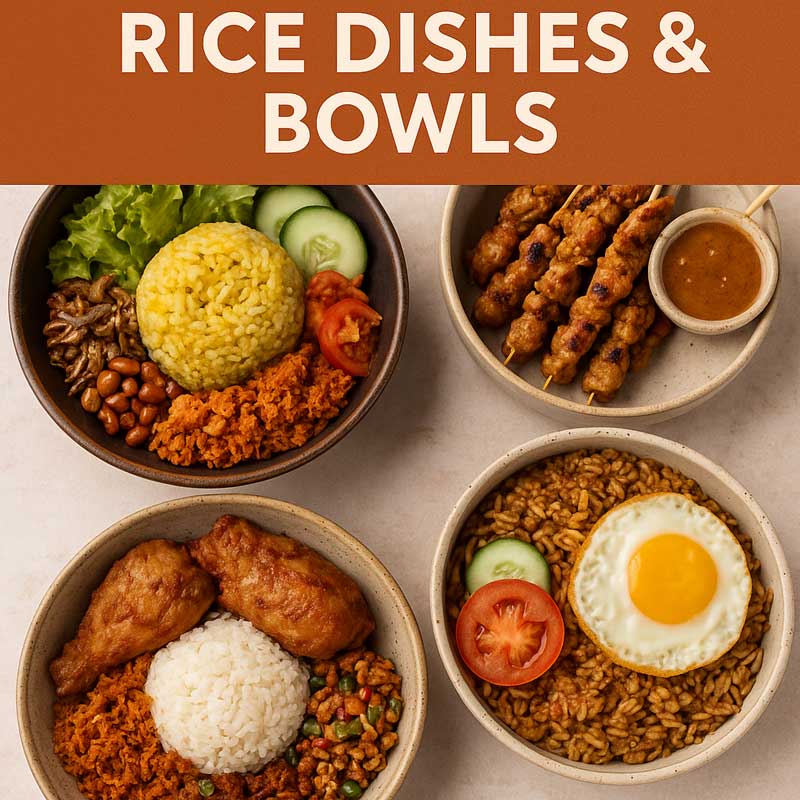
Chicken satay is a celebration of balance. Tender skewered chicken meets a bright, nutty sauce, and together they sing of hospitality and craft. The marinade usually blends turmeric for color and warmth, garlic and shallots for sweetness, lemongrass for fragrance, and a touch of coriander and cumin for depth. A dash of kecap manis or palm sugar elevates the dish with gentle sweetness. The skewers are grilled, often over charcoal, which adds a gentle smokiness that enlivens the surface without overpowering the meat.
The peanut sauce, or bumbu kacang, is the heart of satay’s character. Roasted peanuts mingle with garlic, shallots, and chili, then loosen with lime juice, soy or tamari, a hint of tamarind, and a whisper of coconut milk. The result is a sauce that is creamy, earthy, and bright all at once. Some serve cucumber relish and sliced onions on the side, providing crisp coolness to balance the warmth of the skewers. These elements come together to create a dish that feels celebratory in everyday meals and elegant at gatherings.
In the United States, chicken satay often appears as an approachable starter or a centerpiece for a shared table. Its compact form is ideal for grilling outdoors or in a grill pan, and its familiar aroma invites friends and family to gather. The dish preserves a sense of Indonesian hospitality, inviting guests to sit, savor, and chat as flavors unfold. Satay also serves as a reliable bridge between home cooking and restaurant-style finesse, proving that simple techniques can yield radiant results.
Indonesian Rice Dishes: The Bowls That Tell Stories
Rice sits at the center of many Indonesian meals, and the bowls that accompany satay reflect regional pride and everyday ingenuity. Nasi goreng, or fried rice, is a flexible canvas. It blends day-old rice with garlic, shallots, sweet soy, and sometimes eggs or shrimp. Nasi uduk uses coconut milk and pandan leaves to create a fragrant white rice, rich with aroma. Nasi kuning, a turmeric-colored version, celebrates warmth and color. Nasi campur, the mixed rice bowl, gathers small portions of protein, vegetables, and condiments into one inviting plate.
In bowls, Indonesian cooking shines through balance and variety. A bed of rice supports a protein like satay, while vegetables, herbs, and a chili kick provide contrast and freshness. The bowls emphasize harmony: soft rice or noodles with crisp vegetables, a silky sauce, and a bright acidic note from lime or pickles. This structure makes the dishes approachable for Home Cooks and comforting for families gathering around the table. In the U.S., these bowls become portable, adaptable, and deeply satisfying, demonstrating how Indonesian flavors travel and settle into new kitchens with ease.
Flavor Harmony: Peanut Sauce and Marinades
A defining feature of Chicken Satay and Indonesian Rice Dishes is their flavor balance. The sweet-soy backbone in the marinade and sauce aligns with the natural savor of grilled meat. The peanuts bring an earthy creaminess, while lime juice or tamarind adds a bright, fruity tang. Chili delivers warmth without overpowering. Fresh herbs, such as cilantro or scallions, lift the bowls with crisp green notes. The combination of textures—tender meat, creamy sauce, and crunchy vegetables—keeps the palate engaged and delighted.
Marinades and sauces in Indonesian cooking emphasize layering. The meat rests in spices to tenderize and perfume, then grills to seal in moisture. The rice dishes provide a soft, comforting stage that lets the toppings take center stage. This interplay makes the meals feel well-rounded and complete, whether enjoyed at a casual weeknight dinner or a weekend feast with friends.
Techniques That Elevate Home Cooking
Great satay and bowls emerge from thoughtful technique as much as from ingredients. Here are ideas you can use at home:
- Grill with intention: Soak bamboo skewers, control the heat, and use a steady flame to achieve a gentle char.
- Build a bright peanut sauce: Roast peanuts until golden, then blend with garlic, shallot, chili, lime, and a touch of sweetness. Thin with a bit of coconut milk or water to your preferred consistency.
- Balance the plate: Place a comforting bed of rice, top with satay, and finish with crisp vegetables and a tangy relish to wake the flavors.
- Respect freshness: Use fresh lime juice, herbs, and crunchy vegetables to keep the dish lively and inviting.
- Embrace flexibility: If peanut allergies are a concern, try sesame or almond options for a different yet comforting sauce while preserving the spirit of satay.
The Cultural Value of Sharing and Craft
Food carries meaning beyond taste. Chicken Satay and Indonesian Rice Dishes & Bowls symbolize warmth, generosity, and shared experience. In homes and local eateries, these dishes invite conversation and connection. They celebrate regional diversity within Indonesia—different ingredients and methods reflect local farms, markets, and tastes—while maintaining a common thread that makes the dishes recognizable and comforting to many. The act of gathering around a table to enjoy satay and bowls reinforces a sense of belonging and care for one another, a fundamental part of Indonesian food culture.
In the United States, these dishes offer a bridge between familiar cooking and new flavors. They encourage home cooks to explore spice blends, techniques, and ingredients that respect traditional methods while allowing modern twists. The result is a living tradition: a menu of plates that travel well, perform beautifully in casual meals, and elevate weekend feasts with a touch of Indonesian artistry.
Practical Guide for The Home Kitchen
To bring Chicken Satay and Indonesian Rice Dishes & Bowls to life in your kitchen, consider this practical guide:
- Core ingredients:
- Chicken thighs or breasts, skewers
- Turmeric, garlic, shallots, lemongrass, coriander, cumin
- Kecap manis or dark soy, palm sugar
- Peanuts (roasted or natural peanut butter), garlic, shallots, chilies
- Lime juice, tamarind (optional), coconut milk, salt
- Rice (long grain or jasmine), pandan leaves or bay leaf (optional)
-
Fresh cucumbers or onions for relishes
-
Simple steps:
1) Make the bumbu marinade. Combine turmeric, garlic, shallots, lemongrass, coriander, cumin, kecap manis, and a touch of salt. Mix with oil to create a paste.
2) Marinate the chicken for 2–4 hours to infuse flavor and tenderness.
3) Skewer the chicken and grill over moderate heat until lightly charred and cooked through.
4) Prepare the peanut sauce by blending roasted peanuts with garlic, shallots, chili, lime juice, tamarind, and a splash of coconut milk. Adjust thickness with water as needed.
5) Cook the rice. For a richer aroma, simmer with a bit of coconut milk and a pandan leaf or a pinch of salt.
6) Assemble bowls: rice as the base, satay on top, a ladle of peanut sauce, and a selection of fresh vegetables or pickles on the side.
7) Finish with herbs and a squeeze of lime to brighten the plate. -
Tips for success:
- Use uniform chicken pieces for even cooking.
- Let flavors develop by giving the marinade time to rest.
- Taste the peanut sauce and adjust sweetness, salt, and acidity to your preference.
- Experiment with different rice bowls to discover your favorite pairing.
Final Thoughts: Beauty on the Table
Chicken Satay and Indonesian Rice Dishes & Bowls showcase the elegance of simple ingredients orchestrated with care. They celebrate technique, balance, and the pleasure of sharing. In the United States, these dishes offer a touching reminder that good food can be both comforting and adventurous. They invite home cooks to savor time-honored methods while inviting personal expression. Through these bowls and skewers, the beauty of Indonesian culinary culture shines: approachable, flavorful, and deeply human. Enjoy the aroma, the textures, and the sense of hospitality that accompanies every plate.