
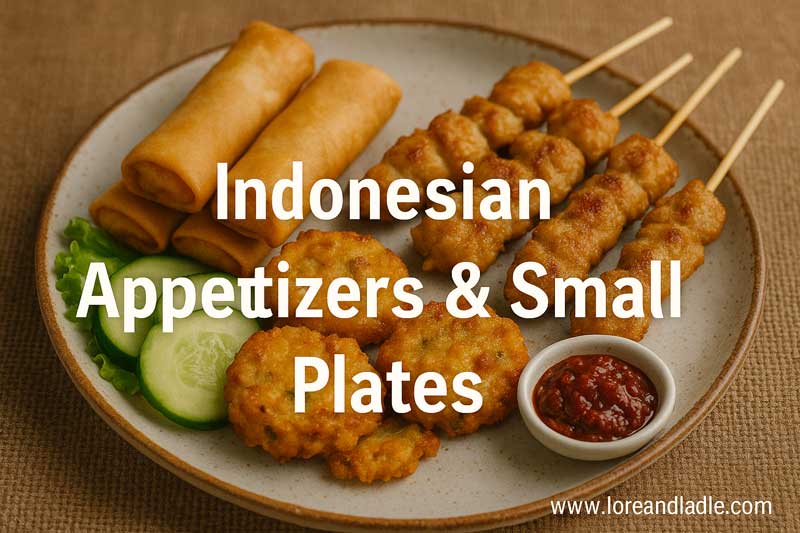
A Bold Introduction to Five Indonesian Appetizers & Small Plates
This post invites you to explore a crafted menu: 5 Indonesian Appetizers & Small Plates to Try If You Love Bold Indonesian Flavor. Each dish carries cultural value and culinary significance that goes beyond taste. These small plates are built for sharing, storytelling, and seasonal gatherings. They showcase how Indonesian cooks balance contrasts—sweet and sour, smoky and fresh, soft and crisp—within a single bite. Read on to discover how these bites reflect the spirit of Indonesian kitchens, and why they endure as favorites in markets, homes, and festive tables.
1) Sate: Skewers that Sing of Fire and Peanut
Sate, or satay, is a symbol of communal cooking. Cooks skewer meat, roast it over charcoal, and finish with a glossy peanut sauce. The technique emphasizes fire, patience, and careful seasoning. Every region offers its own version, from chicken to beef and even seafood. The hallmark is a deeply flavored, lightly smoky bite that carries hints of coriander, turmeric, and lemongrass. The peanut sauce blends sweetness with a touch of heat, creating a universal bridge between simple ingredients and bold aroma. In homes and street stalls, sate becomes a social moment—friends and family gather around the grill as aromas rise, inviting everyone to taste and share. Its cultural value lies in hospitality, entrance into communal meals, and the artistry of mastering fire and balance.
2) Gado-Gado: A Colorful Harmony of Vegetables and Sauce
Gado-Gado is a vibrant medley of blanched vegetables, tofu, tempeh, and sometimes fried onions, dressed in a rich peanut sauce. Its name hints at “mix-mix,” capturing Indonesian cuisine’s love of harmony among textures and flavors. The sauce is the heart: roasted peanuts, lime, palm sugar, and a whisper of garlic and chili. Each bite blends sweet, sour, and nutty notes with crisp vegetables and creamy tofu. This dish highlights resourcefulness and seasonality—vegetables at their freshest, paired with a sauce that unites diverse components. Gado-Gado stands as a culinary symbol of balance and inclusivity in Indonesian dining, offering nourishment and color in every plate.
3) Pempek Palembang: Fish Cake with Tangy Cuko
Pempek Palembang hails from Sumatra’s Palembang region, where fish and tapioca dough become bright, comforting bites. The cakes are firm yet tender, often fried or boiled, and served with cuko—a tangy-sweet chili-vinegar sauce with warming notes of tamarind and palm sugar. This dish celebrates coastal flavors, regional craft, and a technique that turns affordable ingredients into a refined bite. The pairing with cuko illustrates how Indonesian cooks coax brightness from simple pantry items. Pempek is more than a snack; it’s a story of coastal markets, family kitchens, and regional pride. Its cultural value rests in regional identity and the way a local specialty travels from street stalls to home kitchens with equal grace.
4) Ayam Penyet: Smashed Crispy Chicken with Fiery Sambal
Ayam Penyet translates to “pedestal chicken,” but the real standout is the method: fried chicken is gently smashed to loosen the crisp skin and tender flesh, then served with a bright, intense sambal. The sambal—chili, garlic, and sometimes shrimp paste—delivers a bold kick that invites taste, conversation, and repeated bites. This small plate embodies Indonesian street-food vigor: speed, texture, and a fearless peppery profile. It also highlights how heat can be layered rather than overwhelmed, letting garlic sweetness and sour lime balance the heat. Ayam Penyet is a favorite at casual meals and gatherings, a dish that makes bold flavors feel welcoming, approachable, and deeply satisfying.
5) Tahu Gejrot: Crisp Tofu in a Bright Garlic-Chili Sauce
Tahu Gejrot centers on crisp fried tofu bathed in a zesty sauce of garlic, chilies, vinegar, and a touch of palm sugar. The dish delivers contrast: a crisp outside gives way to a silky interior, while the sauce sings with brightness and heat. Originating from West Java, this small plate showcases how simple components—tofu, garlic, chilies—become a bold, memorable bite through careful preparation and balanced seasoning. It’s a favorite snack for tea or coffee breaks and a staple at family gatherings. Tahu Gejrot embodies the Indonesian knack for turning everyday pantry staples into striking flavors that invite sharing and conversation.
Cultural Value and Culinary Significance
Together, these five appetizers reveal how Indonesian cuisine builds cultural value through small plates. Each dish reflects regional techniques, seasonal produce, and social eating patterns that emphasize togetherness. Fire, peanuts, chilies, and bright acidic notes are more than flavors; they are signals of hospitality, celebration, and daily life. These bites travel well from market stalls to family tables, teaching visitors that Indonesian food thrives on balance, contrast, and generosity.
Culinary significance shows in technique and ingredient stories. Sate demonstrates mastery of grilling and the art of a glossy sauce; Gado-Gado showcases integration of textures and flavors; Pempek highlights regional specialization and a signature dipping sauce; Ayam Penyet emphasizes texture and heat; Tahu Gejrot celebrates crisp tofu with a sharp, aromatic sauce. Each dish invites experimentation, conversation, and appreciation for how diverse ingredients reflect a shared culinary language.
How to Experience These Dishes
- In markets and eateries, look for the word “appetizers” or “small plates” on the menu. The portions are designed for tasting and sharing.
- at Home, gather friends and cook a mini tasting: skewers, a veggie platter with peanut sauce, fish cakes with cuko, crispy chicken with sambal, and crisp tofu with garlic-chili sauce.
- When exploring Indonesian cuisine, start with these favorites to feel the rhythm of bold flavors balanced with freshness and texture.
Final Thoughts
These five Indonesian appetizers and small plates offer a window into the country’s culinary soul. They celebrate communal dining, regional pride, and the playful yet precise craft behind Indonesian flavors. Whether you savor them at a street stall, a home kitchen, or a bustling market, you’ll feel the warmth of Indonesian hospitality and the beauty of its culinary artistry. This collection invites you to taste boldly while honoring the traditions that make Indonesian food a vibrant, welcoming part of global cuisine.