
Introduction
Fresh and Bright Classic Lao Main Dishes for Warm Days invites you to explore a small, vibrant window into Lao food culture. These dishes honor the season, the markets, and the shared joy of a quick, satisfying meal. Each plate centers on brightness, balance, and herbs, revealing how Lao cooks coax flavor from simple ingredients. The result is food that feels effortless, generous, and closely tied to daily life. You’ll notice how the bright acidity, aromatic herbs, and clean textures create meals that are easy on the palate and enlivening to the spirit. This collection highlights culinary practices that celebrate freshness, technique, and community.
Fresh ingredients and bright flavors
Lao cooking thrives on fresh produce, citrusy tang, and fragrant herbs. Leafy mints, cilantro, Thai basil, and dill often join with lemongrass, kaffir lime leaves, and fresh chilies. Lime juice and fish sauce provide lively acidity and savoriness, while toasted rice powder adds a gentle crunch and depth. These elements come together in harmony, letting each herb speak while the other notes support it. In warm weather, this approach feels natural: light proteins, crisp textures, and bright dressings that refresh with every bite. The result is dishes that feel both seasonal and timeless, rooted in daily markets and home kitchens.
Larb gai: a bright core of Lao flavors
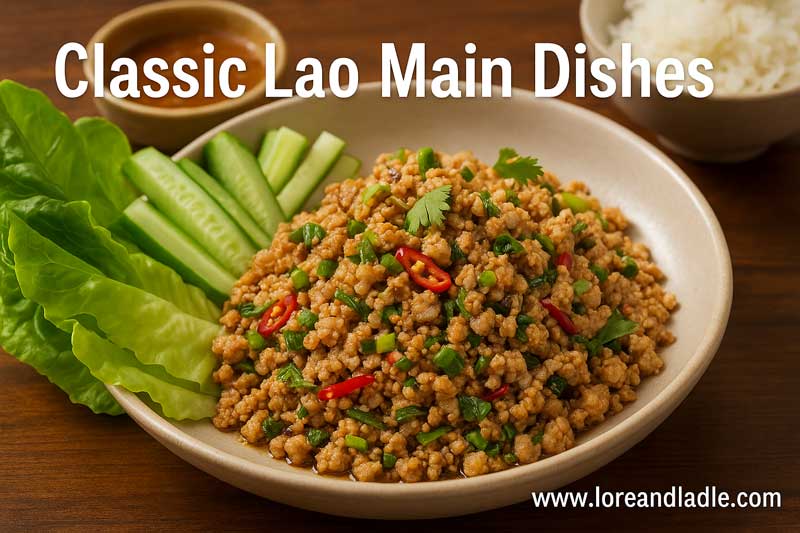
Larb gai serves as a bright, confident centerpiece in Lao tables. Start with minced chicken or turkey, lightly cooked to retain tenderness. Mix in lime juice, fish sauce, and a touch of toasted rice powder for texture. Add finely sliced shallots, mint, cilantro, and green onions. The result is a salad that bursts with citrus, herbal perfume, and a gentle nuttiness from the rice powder. Larb gai is often enjoyed with sticky rice, letting a bite of the fresh greens cleanse the palate. It embodies balance: refreshing acidity, savory depth, and a lingering herb finish. This dish illustrates how Lao cooks translate daily ingredients into a dish that feels celebratory yet familiar.
Nam tok neua: citrusy beef with herb brightness
Nam tok neua captures the earthy warmth of grilled beef in a lively, herb-forward presentation. Slice beef thinly after a quick grill, then dress it with lime juice, fish sauce, ground roasted rice, and a hint of chili. Fold in fresh herbs—mint, cilantro, and scallions—and a shower of toasted sesame seeds if you like. The result is a dish with bright acidity, meaty sweetness, and a clean finish. Nam tok neua invites sharing and conversation, as friends gather to savor a dish that feels both rustic and refined. It highlights Lao street-food roots while elevating the plate with crisp herbs and a zesty bite.
Mok pa: delicate steam in banana leaf
Mok pa shows the gentler, fragrant side of Lao cooking. Steaming fish with lemongrass, dill, garlic, and chili within a banana leaf yields a scented, tender meat with bright herbed notes. The leaf wrap concentrates aromatics and keeps the fish moist. Each bite delivers a clean, perfumed fish flavor that is never heavy. Mok pa also demonstrates technique: steaming preserves freshness and texture, letting the herbs and citrus lift the dish. It remains approachable and elegant, perfect for warm days when light, precise flavors feel uplifting and complete.
Gai yang: grilled chicken with herbal ease
Gai yang is a profile of summer simplicity. Marinade chicken with lemongrass, garlic, lime leaves, pepper, and a touch of fish sauce. Grill until the skin glows and the meat stays juicy. The crisp char adds a subtle smoky note that pairs beautifully with a bright dipping sauce, often a mix of lime, chili, and herbs. Serve with sticky rice and fresh greens to echo Lao hospitality: easy to prepare, generous to share, and deeply flavorful. Gai yang embodies outdoor cooking culture—simple, social, and deliciously refreshing on hot days.
The role of sticky rice and fresh herbs
Sticky rice anchors these dishes, offering a neutral canvas that welcomes bold flavors. Its gentle chew provides balance when zest and spice are high. Fresh herbs act as bright punctuation marks, lifting each bite and inviting another. This pairing reflects Lao culinary logic: a stack of textures, a chorus of aromas, and a rhythm of bite-after-bite satisfaction. The combination makes the meals feel complete without heaviness, perfect for warmer weather and longer gatherings.
Serving these dishes on warm days
On warm days, these dishes shine because they are lively but not heavy. Start with a plate of larb or nam tok as a bright main, then complement with mok pa for aroma and gentleness. Add gai yang when you want a comforting grill flavor, and finish with a minty, citrusy dip to tie the flavors together. The experience is communal, generous, and inviting. It celebrates the season’s produce while honoring the artistry of Lao cooks who balance heat, acidity, and herb brightness with care.
Conclusion
Fresh and Bright Classic Lao Main Dishes for Warm Days presents more than meals; it presents culture in motion. Each dish shows how Lao cooks honor season, community, and craft. The harmony of lime, herbs, and light proteins offers a refreshing, respectful glimpse into Lao food culture. Whether you cook at Home or savor these flavors with friends, you’ll taste the warmth, clarity, and beauty that define Lao cuisine.