
Welcome to Comfort Classics
Comfort Classics: Classic Lao Main Dishes That Taste Like Home invites readers into a kitchen where every bite tells a story of warmth, family, and shared meals. These dishes carry cultural value by connecting people to place, memory, and everyday life. They honor simple ingredients transformed by technique, time, and care. When you savor a Lao main dish, you taste balance, hospitality, and the rhythms of home cooking. This post explores the culinary significance behind these dishes, their flavors, and the ways they anchor Lao food culture in the everyday.
The Special Balance of Lao Flavors
Lao cuisine shines in its bright balance. A single main dish often harmonizes sour, salty, spicy, and herbal notes with a gentle sweetness. Fresh herbs—mint, cilantro, dill, and green onions—lift each bite. Aromatic lemongrass, fragrant dill, and a hint of galangal or lemongrass oil deepen the aroma. Fish sauce lends depth, while lime juice or tamarind adds a crisp tang. This careful equilibrium makes Lao main dishes feel both comforting and lively, ideal for sharing. The result is a flavor profile that speaks to clarity and warmth, a culinary invitation to gather, taste, and reconnect.
Signature Dishes and Their Heart
-
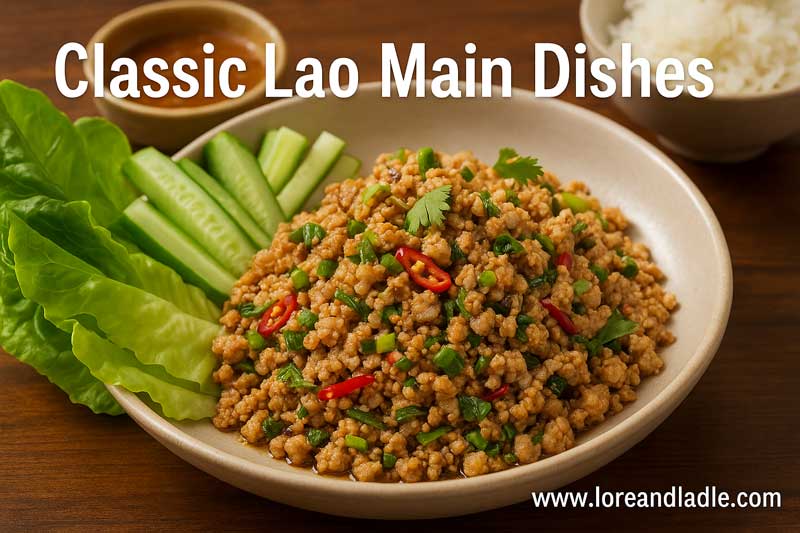
Larb (laap): A cornerstone Lao dish, larb centers minced meat tossed with toasted rice powder, chilies, shallots, and fresh herbs. It is often served with sticky rice, making the meal feel complete. The pounding of ingredients by hand releases essential oils and textures, a ritual that honors craft and patience. Larb teaches restraint and balance: bold heat, bright citrus, and rich meat unite in a lively, satisfying main.
-
Or Lam: This slow-simmered stew highlights meat or game, eggplant, mushrooms, and fragrant herbs. Dill and lemongrass mingle with coconut or palm sugar to create a soothing, robust profile. Or Lam reflects a technique of gentle simmering, where flavors develop over time. The dish embodies comfort through depth and tenderness, a reminder that patience yields depth in both kitchen and life.
-
Khao Poon: A vibrant vermicelli noodle soup, Khao Poon layers a coconut-rich broth with aromatic herbs and spices. It is a festive, communal dish that showcases the skill of balancing a silky broth with fresh vegetables and herbs. Its bright presentation and comforting warmth make it a beloved main during gatherings and Sunday meals.
-
Ping Gai and Sai Oua: Grilled chicken and Lao sausage bring smokiness and bold herbaceous notes to the table. Marinades often feature garlic, lemongrass, turmeric, and local spices. These dishes celebrate outdoor cooking and the joy of a shared grill, a ritual that marks special occasions and everyday celebrations alike.
Techniques That Nurture Flavor and Texture
Lao main dishes rely on a few central techniques that elevate every element:
-
Mortar and pestle pounding (khua): Crushing herbs and spices gently releases aroma without losing brightness. This method is a signature of Lao cooking and a bridge between home and professional kitchens.
-
Toasting and grinding rice powder (khao kua): A light toast of glutinous rice adds a nutty texture and subtle sweetness to meats and salads. A spoonful transforms a dish from good to memorable.
-
Gentle simmering and slow braising: Or Lam and similar stews benefit from low heat and patient cooking. This creates tender meat, deeply infused sauces, and a comforting, almost velvet mouthfeel.
-
Fresh herb finishing: A final handful of mint, dill, or cilantro brightens the plate and reinforces the dish’s herbal backbone. It signals freshness and care in every serving.
Regional Voices and Seasonal Flavors
Laos features regional nuances that enrich these classics. In the north, heartier stews and mushroom notes appear in Or Lam. In central regions, tart-sour brightness from lime or tamarind may lead, paired with generous herbs. In the south, fish and river herbs mingle with coconut touches to create creamy, ocean-spiced iterations. These regional voices share a common philosophy: ingredients are respected, and care is shown in the preparation. Seasonal produce—fresh herbs in spring, ripe chilies in late summer, and root vegetables in cooler months—shapes menus and keeps dishes vibrant year-round.
Sourcing, Seasonality, and Home Kitchen Tips
To honor these dishes at Home, seek quality ingredients:
- Fresh herbs: mint, cilantro, dill, and green onions. These wake the dish and add brightness.
- Aromatics: lemongrass, garlic, shallots, and chili. Use them to build a fragrant base.
- Protein choices: pork, chicken, beef, or mushroom for vegetarian versions. Each offers a distinct texture and flavor.
- Condiments: fish sauce, lime juice, and a touch of palm sugar. They anchor the dish’s balance.
- Sticky rice: the classic accompaniment. Its chewy texture complements the sauces and textures of Lao mains.
Practical tips:
– Toast rice powder yourself for freshness. A dry skillet over medium heat until pale gold, then grind finely.
– Pound aromatics with intention. A few deliberate presses release oils that speed up flavor development.
– Finish with herbs just before serving to preserve their aromatic magic.
Food as Hospitality: How These Dishes Bring People Together
These Lao mains are more than meals; they are invitations to share. The act of preparing them for family and friends signals care and generosity. A table set with sticky rice and colorful herbs becomes a stage for conversation, laughter, and memory-making. The rhythm of serving—portions passed around, bowls refilled, and plates shared—fosters a sense of belonging. In homes and gatherings, these dishes mark everyday life as something special, turning ordinary moments into meaningful rituals of nourishment and connection.
Serving Ideas and Presentations
A Lao main dish shines when presented with simplicity and color. Consider:
– A central bowl of larb with a generous heap of herbs and a side of sticky rice.
– Or Lam plated with a warm, inviting aroma, herbs scattered on top.
– Khao Poon served with a bright array of vegetables and sliced chilies for color contrast.
– Grilled meats brought to the table with fresh lime wedges and a small dish of dipping sauce.
Small touches matter: a sprig of dill atop Or Lam or a final squeeze of lime over larb elevates the plate. The beauty is in balance and presentation as much as in flavor.
A Culinarian’s Note: Making Lao Classics Accessible
If you are new to Lao cuisine, start with one dish and build confidence. A well-made larb demonstrates how chopping, toasting, and seasoning create a chorus of flavors in a single bowl. As you gain comfort, explore Or Lam’s depth or the bright complexity of Khao Poon. Each step teaches you about herb usage, texture, and the delicate dance of sour and salty.
Conclusion: The Taste of Home in Lao Main Dishes
Classic Lao main dishes embody comfort, culture, and culinary artistry. They celebrate home as a space of care, family, and hospitality. Through bright herbs, careful techniques, and the unifying power of sticky rice, these dishes connect generations and neighborhoods. They are a living heritage—delicious, nourishing, and deeply human. Whether enjoyed with friends, family, or neighbors, these Lao mains remind us that good cooking is a shared language of warmth and belonging.