
Introduction
Welcome to the Fresh Herb–Lovers Guide to Classic Lao Main Dishes. This piece celebrates a way of cooking that centers bright, fresh greens as the heartbeat of Lao flavor. In Lao cuisine, herbs are not just seasoning; they guide aroma, balance, and memory. Each dish in this guide invites you to taste a moment when garden herbs meet the heat of the pan, the steam of a banana leaf, and the warmth of family meals. The result is a dining experience that feels both intimate and expansive.
The Fresh Herb Philosophy in Lao Cuisine
Fresh herbs in Lao cooking illuminate a philosophy of balance. They brighten, mellow, and sharpen in turn, creating harmony among sour, salty, and spicy notes. In Lao markets, mint, cilantro, Thai basil, dill, lemongrass, kaffir lime leaves, and perilla mingle with chilies and fish sauce. The herb blend is crafted with intention, added at different stages to modulate aroma and texture. This approach yields dishes that are lively on the palate and generous on the senses. The herb-forward style also reflects a culture that values garden-to-table vitality, seasonal flavors, and shared meals that honor guests with bright, fresh finishes.
A Palette of Lao Main Dishes
This guide highlights classic Lao main dishes where fresh herbs take center stage. Each dish showcases how herbs elevate texture, fragrance, and character.
-
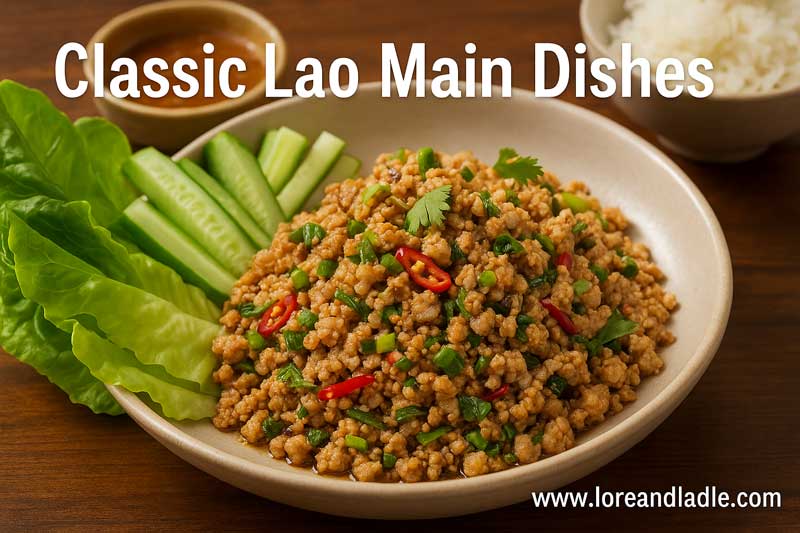
Larb: A bright meat salad where minced meat meets mint, cilantro, Thai basil, dill, lime juice, roasted rice powder, and fish sauce. The herbs bring a refreshing lift that pairs perfectly with sticky rice. This dish embodies clarity and balance, inviting you to savor each crisp bite and herbaceous hint.
-
Mok Pa: Steamed fish wrapped in banana leaf with lemongrass, dill, kaffir lime, and herbs that perfume the steam. The gentle heat preserves delicate herb oils, creating a fragrant, moist main dish. Herb notes lift the fish into a fragrant, comforting whole.
-
Or Lam: A hearty Lao curry that mingles tender meat or vegetables with a chorus of herbs, including basil, dill, lemongrass, and leafy greens. The result is a deeply aromatic dish with herbal brightness that makes the herbs feel essential rather than optional.
-
Khao Poon: A noodle-centered Lao main dish in a coconut broth enriched with lemongrass, kaffir lime, and a sprinkle of fresh herbs at the finish. The herbs brighten the curry-spiced broth and complement the soft noodles with lively accents.
Techniques that Honor Fresh Herbs
A key to Lao herb-driven dishes is timing. Add delicate herbs near the end to retain fragrance. Crush or tear leaves by hand to release oils, rather than chopping them into small pieces that may overpower a dish. Pair herbs with textures—crisp mint against tender meat, or a herbaceous finish over a creamy curry—to let each element shine. Fresh herbs also guide the cooking sequence: prep herbs first, then build the dish so aroma rises as you plate. Finally, balance is essential. Herbs should illuminate the main ingredients, not dominate them, and that balance is what makes Lao main dishes memorable.
Cultural Value and Shared Experience
These Lao main dishes are more than meals; they are social rituals. In homes and markets, herbs come from the family garden or local stalls, linking cooks to place and season. Sharing a bowl of larb with friends, or presenting mok pa steaming from a banana leaf, creates moments of connection that travel well in memory. The herbs’ fragrance signals hospitality and care. Festivals, temple feasts, and family gatherings often feature herb-forward dishes that showcase local produce and time-honored preparation methods. By highlighting fresh herbs, these dishes become ambassadors of Lao culture, inviting others to experience regionally inspired flavors with universal warmth.
Shopping, Storage, and Freshness Tips
To best enjoy the herbal character of Lao main dishes:
– Seek bright, fragrant herbs with no dark spots. Sniff gently; a strong scent signals freshness.
– Store leafy herbs like cilantro, mint, and Thai basil in a glass of water, covered loosely, in the refrigerator.
– For hardy herbs such as lemongrass and dill, trim roots and store upright in a jar of water, then cover with a plastic bag.
– Use herbs at their peak. If a few leaves begin to brown, trim and use them in sauces or insect-free compost rather than discarding the whole bundle.
– When cooking, add mint and delicate greens at the very end to preserve aroma; fold herbs through the dish rather than vigorously mixing to avoid bruising.
The Beauty of Lao Main Dishes in Everyday Life
The Fresh Herb–Lovers Guide to Classic Lao Main Dishes invites Home Cooks to explore a cuisine where herbs enrich the everyday. The dishes teach us to listen for aroma as we cook, to respect the season, and to savor the moment of sharing. In Lao culture, food is a bridge between kitchen and table, and herbs are the bright threads that help connect generations through taste. As you prepare these dishes, you cultivate a living appreciation for how fresh herbs can transform simple ingredients into a cohesive, memorable meal.
Closing Thoughts
If you are drawn to cuisine that celebrates greens and aromatics, this guide offers a welcoming path into Lao main dishes. The essence lies in herb-driven freshness, thoughtful balance, and the joy of gathering around a table. Embrace the herbs, trust the technique, and relish the result: classic Lao flavors that feel both timeless and personal.