
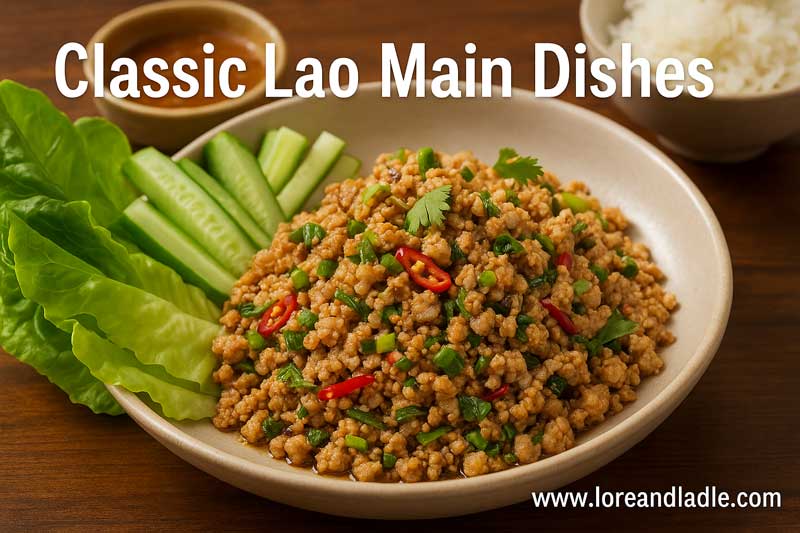
Introduction: Quick Guide to Classic Lao Main Dishes for Busy Home Cooks
Welcome to a quick, inviting look at Lao cuisine. This guide centers on the cultural value and culinary significance of classic Lao main dishes. Each recipe is chosen for home kitchens that value speed without sacrificing depth. The dishes showcase sticky rice as a stable centerpiece, bright herbs, and clean balance. As you cook, you’ll feel how Lao flavors invite community, share, and celebration. The aim is to inspire you to cook with intention, savor each bite, and honor the beauty of Lao food in everyday meals.
What makes Lao main dishes special
Lao cooking centers on balance. The best dishes harmonize salty, sour, spicy, and earthy notes. Fresh herbs and citrus lift every bite. Sticky rice ties courses together and becomes a utensil of sorts during meals. Lao food often highlights seasonal ingredients: fragrant herbs, river fish, and garden vegetables. These dishes celebrate simplicity done well. They reward patience in preparation and delight in every splash of lime or mint leaf. for Busy Home Cooks, Lao meals offer quick techniques that still convey depth and place.
Larb: The bright, fragrant minced meat salad
Larb is a signature Lao dish. It begins with finely chopped meat, quickly seasoned with lime juice, fish sauce, and a touch of chili. A sprinkle of roasted rice powder adds texture and a nutty note. Fresh herbs—mint, cilantro, and scallions—light up the plate. A final squeeze of lime pulls all flavors together. Larb is commonly served with sticky rice and fresh vegetables on the side. It is both everyday food and festive fare, perfect for weeknights or gatherings. Its bright aroma and clean finish embody Lao culinary spirit: honest ingredients, precise balance, and shared enjoyment.
Mok Pa: Steamed fish in banana leaf
Mok Pa is a fragrant, gentle main dish. Whole or filleted fish is seasoned with dill, lemongrass, kaffir lime leaves, and a hint of galangal. The fish is wrapped in banana leaves and steamed until tender. The steam carries the herb notes and preserves delicate fish flavors. When served, the dish often arrives with sticky rice and a fresh herb bowl. Mok Pa reflects Lao respect for rivers, herbs, and a mindful cooking method. The banana leaf wrapping itself becomes part of the aroma, inviting you to savor the moment of opening the parcel.
Or Lam: Hearty Lao meat and herb stew
Or Lam runs deeper in flavor while remaining accessible for home cooks. This stew blends meat with a rustic mix of vegetables, eggplant, peppers, and a bright herb paste. A traditional blend may include dill, chili, and lemongrass. Slow simmering allows the meat to become tender and the aromas to mingle. Or Lam embodies balance: comforting warmth from the stew, freshness from herbs, and a subtle chili kiss. It pairs well with sticky rice and a crisp vegetable side, making it a nourishing center for a busy evening.
Khao Piak Sen: Comfort noodle soup
Khao Piak Sen is Lao comfort in a bowl. Thick, soft rice noodles swim in a clear, soothing broth. Chicken or pork provides warmth, while garlic, shallots, cilantro, and lime brighten the soup. A drizzle of chili oil or a squeeze of lime adds a personal touch. This dish teaches how Lao cuisine can be gentle and satisfying. It’s quick to prepare on a busy night, especially when you keep noodles, broth, and protein ready in the fridge. The result is a nourishing staple with universal appeal.
Nam Khao: Crispy rice salad with zest
Nam Khao is a lively Lao dish that balances texture and tang. Crispy rice blends with minced meat, coconut milk, and a fish sauce vinaigrette. Fresh herbs—cilantro, mint, scallion—lift the palate, while lime finishes the dish with brightness. The result is a bright, satisfying main that can be plated simply or dressed up with vegetables and a side of pickles. Nam Khao demonstrates how Lao cooking thrives on contrasts: crisp, soft, herbal, and zesty all in one bite.
Quick prep tips for busy cooks
- Plan around a single, versatile herb set: cilantro, mint, dill, lemongrass, and lime.
- Use sticky rice as a fast, ready-to-serve staple. Cook a batch ahead and portion for the week.
- Prepare a batch of roasted rice powder (khao kua) to finish dishes like Larb for texture.
- Pre-chop greens and herbs; store them in airtight containers for quick assembly.
- Cook proteins in bulk (grilled fish, minced meat) and finish with fresh sauces at the moment of plating.
- Keep a simple Lao dipping sauce (fish sauce, lime, chilies) ready to brighten meals.
Serving ideas and table moments
Lao dishes prosper in a shared setting. Plate with balance: a main protein, a comforting starch, a bright herb bowl, and fresh vegetables. The aroma of herbs invites conversation and enjoyment. A platter of greens, herbs, and lime wedges invites guests to tailor flavors at the table. Sticky rice is often shaped or compacted so it’s easy to pick up with fingers or a spoon. These small rituals elevate everyday cooking into a moment of hospitality and care.
The cultural thread: flavor, family, and place
Classic Lao dishes illuminate a culture that values freshness, balance, and community. The use of herbs mirrors a close relationship with gardens and markets. The emphasis on sticky rice shows how a single staple can anchor a meal across courses. Sharing bowls and plates expresses generosity and respect for guests. Each dish carries stories of home kitchens, markets, and seasonal seasons. Cooking these dishes connects you with a culinary tradition that treasures simple, bright flavors and a mindful pace.
Quick guide recap: for busy home cooks
- Larb provides brightness and balance with meat, herbs, and lime.
- Mok Pa showcases delicate fish and herbal aromas in a banana wrap.
- Or Lam offers a warming, herb-forward stew for comfort at the table.
- Khao Piak Sen delivers cozy noodles with a clean broth.
- Nam Khao brings texture and tang with crispy rice and herbs.
- Plan ahead, use a shared herb set, and keep sticky rice ready.
- Create a table that invites sharing and enjoyment of every bite.
Conclusion: honoring Lao cuisine in your kitchen
These classic Lao main dishes reveal a culture that values harmony, freshness, and hospitality. They are practical for busy cooks while offering depth that rewards careful tasting and thoughtful plating. By bringing these dishes to your home kitchen, you honor a culinary tradition that thrives on balance, community, and respect for ingredients. May your meals be flavorful, your prep be smooth, and your table a place of warmth and connection.