
Welcome to Classic Lao Noodle Favorites for First-Time Lao Food Fans
This post introduces a gentle, inviting view of Lao noodle dishes. It celebrates how noodles carry culture, memory, and everyday happiness. You will learn how these meals express balance, craft, and sharing. The focus stays on taste, technique, and the beauty of Lao food traditions. You will feel how a bowl of noodles can tell a story of place, family, and seasonal herbs.
The Cultural Heartbeat of Lao Noodles
Lao noodles sit at the heart of many meals. They appear in markets, homes, and friendly gatherings. Noodles invite conversation, slow sipping broth, and shared plates. Fresh herbs, lime, and fish sauce wake the dish with brightness. Each bite echoes daily life—simple comforts, careful work, and a smile from the cook. In Lao culture, meals are moments to connect, to honor ingredients, and to welcome guests. Noodle dishes show this spirit in every simmer, chop, and sprinkle.
Signature Dishes: Khao Piak Sen and Kanom Jeen
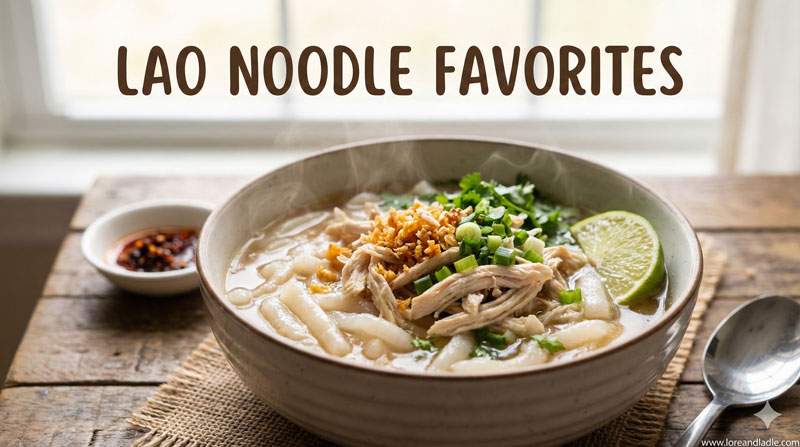
Two classic Lao noodle choices stand out for first-time tasters. Khao Piak Sen Is a soothing noodle soup. Rice noodles swim in a cloudy, comforting broth. The broth rests on slow simmered bones and aromatics. Tender meat, if present, joins a bright chorus of herbs. A squeeze of lime and a dash of chili paste heighten the depth.
Kanom Jeen is another timeless Lao staple. These fermented rice noodles are light, silky, and slightly tangy. They pair with vibrant curries and fresh vegetables. A dollop of jeow (a chili paste or relish) adds warmth and color. Diners often mix textures—soft noodles, crisp herbs, and creamy coconut curry—to create balance. Both dishes reveal how Lao cooks coax aroma from simple ingredients.
The Craft: Ingredients, Techniques, and Balance
Key ingredients center on rice and fresh herbs. Rice noodles provide a chewy, satisfying bite. Broth is the backbone in Khao Piak Sen, where patience and gentle heat create clarity and depth. Kanom Jeen offers a different texture: slender, delicate strands that absorb sauces without losing their shape.
Fish sauce, lime, and a light touch of sugar create a bright, savory-sour profile. Fresh herbs—cilantro, mint, and dill in some regions—lift flavors and invite a refreshing finish. Chili pastes and jeow add warmth when desired. The craft lies in harmony: broth depth, noodle silk, herb brightness, and the right amount of heat. When these elements meet, the dish feels both comforting and lively.
Sharing and Table Moments
Noodle meals invite sharing. A central bowl invites everyone to gather, scoop, and adjust flavor together. Small plates with jeow, pickled greens, and fresh herbs encourage personal balance. The act of passing bowls and spoons becomes part of the meal’s warmth. In Lao culture, food is a bridge between generations, a way to welcome guests, and a signal of care. A table filled with noodles is a table filled with connection.
Regional Flavors Within Laos
Laos offers gentle regional nuances that flavor noodle traditions. In some towns, Kanom Jeen is enjoyed with coconut-moconut curries and crisp vegetables, creating a creamy, bright pairing. In other regions, Khao Piak Sen gains a bolder broth with extra herbs and a touch more chili. You may notice subtle differences in herbs, thickness of the broth, and the preferred accompaniments. These variations reflect local markets, harvests, and Family recipes, all contributing to a larger Lao noodle story.
Tips for First-Time Fans: Tasting Notes and Pairings
- Start with the aroma: inhale the herbs, then sip the broth. You’ll sense the balance of savory and fresh.
- Taste the textures: noodles should be chewy yet tender, broth smooth, herbs crisp.
- Add heat gradually: a small dab of jeow can lift flavors without overwhelming them.
- Pair with greens and lime: the crunch and citrus brighten the dish.
- Observe the serving rhythm: noodles, broth, and toppings come together as a mindful pace.
Why These Noodles Matter
These dishes showcase Lao culinary values: balance, freshness, and hospitality. The noodles are more than food; they are vessels for shared experiences and seasonal ingredients. They highlight careful technique—how heat, time, and accompaniment create harmony. They invite curiosity about ingredients, aromas, and textures. They honor tradition while welcoming new tastes. In every slurp, you feel the care that Lao cooks pour into daily meals.
A Gentle Invitation to Explore
If you are exploring Lao Flavors for the first time, approach with curiosity and respect. Let the noodles lead you through a gentle spectrum of taste and texture. Observe how herbs brighten the palate, how the broth soothes, and how a simple jeow adds warmth. Enjoy the sense of place that these dishes convey—the markets, the kitchens, and the hands that prepare them.
Conclusion
Classic Lao Noodle Favorites offer a welcoming gateway into Lao food culture. They reveal culinary significance through broth, noodles, and bright accompaniments. They celebrate sharing, seasonality, and the everyday joy of eating well. For first-time Lao food fans, these dishes are not just meals; they are introductions to a gentle, flavorful world where food and culture blend in every bowl.