
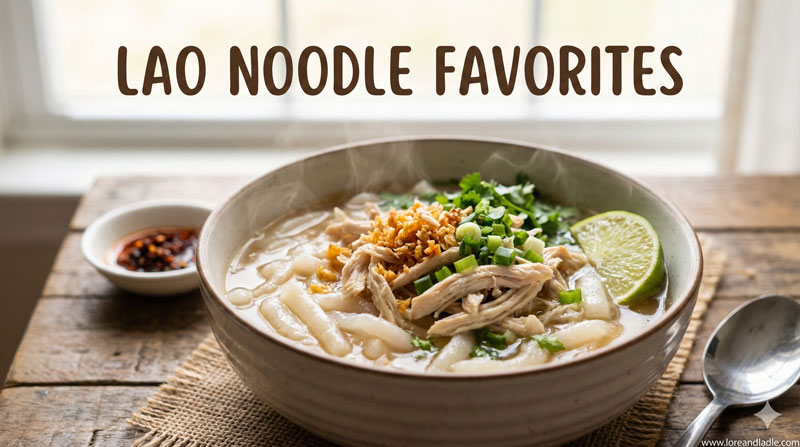
A Taste of Lao Noodle Culture
Restaurant-Style Lao Noodle Favorites You Can Recreate at Home invites readers into a warm world where noodles meet balance, brightness, and the spirit of sharing. Lao noodle dishes are more than meals; they are moments of gathering, skill, and care. From stall-side bowls to family kitchens, noodles carry memories of markets, rivers, and seasonal produce. In this article, we celebrate the cultural value and culinary significance of Lao noodle craft, and offer practical ideas to honor that craft in your own kitchen.
The Flavor Compass of Lao Noodles
Lao cuisine centers on balance. Sour, salt, heat, and fresh herbs each play a role. Noodles act as a canvas for this harmony. A good Lao noodle dish blends chewy rice noodles with broth or a wok-fry, bright herbs, lime, and a touch of fish sauce. The result is a bowl that wakes the senses while inviting slow, mindful tasting. When you prepare Lao noodles at home, you join a tradition that celebrates simple ingredients elevated through technique and care.
Restaurant-Style Techniques at Home
You can recreate restaurant-style Lao noodles with careful planning. Start with a flavorful stock or a glossy wok sauce. Think about texture: noodles should be just tender, not mushy. Build depth with aromatics like garlic and shallots, then finish with fresh herbs. A crisp garlic topping or fried shallots adds a restaurant-like finish. Presentation matters too: arrange noodles toward the center, ladle broth or sauce around, then crown with herbs and a squeeze of lime. These small choices lift a home-cooked meal into a refined dining experience.
A Closer Look at Popular Lao Noodle Formats
Lao noodle classics fall into a few inviting formats. Brothy noodle bowls offer a comforting, sensory-rich experience with clear or slightly creamy broths. Dry or stir-fried noodle dishes showcase quick wok work, bright sesame or chili notes, and crisp vegetables. Vermicelli bowls provide a fresh, lighter option with herbs, grilled meat, and lime. Each format emphasizes balance, contrasting textures, and color—elements that reflect Lao culinary philosophy and its love of communal dining.
Ingredient Spotlight: Essentials for Authentic Flavor
Key ingredients anchor Lao noodle dishes. Rice noodles provide the flexible, chewy backbone. Fresh herbs—cilantro, mint, and Thai basil—brighten and lift the dish. A splash of fish sauce adds depth, while lime juice brings tang. A touch of palm sugar rounds the brightness, and chilies offer warmth. Optional elements such as toasted sesame, fried garlic, or crisp shallots contribute texture. Choosing high-quality noodles and fresh herbs makes a noticeable difference in the final bowl.
Plating for Pleasure: The Visual and Sensory Experience
Restaurant-style Lao bowls rely on thoughtful plating. Use a wide bowl to showcase the heap of noodles, herbs, and toppings. Place herbs on top after broth is ladled, so steam releases their aroma. A final squeeze of lime or a delicate drizzle of seasoned oil can brighten the presentation. The eye expects harmony: a balanced color palette, varied textures, and a neat, inviting bowl that signals hospitality.
Honoring the Culture Through Home Cooking
Cooking Lao noodles at home is a respectful celebration of food culture. It offers a way to learn technique, savor nuanced flavors, and share a meal that echoes tradition. Approach each dish with curiosity, patience, and gratitude for the cooks who perfected these recipes over generations. By recreating restaurant-style Lao noodle favorites at home, you keep the cuisine vibrant, accessible, and deeply human.
A Gentle Invitation to Begin
If you’re new, start with a simple Lao-inspired noodle bowl: a fragrant stock, a handful of fresh herbs, and chewy rice noodles. Add a few slices of meat or tofu, a bright lime wedge, and a pinch of chili. You’ll taste the care that makes Lao noodles special. As you cook more, you’ll discover the subtle art of balance that defines Lao culinary culture. Enjoy the process, savor the flavors, and share the meal with friends and family.