
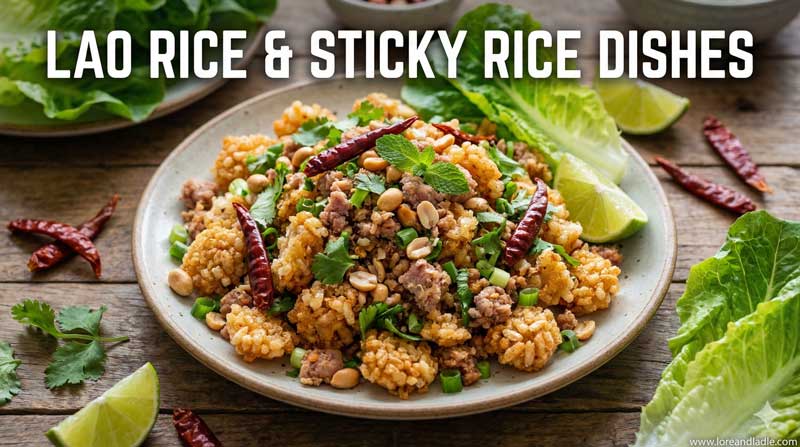
Introduction: Fresh and Bright Lao Rice & Sticky Rice Dishes for Warm Days
On warm days, Lao cuisine shines with light, bright flavors built around rice. The dish Fresh and Bright Lao Rice & Sticky Rice Dishes for Warm Days celebrates that beauty. It highlights how two forms of rice—steamed white rice and fragrant sticky rice—serve as the canvas for herbs, citrus notes, and crisp textures. The result is meals that feel refreshing yet deeply satisfying, inviting a calm, appreciative mood at the table. This article explores the cultural value and culinary significance of these rice-centered dishes, focusing on how they reflect Lao culinary artistry and daily life. The tone stays respectful, calm, and inviting, with clear transitions that help readers savor each idea.
The Heartbeat of Lao Rice: White Rice and Sticky Rice in Daily Life
Rice stands at the center of Lao meals in a way that colors every plate with meaning. White rice, known as khao, provides a clean base for bold sauces, herb salads, and clear broths. Sticky rice, or khao niao, brings a slightly tender, cohesive texture that lends itself to grabbing bites with the fingers. Both forms appear in daily cooking, family gatherings, and markets, each chosen to complement the seasonal flavors and the dish’s texture.
In Lao culture, rice is more than sustenance; it is a daily companion that shapes technique, timing, and sharing. The aroma of steaming rice, the sight of a bamboo steamer, and the feel of warm grains create a comforting rhythm. Fresh and Bright Lao Rice dishes honor that rhythm by balancing rice with bright herbs, zesty lime, and flavorful dips. This harmony makes meals on warm days feel buoyant and inviting, encouraging lingering conversation and a sense of togetherness around the table.
Fresh, Bright Flavors: Herbs, Citrus, and Dips That Lift the Dish
Herbs play the leading role in Fresh and Bright Lao Rice dishes. Fresh mint, cilantro, Thai basil, dill, and dill-like fronds mingle with crunchy vegetables and tender proteins to form a lively, aromatic chorus. Lemongrass, lime leaves, and kaffir lime brighten the notes, while lime juice and zest lend a playful acidity that rinses the palate clean between bites.
Chili heat is balanced, never overpowering, and fish sauce adds a nuanced, savory depth. A touch of palm sugar softens acidity and ties together the blend of flavors. Dips and sauces, such as jaew-style chili sauces, become focal points for dipping bites of sticky rice or grilled proteins. The interplay of tang, heat, salt, and a whisper of sweetness makes each mouthful feel crisp, fresh, and empowering—an ideal fit for warm days when meals should feel uplifting rather than heavy.
The dish also embraces crisp, bright vegetables. Slices of cucumber, shredded green mango, or thin ribbons of papaya add crunch and a cool counterpoint to the soft, steamy rice. A gentle scattering of toasted rice powder—an extra sesame-like note—can finish a plate with a subtle nutty aroma. Altogether, these elements create a bright, restorative profile that resonates with the liveliness of Lao markets and homes.
Techniques That Preserve Texture and Balance
The skill behind Fresh and Bright Lao Rice dishes lies in careful technique. For sticky rice, the method honors tradition: rinse the rice lightly, soak briefly if time allows, then steam in a woven basket until each grain glistens with tenderness. Keep the steam steady and avoid overcooking, which can dull the gentle bite that characterizes khao niao. After steaming, gently fluff the grains so they hold together without becoming mushy. Sticky rice is best enjoyed warm, shaped into small portions for easy dipping or pairing.
White rice requires a lighter touch: rinse until the water runs clear, then steam with precise water-to-rice ratios. A brief rest after steaming helps the grains settle and maintain a clean, separate texture. When both forms appear on the same table, the chef may use sticky rice to scoop sauces and herbs in a satisfying, pocket-like bite, while white rice provides a neutral backdrop for more delicate dips and salads.
In assembling a plate, add herbs and vegetables toward the end to preserve their fresh aroma. Toss greens gently with lime juice, fish sauce, and a hint of palm sugar, just enough to wake the flavors without wilting the leaves. The result is a dish that feels light on the palate yet rich in aroma and texture.
A Palette of Dishes: From Khao Niao to Bright Salads
Fresh and Bright Lao Rice dishes span a range of preparations, all centered on the same pillars of rice, herbs, and brightness. A classic pairing features sticky rice with a vibrant herb salad and a zesty jaew-style sauce on the side. The bite of grilled meat or fish, brushed with a citrusy glaze, finds a perfect match in a mouthful of warm sticky rice and crisp herbs.
Larb, a bright herb-forward meat salad, often graces the table with its zippy lime juice, fish sauce, and minty lift. It complements both white rice and sticky rice, depending on the preferred texture. Tam mak houng, Lao green papaya salad, offers a crisp, tangy contrast—shredded papaya with lime, chili, and sometimes dried shrimp or peanuts—perfect for warm days. These dishes showcase Lao culinary artistry: a balance of heat, sourness, salt, and fragrance, all anchored by rice.
Regional variations exist within Laos, and each area infuses its own local produce and herbs into the same framework. The result is a family of dishes that feel connected, yet distinctly local—bright, fresh, and endlessly adaptable to seasonal ingredients.
Cultural Moments at the Table: Sharing, Etiquette, and Seasonal Joy
Sharing is central to Lao dining culture. A meal often unfolds as a series of small plates placed in the center, inviting everyone to sample and savor. Sticky rice is commonly passed in portions, and diners use fingers or a small spoon to shape a bite and scoop a dab of sauce. The practice fosters conversation, attentiveness, and a sense of communal enjoyment.
Seasonal abundance guides how the dishes are prepared. In warm months, households choose herbs with bright aromas and crisp textures to elevate each plate. Markets burst with fresh greens and citrus fruits, encouraging cooks to experiment with new combinations while preserving traditional balance. This shared approach to cooking and eating reinforces community ties and a respect for nature’s rhythms.
Attention to freshness, aroma, and color matters. The plate should feel inviting, with greens vibrant, the lime’s shine evident, and the grains of rice perfectly cooked. In this way, Fresh and Bright Lao Rice dishes become not just meals but small ceremonies of daily life—moments that celebrate the bounty of the season and the warmth of gathering with others.
Practical Tips for Home cooks: Bringing Lao Rice to Your Table
- Start with good rice: choose a high-quality sticky Rice for that signature cling and a fragrant white rice for versatile pairing.
- Rinse and soak: rinse rice until the water runs clear, and soak sticky rice briefly if time allows to improve texture.
- Steam with care: use a bamboo basket for sticky rice and a steamer for white rice; avoid overcooking to keep grains distinct.
- Build brightness with herbs: assemble herb salads close to serving time to preserve fragrance.
- Balance sauces and dips: aim for a bright combo of lime, fish sauce, chilies, and a touch of palm sugar.
- Pair thoughtfully: match sticky rice with grilled proteins or robust dips, and pair white rice with lighter broths or clear salads.
- Keep it fresh: use cucumber, green mango, or papaya for crisp contrasts that cool the palate on warm days.
- Serve with intention: present the plates in the center and invite guests to mingle flavors and textures through shared tasting.
The Enduring Beauty of Lao Rice on Warm Days
Fresh and Bright Lao Rice dishes remind us that food can be gentle and expressive at the same time. The elegance of rice as a canvas, the immediacy of bright herbs, and the clarity of citrus create meals that feel uplifting and nourishing. This culinary approach honors the land, the harvest, and the communal joy of sharing a meal with friends and family. It stands as a testament to Lao culinary artistry: a respectful, joyful blend of texture, aroma, and flavor that remains timeless on warm days.
If you would like to explore these ideas further, seek local Lao markets and cookbooks that celebrate khao niao and khao. Experiment with fresh herbs, citrus, and a balanced dipping sauce. You may discover that the simplest combination—rice, greens, and a bright sauce—invites not just nourishment but a quiet celebration of tradition and togetherness.