
Introduction
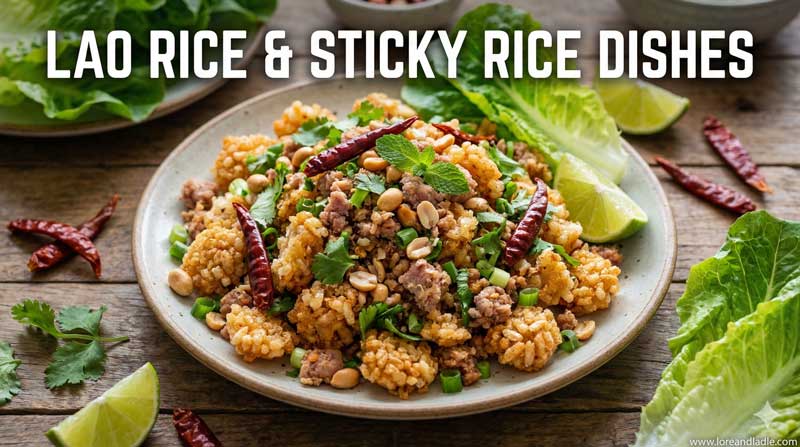
Simple Lao Rice & Sticky Rice Dishes Recipes with Big Flavor opens a window into a cuisine that centers on two remarkable rice traditions. In Laos, rice is more than a staple; it is a daily companion, a shared language, and a quiet celebration of season and soil. The dish invites cooks to explore bold flavors while honoring gentle, time-honored techniques. Here, fluffy jasmine rice and glossy sticky rice live side by side, each offering its own texture, aroma, and sense of place.
The cultural heart of Lao rice
Rice shapes the rhythm of Lao life. It guides meals, markets, and family gatherings. A bowl of fragrant jasmine rice feels bright and light, pairing with delicate herb profiles. Sticky rice, warm and clingy, anchors more robust dishes and sauces. Together, they tell a story of harvest, rain, and careful hands that rinse, soak, and steam. This collection highlights how rice connects people to the land and to one another at the table.
Flavor with balance and brightness
Big flavor in these dishes comes from balance, not complexity. Fresh herbs, bright lime, and a kiss of fish sauce bring the plate to life. Chili adds warmth, while garlic and shallots provide depth. Dips and jeow sauces, made with peppers, herbs, and roasted ingredients, invite dipping and scooping. This approach celebrates how simple components, when united thoughtfully, create memorable harmony on the palate.
Techniques that honor tradition
Two core techniques shape the character of Lao rice dishes. First, the jasmine rice is rinsed and steamed to a light, separate grain. Second, the sticky rice uses glutinous rice that is soaked and steamed in a woven basket, yielding a soft yet resilient bite. The hands-on process of shaping a chunk of sticky rice to scoop a bite of sauce is a small, tactile ritual. These techniques preserve texture, aroma, and the gentle mechanics of Lao cooking.
Sharing at the table
A Lao meal often feels like a communal welcome. Small bowls of jeow, herbs, and vegetables surround a center of rice. Diners use their hands to pinch pieces of sticky rice and to dip into aromatic sauces. This practice emphasizes hospitality, generosity, and connection. The act of passing a dish and inviting others to try a bite becomes a quiet language of care.
Regional echoes and seasonal notes
Across Laos, rice expressions vary with land and climate. Some areas lean toward lighter, fragrant accompaniments; others favor richer, smoky, or citrusy notes. Fresh herbs such as mint, cilantro, and dill appear in many profiles, while lemongrass and chili provide clear lift. These regional echoes enrich the simple dish, showing how geography and season breathe character into rice meals.
Pairings, sauces, and serving traditions
Jeow sauces, with chili, garlic, and roasted ingredients, offer bright contrast to the soft rice. Fish sauce and lime juice introduce a tangy, savory frame. Grilled meats, vegetables, and herbs join the plate to create a balanced ensemble. The result is a dish that feels both everyday and celebratory, suitable for quick weeknight eating and shared weekend meals alike.
Cooking for home kitchens with big flavor
Bringing Simple Lao Rice & Sticky Rice Dishes Recipes with Big Flavor into a home kitchen invites accessibility without sacrificing depth. Choose high-quality jasmine Rice for airy, separate grains and good-quality glutinous rice for a satisfying sticky texture. Build flavor with fresh herbs, a well-balanced jeow, and a light splash of lime. Small, thoughtful steps let Home Cooks honor tradition while making the dish their own.
A welcoming invitation to the senses
This culinary approach invites exploration through texture, aroma, and taste. The lightness of jasmine rice contrasts with the comforting density of sticky rice. The herbs brighten the plate, while sauces provide warmth and brightness. The overall effect is generous, inviting, and deeply respectful of Lao food culture.
Conclusion
Simple Lao Rice & Sticky Rice Dishes Recipes with Big Flavor stands as a celebration of Lao rice, its textures, and its role in daily life. It shows how two rice traditions can coexist beautifully on one table, each contributing its own character to a shared experience. The dishes remind us that flavor grows from patience, fresh ingredients, and a mindful connection to the kitchen and the table.