
Introduction
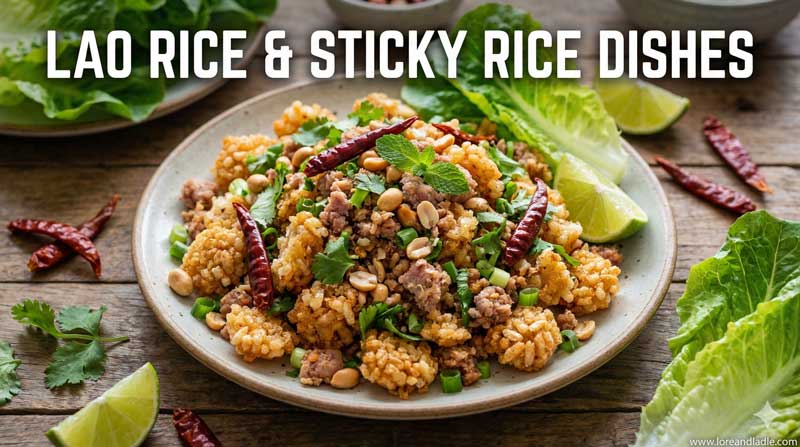
Family-Style Lao Rice & Sticky Rice Dishes to Share at the Table celebrates how rice forms the heart of Lao meals. This style invites everyone to gather, pass baskets, and savor a range of flavors together. The beauty lies in shared bowls, warm conversation, and the quiet rhythm of fingers shaping sticky rice into small bites.
The Core of Lao Rice
In Lao kitchens, sticky rice is central. It anchors meals with texture, aroma, and memory. Lao cooks pair sticky rice with vegetables, fish, and herbs, letting each bite speak softly of home. The rice carries subtle sweetness and a silky chew that makes it easy to share. This emphasis on rice creates a table that feels welcoming and rooted in daily life.
Texture and Technique of Sticky Rice
Sticky rice is steamed to release its tender bite. Soaking helps hydrate the grains, then gentle steam cooks them evenly. A bamboo basket or woven mat holds the rice as the steam works through. Guests form small portions with fingers, shaping each bite into a neat, palm-sized piece. The result Is a cohesive, shareable texture that invites dipping and passing.
Sharing as a Cultural Practice
The table becomes a living circle where food and conversation mingle. A central basket of sticky rice sits beside bowls of sauces, herbs, and main dishes. Guests take turns offering bites to others, a simple act of hospitality. This sharing rhythm keeps the meal calm, social, and inclusive. It’s a daily ceremony that honors generosity and togetherness.
Pairings and Sauces
Pairings heighten the family-style experience. You will often find:
– Fermented chili sauces and fresh herbs that brighten the palate.
– Light fish or lime-based sauces to balance richness.
– Green papaya or herb salads that add crunch and brightness.
– Tender meats or fish, grilled or steamed, to accompany the rice.
Together, these elements create a tapestry of flavors that highlight the rice as the centerpiece.
The Table as a Stage for Hospitality
The table becomes a space of calm service and warm welcome. Baskets of sticky rice, small bowls of jeow or sauce, and plates of vegetables surround the diners. Diners dip, pinch, and shape, working with the texture of the rice. The act of sharing reinforces manners of care, patience, and mutual enjoyment.
Modern Variations and Accessibility
Today, homes adapt with fresh herbs, seasonal vegetables, and lighter sauces while keeping the core idea intact. You may find vegetarian jeow options and leaner proteins that retain the sense of abundance. The dish travels well into casual gatherings and Family dinners, always preserving the focus on shared experiences.
Practical Tips for Hosting a Family-Style Lao Rice Table
- Prepare one central sticky rice basket per table and keep it warm.
- Offer a variety of jeow or dipping sauces to invite dipping and tasting.
- Arrange bowls of herbs, sliced vegetables, and small plates within easy reach.
- Use fingers to shape rice; provide clean, small towels for hands.
- Keep main dishes nearby but not overpowering the rice’s place at the center.
- Encourage guests to pass baskets and bowls with a gentle, shared rhythm.
- Include a simple fish or plant-based option to expand choice without crowding the table.
Conclusion
Family-Style Lao Rice & Sticky Rice Dishes to Share at the Table honors a peaceful, shared eating experience. The centerpiece is the sticky rice, warmed by cooks’ care and friends’ conversation. This culinary tradition offers a graceful, inviting way to celebrate Lao heritage through flavor, texture, and togetherness.