
Fresh Herb–Lovers Guide to Lao Comfort Food Classics
This guide celebrates Lao comfort foods that bloom with bright, fresh herbs. It highlights cultural value and culinary importance in everyday meals and festive gatherings. The dishes featured honor the land, the markets, and the home kitchen. Readers discover how herbs lift flavors, textures, and memories in Lao cooking.
Fresh Herbs at the Heart of Lao Cooking
Fresh herbs define Lao cuisine. Mint, cilantro, dill, Thai basil, and lemongrass appear in many meals. Lime leaves, culantro, and green onions add lift and depth. These herbs are rarely hidden; they are cradled in bowls, brushed on grills, stirred into soups. Their presence signals care and attention to season and place.
Herbs accompany staples, not as toppings but as main notes. They wake simple ingredients with bright perfume. A bowl of broth or a plate of grilled fish becomes layered and refined. The aroma brings a sense of welcome to every bite. In Lao kitchens, herbs connect the table to gardens, markets, and the daily rhythm of life.
Comfort Food Classics in Lao Cooking
Comfort in Lao cuisine comes from meals that soothe and satisfy. Sticky rice creates a warm, calming base for many dishes. Fresh herbs play a starring role in sauces and dips that accompany this rice. A lively jeow—one of several herb-forward dipping sauces—pairs with grilled meats, fish, or vegetables. It blends chilies, lime, garlic, and herbs for a bright finish.
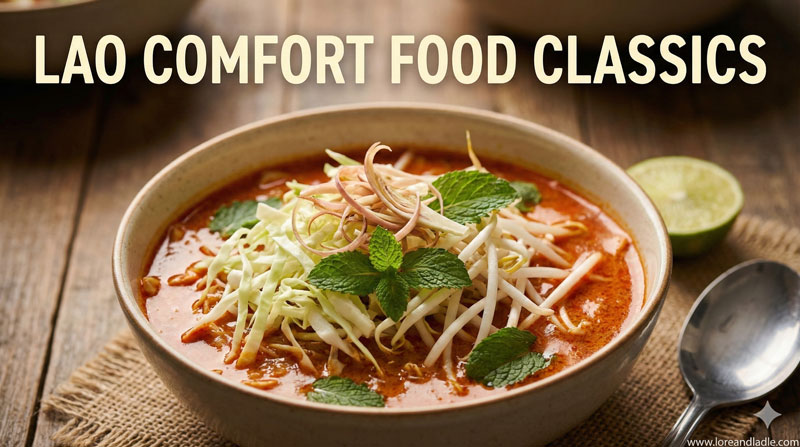
Larb, a lean meat salad, often relies on chopped herbs to balance its bold flavors. The herbs mellow the heat and sharpen the citrus tang. Khao piak sen, a comforting noodle and broth, benefits from a handful of fresh greens and aromatic leaves at the end. Grilled fish or chicken is commonly brightened with herb rubs and fresh herb garnishes. Throughout these classics, herbs unify texture, aroma, and memory.
Techniques That Let Fresh Herbs Shine
Finishning is key. Add herbs near the end of cooking to preserve their brightness. A quick burst of high heat or a gentle simmer releases essential oils, but too much heat can dull the perfume. Chop herbs finely but with care, so their oils bloom on the palate.
Balance guides technique. Finishing with fresh herbs creates contrast against warm staples like sticky rice or a steaming broth. Dips and sauces are lightly seasoned, letting herbs carry the primary aroma. Blending herbs in a mortar and pestle merges their oils for a smooth, fragrant jeow. This method honors tradition while keeping flavors lively and approachable.
Cooking methods respect the herb’s character. Steaming preserves delicate notes; grilling adds smoky depth that herbs echo back. Fresh herb additions at the table invite communal participation. The result is a meal that feels crafted, yet effortless.
Seasonal Harvests and Market Life
Markets shape Lao herb culture. Vendors offer bundles of bright greens, fragrant stems, and leafy tops. Farmers bring fresh scent and color to the stall, inviting cooks to create with intention. Seasons whisper new combinations: mint in spring, dill in cooler days, Thai basil in warm evenings. The rhythm of harvest and sale guides menu choices and home cooking.
Home gardens echo this seasonal cycle. A small herb patch yields a rapid, reliable supply of flavor. Home Cooks harvest what they need, then prepare a meal that tastes of today. This immediacy strengthens the bond between the eater, the cook, and the land.
Social Spirit: Sharing Lao Comfort Foods
A Lao table is a place of sharing and calm joy. Dishes centered on fresh herbs invite everyone to taste, discuss, and smile together. The act of passing jeow and herb bowls creates connection. Meals emphasize hospitality and the pleasure of a well-balanced bite.
Herbs also teach restraint and balance. A spoonful of bright herb mix adds perfume without overwhelming the dish. Diners learn patience as flavors unfold with each bite. The culture values gentle instruction, listening to aromas, and appreciating simple, honest ingredients.
Honoring Craft Through Everyday Beauty
Fresh herbs reflect care in the kitchen. The color, scent, and texture of greens elevate plain staples. Even a modest bowl of broth can become memorable when finished with crisp herb ribbons. This beauty is not flashy; it is the grace of everyday cooking done well.
Lao comfort foods teach that flavor grows from attention. A cook’s choice of herbs, timing, and finishers shows respect for those who will eat. The result is a meal that feels personal, familiar, and deeply satisfying. People leave the table with a sense of nourishment for body and spirit.
Final Reflections: The Cultural Value of Lao Comfort Foods
This guide centers on the cultural value of Lao comfort foods. Fresh herbs are the thread that runs through many beloved dishes. They connect garden, market, kitchen, and table. The culinary significance lies in how herbs transform simple foods into comforting, memorable meals.
Eating these dishes invites a slower pace, a mindful approach to flavor, and a shared sense of home. The beauty of Lao comfort foods lies in their clarity and balance. They honor tradition while inviting curiosity and joy. In every bite, there is a celebration of freshness, community, and the enduring art of Lao cooking.